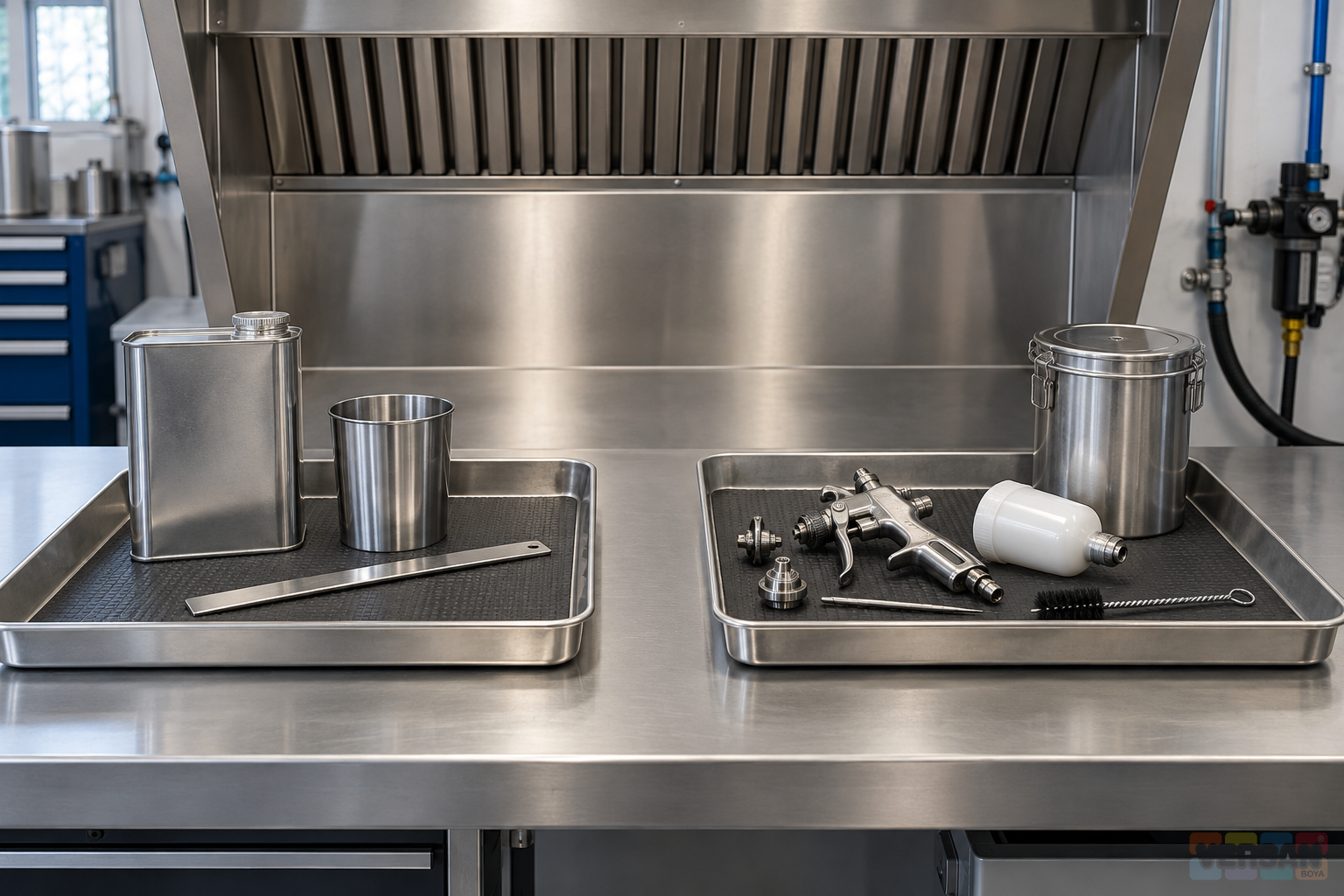
Cellulosic thinner may be kept near both the paint preparation bench and the equipment cleaning area. That proximity does not make the two operations equivalent. Dilution concerns the preparation of a specific coating for its intended application. Cleaning concerns removal of previous material, protection of equipment components and a controlled transition to the next job. Combining those needs under a general thinner use instruction can leave the product identity, reason for an addition and destination of used material unclear. An effective workflow starts by giving each operation its own decision question and traceable record.
Select cellulosic thinner through its exact product reference and the instructions for the associated coating. A commercial family name does not guarantee compatibility with every paint or equipment component. This article does not provide a dilution ratio, solvent blend, cleaning recipe or protective equipment specification. Its proposed records should be used alongside current technical data, safety information and the equipment manufacturer's maintenance instructions. The examples explain possible decision structures; they are not claims about an actual workshop, customer order or factory process operated by Versan Boya.
1. State the purpose of use at the beginning
The first line of a material request can identify dilution or equipment cleaning as the intended task. This simple distinction helps purchasing, storage and application teams avoid assigning different meanings to the same word. A dilution request is linked to the coating identity. A cleaning request is linked to the equipment and previous material. That makes it possible to understand which operation a container has been assigned to. Repeating the product name on an unclear work order does not resolve the uncertainty if the purpose of the operation remains unstated.
The archived catalogue describes cleaning thinner in relation to removal of oil and dirt from metal surfaces. That description does not automatically approve the product for every spray gun seal, plastic component or coating mixture. Cleaning a metal surface and cleaning an assembly containing several materials are different approval questions. Preserve the boundary of a short catalogue statement instead of expanding it into an unrestricted use instruction. Obtain current, product and equipment specific information where the proposed task goes beyond the documented description.
A workshop may use separate forms or separate fields in one record. The format matters less than maintaining the distinction. Completion of cleaning does not demonstrate that a paint mixture has passed its dilution checks. Equally, a correctly prepared mixture does not show that the equipment has been cleared of the previous product. Treating those questions independently prevents an incomplete activity from being hidden behind a successful result elsewhere in the process.
2. Trace the exact product rather than only its family
A workshop may hold several products in its thinner range. Container appearance and smell are not dependable methods of distinguishing them. Keep the product name, readable label and route to the relevant documentation connected. Recording which work order receives a material makes an unrecorded substitution easier to identify. If an original label becomes unreadable, guessing a replacement identity does not restore traceability. The uncertainty should be resolved before the material is assigned to a task that depends on its compatibility.
A technical data sheet and a safety data sheet answer different questions. The former explains product and application context; the latter supports assessment of hazards and safe use. An archived catalogue extract does not replace the complete set of applicable current instructions. If a document's revision or relationship to the actual product is unclear, resolve that gap first. Finding an old file is not the same as demonstrating that every instruction in it has been confirmed for the present container, equipment and operation.
It can be useful to link the work order to the document version used for the decision. This does not require staff to print or duplicate every document each day. A controlled reference to the current source may be sufficient. The aim is to prevent different operators from selecting inconsistent instructions from separate folders and then assuming that they followed the same method. A later investigation is more meaningful when the information available at the time remains identifiable.
3. Evaluate dilution within the particular coating system
Dilution belongs in the context of the paint, application method and relevant product instructions. A subjective impression of flow should not become an automatic reason to add material. First establish the paint identity, preparation record and associated thinner. Teams should also use consistent descriptions. Saying that a mixture was easier to apply does not produce a repeatable observation unless the relevant condition is explained. The purpose of the record is to turn an improvised intervention into a decision that another competent person can understand and review.
An associated product selected for a cellulosic coating system should not be replaced simply because another material appeared satisfactory in a different system. No universal addition percentage is proposed here. Use the manufacturer's applicable conditions, method and limits. Transferring a ratio from the archived description of a different paint is not correct matching merely because a document has been consulted. Where the exact identity is missing, request technical clarification rather than supplying a numerical instruction that cannot be tied to the product.
The preparation record can identify the starting materials, instruction used for the operation and result of the relevant checks. A departure from the established method should have its own reason and authorization. Such records are useful before a problem occurs: they help explain what actually happened on a previous job and reduce the need for different operators to reconstruct the same uncertain procedure from memory.
4. Separate clean process material from used cleaning liquid
The material assigned to dilution needs a clear identity and handling arrangement. Used cleaning liquid is a different stream because its contents may include material from the preceding operation. Those streams should not share an ambiguous container or a single generic description. A used liquid looking clear does not demonstrate that it has the same composition or approved use as clean product. Appearance alone should therefore not be used to authorize its return to a coating mixture. Traceability must remain more specific than the visual condition of the liquid.
Keeping preparation records for cellulosic gloss paint distinct from cleaning records helps identify where previous material could enter the next operation. Management of used liquid belongs within the workshop's approved waste and safety arrangements. This article does not offer recovery, distillation or reuse instructions for uncertain mixtures. Those activities should not be treated as simple material saving measures that become appropriate merely because someone has used the same habit before. The clean material required for the coating remains a separately controlled input.
Storage records can distinguish unopened product, material assigned to a particular operation and used liquid awaiting the appropriate next action. If a container's identity becomes uncertain, complete the missing information rather than guessing its contents. Covering two different labels with one broad replacement description reduces traceability further. A clear separation makes the starting material for the next paint preparation understandable, not just the appearance of the storage area more orderly.
5. Do not treat an assembly as one metal surface
Spray equipment can include seals, connections and components made from different materials in addition to the visible metal body. Selection of a cleaning product should consider the applicable maintenance instructions for the whole task. The equipment manufacturer should define the relevant method, disassembly limits and reassembly requirements. Experience with a similar gun does not establish that every detail of the current model is the same. Record the actual equipment reference so that an instruction can be related to the assembly being maintained rather than to a remembered example.
After using a cellulosic primer, assessment of the remaining coating and compatibility with equipment materials are separate questions. A product that removes a residue is not automatically suitable for every component. Link the chosen method to the exact equipment and approved cleaning product. If a component material or disassembly requirement is unknown, consult the authorized maintenance source. Adding a more aggressive solvent is not a substitute for resolving the uncertainty and can introduce another variable into the subsequent investigation.
A maintenance record can keep the component identity beside the observation. For example, a visible change in a sealing part should initially be described as an observation, with its cause left open until assessed. Do not record the assembly as suitable for production simply to close the work order. A meaningful maintenance decision can also help prevent a problem on the next application from being attributed automatically to the paint mixture.
6. Make the two workflows physically and administratively legible
The arrangement of the work area should support the difference between the tasks. It should be possible to identify which record belongs to the tools assigned to paint preparation and where the cleaning tools are controlled. This article is not a facility layout or fire protection design. Positioning and controls require the applicable risk assessment and competent technical arrangements. The practical objective is to prevent a container or tool remaining after one operation from being mistaken for approved material for a different operation by the next person approaching the bench.
If one team is preparing a cellulosic varnish application while another is cleaning equipment from a previous paint job, a concise handover can identify what is complete and what is still pending. State which assembly has been cleared, which product is being prepared and which decision is awaiting confirmation. Colour coding may assist identification, but its meaning and the person responsible for updating it must be understood. Physical separation without a reliable record can still leave the next operator guessing what the arrangement signifies.
Creating two stations does not establish that every process risk has been resolved. Check that they are actually being used as intended and that material identities remain readable. A brief handover when personnel change can preserve the arrangement after its initial introduction. Otherwise a system that was clear on its first day may gradually become a collection of familiar but unexplained positions and colours.
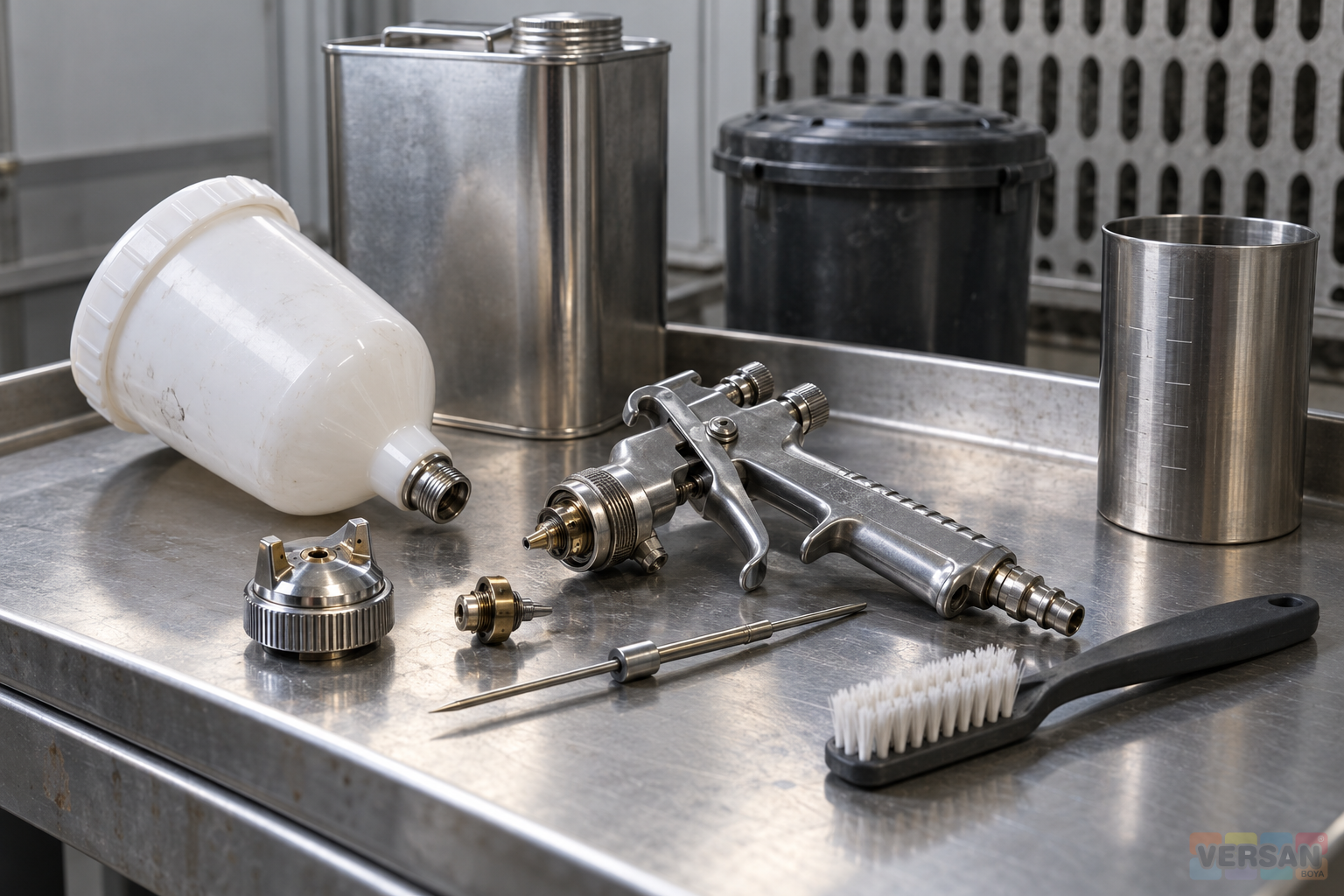
7. Include cleaning in the exposure assessment
HSE guidance emphasizes assessment and control of work with solvent containing materials. Cleaning should remain within that assessment rather than being treated as an insignificant task at the end of production. Uncontrolled spraying or open container cleaning is not presented here as an acceptable substitute for an approved method. Consult the applicable safety data and equipment instructions. A brief catalogue description does not demonstrate that the required controls have been selected for the actual cleaning activity.
This section deliberately does not specify a respirator, glove material, ventilation rate or exposure duration. Those choices need competent assessment of the product and real task. The workflow record can identify where that decision is documented and who is responsible for confirming it. Having a safety instruction in a folder is not the same as demonstrating that the operation follows it. If the method being used is uncertain, familiarity or time pressure should not be treated as evidence that it is appropriate.
Changes in equipment, cleaning product or previous coating may affect whether an existing assessment remains relevant. Identify the change and direct it to the appropriate review instead of relying on a general thinner safety label. Maintaining that link helps staff recognize when a task has moved beyond the conditions originally considered without attempting to prescribe a universal safety solution in the production checklist.
8. Avoid substitution based on similar product names
Polyurethane thinner and epoxy thinner identify different system contexts. The word thinner does not establish that either may replace the other. Equally, a product selected for equipment cleaning should not automatically be treated as the diluent for the next coating. Plan the transition through two separate questions: how the previous material is addressed and how the equipment and process are prepared for the incoming system. Answering one does not resolve the other.
The same principle applies to acrylic thinner and synthetic thinner. A statement in one product document should not be transferred to a cellulosic system merely because the task sounds similar. Correct identification of an associated material does not demonstrate that every application condition matches. During a system change, read the current coating instructions beside the cleaning record. An unrecorded substitution made before technical clarification can make a later result considerably harder to interpret.
The product links in this section are not a blending proposal. They distinguish catalogue families and provide a route to the appropriate product information. Where matching remains uncertain, communicate the actual product codes and intended operation to the technical contact. Asking which material is appropriate for a specified product and purpose is more useful than a broad question about which thinner is strongest or most convenient.
9. Record the cleaning result more clearly than looks clean
Looks clean does not explain which component was assessed or against what requirement. Relevant inspection points from the approved maintenance method can be carried into the work record. Identify the part, observation and any decision requiring further assessment. This article does not prescribe a residue analysis technique or laboratory acceptance threshold. A photograph cannot establish the condition of a concealed internal surface. Do not report an inaccessible area as examined simply because the outside of the assembly appears satisfactory.
Where an observation is unsatisfactory, state the next authorized action. Further cleaning, maintenance review or component replacement may need consideration under the applicable instructions. Avoid treating every difference as a reason for the same intervention. Preserve the observation and explain the decision. That allows equipment to return to production because the relevant controls have been completed, rather than because the administrative task needs to be marked closed.
A change of tool or container during the operation may also be relevant to the final assessment. Select information that supports a later decision rather than filling the form with detail that nobody can interpret. The next competent person should be able to distinguish a check actually carried out from an assumption made about it. That distinction is more valuable than a long completion statement containing no identifiable observation.
10. Treat the next product as a separate start check
Provide a clear handover between closing the previous job and starting the next. Read the incoming product identity, assigned equipment, cleaning status and current application instructions together. If it is unclear which assembly a cleaning approval concerns, a matching calendar date is not sufficient evidence. An internal equipment code can help prevent records being exchanged between two similar guns or mixing vessels. The required link is between a specific record and a specific assembly, not merely between two activities occurring in the same work area.
Keep the first application assessment connected to the correct product and preparation information. If the result differs from expectation, review those starting conditions rather than immediately changing the thinner addition. When the equipment, coating, associated material and purpose can be read together, the location of an uncertainty becomes easier to identify. This does not diagnose a defect remotely; it establishes a more reliable starting point for the investigation.
The articles on cellulosic thinner evaporation and surface quality, equipment cleaning and residue control and cleaning and sample approval during a colour change address related decision points. Reading them does not complete the checks on the actual job. Their purpose is to clarify the questions that a useful production and handover record should answer.
11. Follow both streams through a hypothetical changeover
Consider an illustrative workshop planning a dark coloured job followed by a lighter one. Clean associated material for the second job may already have been issued from storage while the equipment release record for the first remains incomplete. A prepared mixture does not make the equipment ready. Likewise, completion of cleaning does not establish that the next mixture contains the correct products. Read the decisions separately and direct the missing information to its own responsible person instead of allowing one completed activity to stand in for another.
This example does not prescribe the same special procedure for every colour transition. Use the method established through the actual product and equipment instructions. The example simply shows how a successful check in one task should not conceal an unanswered question in another. With that distinction in place, the missing information can be addressed before production begins rather than inferred afterwards from an unexpected surface result.
If a job waits for clarification, do not close the record with delayed as its only explanation. State the question, required information and decision owner. When the information arrives, preserve the earlier entry and update the result. Repeated delays can then be examined in terms of actual material supply, documentation or equipment preparation instead of being grouped into an undefined problem with thinner use.
12. Apply supply and instruction changes to each task separately
A new product code or replacement container does not inherit approval from an old workshop habit. Keep assessment of suitability for coating dilution separate from assessment of equipment cleaning. Technical confirmation for one purpose should not be treated as confirmation for the other. Preserve readable identification and access to the applicable documents during a supply change. Where the physical container and work record disagree, resolve that difference before use rather than allowing the production deadline to choose an assumed identity.
When the current instruction is established, communicate which version is to be used. Preserve previous records so that earlier jobs remain understandable. A concise matching and authorization record linked to the operation may be more useful than a very long general list of thinners. What matters is the connection between the correct product, the intended task and the actual result of its checks.
The dilution record should explain which coating was prepared, while the cleaning record should explain which equipment was brought to the specified condition. They can be connected without becoming interchangeable. Keeping the product identity, purpose and observation distinct makes the next production start more transparent. Unknown results and checks that have not been performed should remain visible rather than disappearing beneath a completion label.