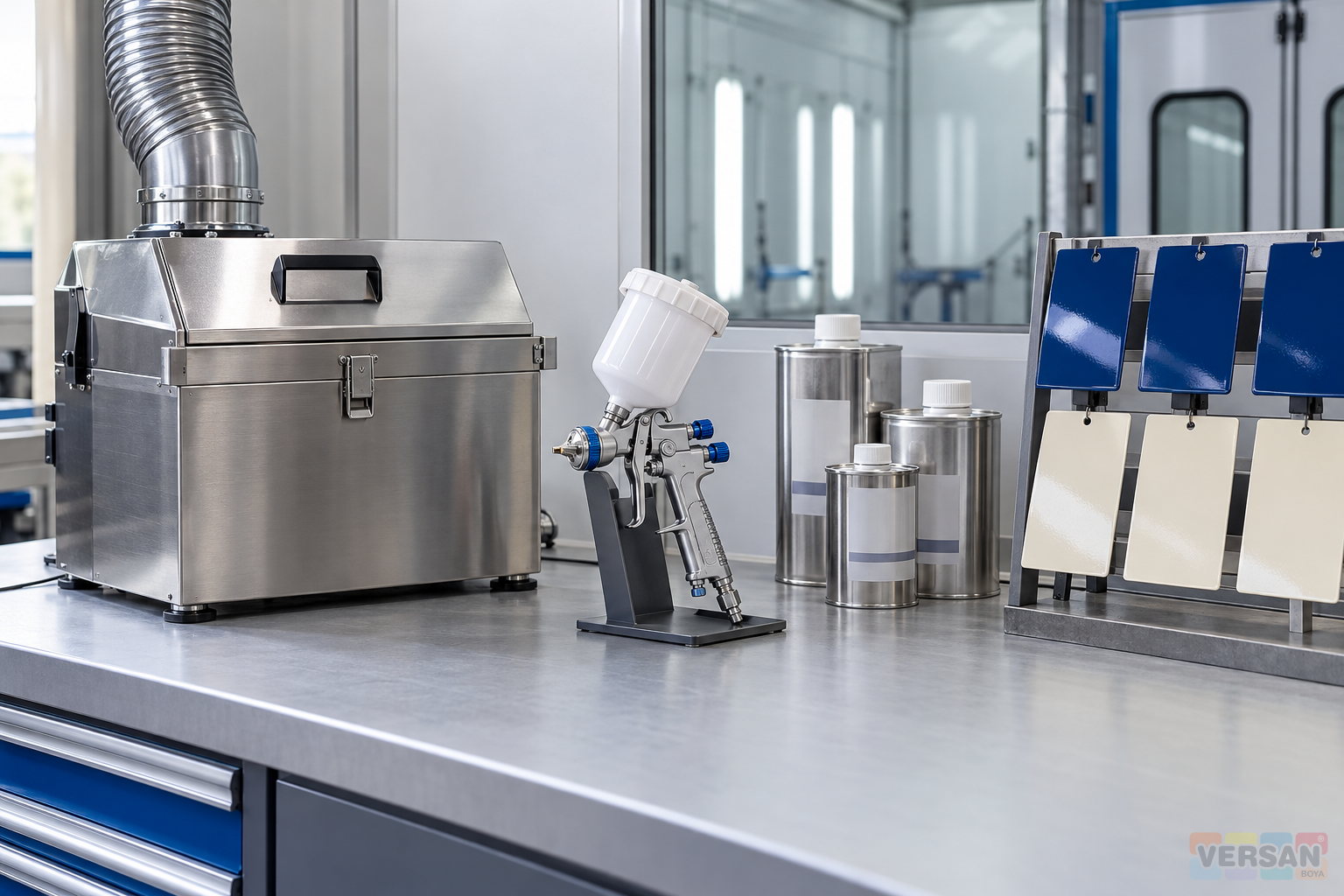
A colour change in nitrocellulose paint is more than connecting a new container to a spray gun. Residue from the previous material, the condition of the new mixture, the appearance of the primer and the lighting used for inspection all influence the result. A satisfactory first component does not prove that subsequent components will remain consistent. The practical objective is a controlled transition in which the approved appearance can be reproduced under recorded conditions, rather than a changeover that merely looks clean from the outside.
This article follows the changeover from closing the previous job to releasing the next production run. A sample prepared with gloss nitrocellulose paint does not automatically approve a different product or gloss class. Confirm the product code, current technical data sheet and safety data sheet before starting. The workflow below is a management framework: the equipment manufacturer's instructions and verified product requirements determine the actual cleaning method, application settings and assessment conditions.
1. Start with an identifiable job order
The new job needs an accepted reference as well as a colour name. A screen image, a small piece taken from an old component and a retained approval panel do not provide equivalent evidence. Establish the substrate, primer and finish used for the reference. If those details are missing, resolve the uncertainty before treating the sample as a production standard. Also identify where the component will be used and which surfaces are visible, because a concealed edge and the main face may require different inspection arrangements.
Record the previous colour, next colour, product batch, equipment identity and person responsible for approval. Keep that information with the job rather than relying on a verbal handover. Where other materials from the wood and furniture coatings range are being used nearby, distinguish their containers, tools and work areas. This prevents a trial involving the wrong coating family from being mistaken for evidence about the colour change currently under investigation.
2. Define colour, gloss and texture together
A coating may appear close in colour while looking different because its gloss is different. Orange peel, sanding marks and primer texture also change how light is reflected. An approval record should therefore contain more than a colour code. Describe the condition of the reference, the viewing direction and the assessment lighting. Use a clean, undamaged panel for comparison. An aged, contaminated or yellowed archive sample can create an apparent mismatch that cleaning the gun or altering the next mixture will not resolve.
Approval of a finish made with matt nitrocellulose paint cannot simply be transferred from the gloss version with a short note. The required appearance of semi-matt nitrocellulose paint also needs its own definition. If instrumental colour or gloss tolerances are required, the parties should agree the measurement method and acceptance limits together. This article does not assign a universal numerical tolerance to all products, substrates and end uses.
3. Close the previous job in a controlled way
Before cleaning begins, close the records for the final accepted component and the material used. Place usable remaining coating in a correctly identified container under the manufacturer's storage conditions. Do not put it into a container associated with another colour. Keep usable material separate from cleaning waste. A mark understood only by the operator is insufficient: another trained person should be able to establish the contents and their job connection without guessing or opening an unidentified container to investigate.
Reconcile material use and any unfinished components at the same time. A door or shelf from the previous colour left among the next batch can later look like a coating inconsistency. Update the identities on racks, trolleys and sample positions when the job changes. Clearing and preparing the work area is a separate task from cleaning the internal paint path. Both need completion before the changeover is considered ready, especially when more than one operator or shift shares the same equipment.
4. Base the cleaning plan on the actual equipment
The cup, paint passages, lid, filter and connections can retain material in different ways. A clean outer surface does not establish the condition of internal channels. Obtain the permitted disassembly, cleaning and reassembly sequence from the equipment manufacturer. A solvent that removes paint is not necessarily compatible with every seal or plastic part. The trained operator needs to know those limitations and the inspection points before beginning, including how damaged or uncertain components are taken out of use for further assessment.
The thinning function of nitrocellulose thinner is distinct from the function of a cleaning material. A catalogue statement that a thinner can be used with a coating does not authorize soaking every gun component in it. Confirm the cleaning product against equipment compatibility requirements and its safety information. Instead of inventing one volume or number of flushes for every workshop, define the permitted procedure and the evidence required to show that it has achieved an acceptable result.
5. Distinguish a cup-fed gun from a supply line
A changeover plan used for a small cup-fed gun may not cover a pump-and-hose installation. The wetted volumes, return connections and filter positions depend on the actual equipment arrangement. Identify the feed route as well as the gun in the job record. If a common line serves several application points, show the boundary that has been cleaned and checked. A satisfactory result in one accessible section does not establish the condition of material remaining in another branch of the system.
This distinction also identifies who should define the procedure. It is not a recommendation to replace hoses arbitrarily or open connections outside the manufacturer's instructions. The authorized maintenance team should establish which components can be inspected during the task. If the approved procedure requires a trial from a particular line outlet, complete that step and record what the sample represents. This prevents the easiest visible part of the installation from becoming the only evidence used to release the whole paint supply route.
6. Keep cleaning within the controlled work area
Gun cleaning also belongs in the exposure assessment. HSE identifies cleaning thinner passed through a gun without proper controls as a potential source of exposure. Do not spray solvent into the surrounding workspace to speed up a changeover. Manage extraction, ignition sources and personal protection through the product safety information and the workplace risk assessment. Odour is not a reliable clearance test. Where a closed cleaning unit is used, follow its instructions and verify its condition before the task.
Product identification remains important even when the purpose is simply cleaning. The cleaning thinner product page helps distinguish its intended role from a coating thinner, but is not an automatic compatibility approval for a particular gun washer. The job plan should identify the authorized cleaning material, the waste collection point and responsibility for checking the equipment afterwards. Keep the task traceable so that an unexpected residue or component problem can be investigated without reconstructing events from memory.
7. Do not approve cleaning from the final rinse alone
A clear-looking final rinse is a useful observation, but it is not production approval by itself. Residual pigment retained in a passage may be carried into the next material. After the permitted procedure is complete, inspect the cup, lid and accessible paint path as required by the equipment instructions. Resolve remaining colour, fibres, foreign particles or loose connections before filling the gun. Record who performed the check and any component replacement, particularly when the equipment is returned to service by a different person.
A dark-to-light transition may justify a more careful trial than a change between similar colours, but colour depth is not the only consideration. Pigment behaviour, line length, the previous holding period and the condition of dried residue also matter. Follow the validated equipment procedure rather than assuming that a fixed count of rinses proves every changeover. The first controlled application with the new coating connects the cleaning assessment to the appearance actually produced on a representative substrate.
8. Make the trial substrate representative
A light topcoat can appear different over primers with different colours or absorption characteristics. When the trial panel and production components have different undercoats, cleaning may not be the cause of the apparent colour difference. For a job using nitrocellulose primer, record primer identity, preparation and sanding condition. Include critical edges or machined areas if they behave differently from the flat face. A trial that ignores those details can approve a simplified surface while leaving the actual component unassessed.
The archived catalogue describes application of the nitrocellulose finish over prepared and sanded undercoats. It does not establish compatibility with an unidentified old coating. Such a situation needs a suitable trial and technical review rather than approval from a product name alone. Examine edge hiding as well as colour on the main face. The purpose of the panel is to demonstrate the appearance obtainable on the intended work, not to present the best possible result on an unrelated ideal test surface.
9. Give the new mixture its own identity
Confirm product name, colour information, batch number and container condition before opening the next material. Mix and thin according to the current technical data sheet; the familiar setting for the previous colour is not automatically the correct setting for the next one. Do not add unidentified leftover thinner or material of uncertain origin. The archived catalogue is useful for establishing the coating family, but current technical information supplied for the selected material controls production details and any conditions requiring clarification.
Where nitrocellulose paint binder and a tinting system are involved, establish which system the formula belongs to. Do not make improvised binder or cross-product additions merely to move the colour towards the reference. If an authorized formula revision is needed, record it as a new version. Link the mixing container and approval sample to the same identity. Otherwise a satisfactory sample may remain impossible to reproduce because its actual mixture cannot be established afterwards.
10. Apply the first trial under comparable conditions
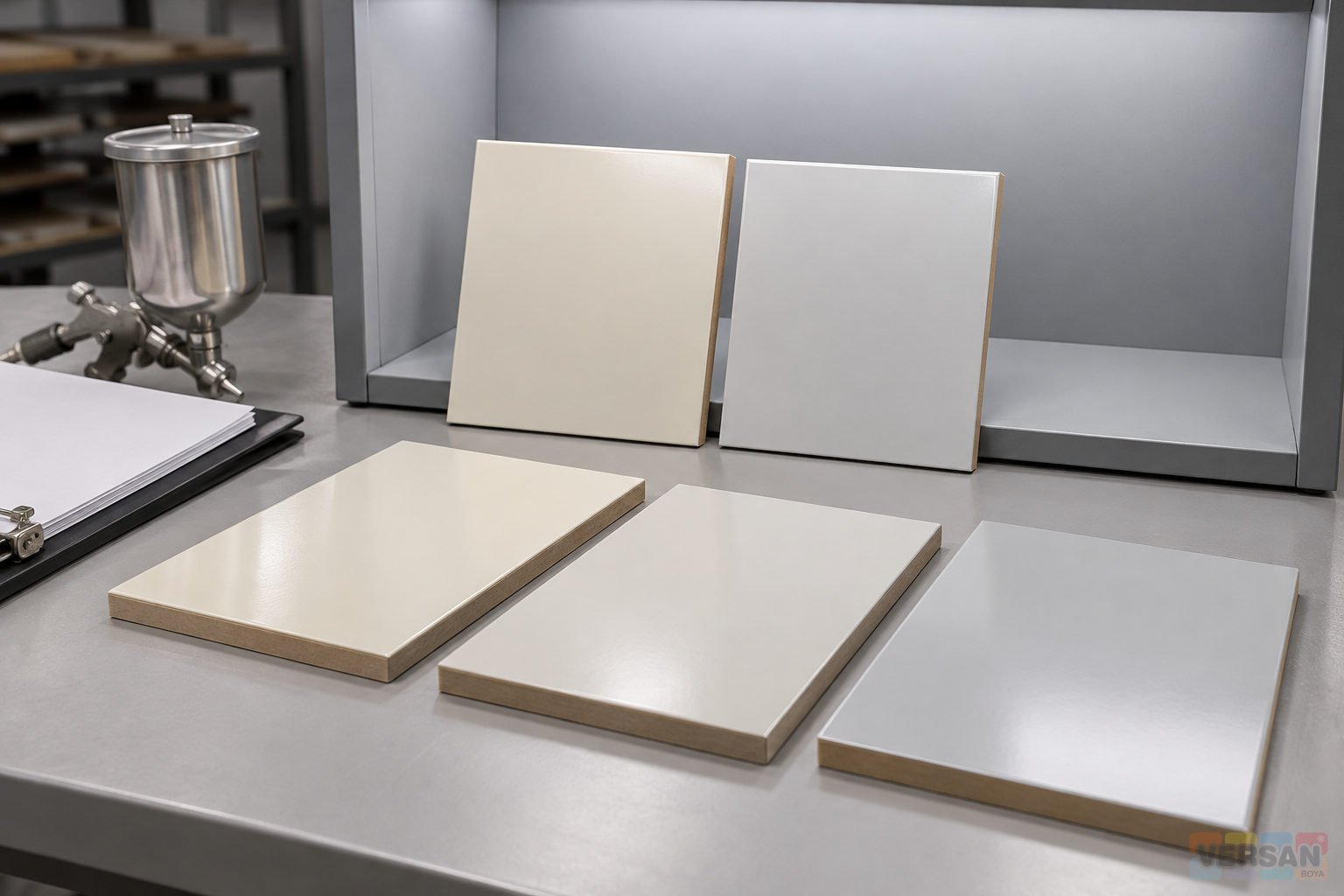
Before releasing production, coat a separate representative trial panel with the cleaned equipment. Record its preparation, material identity, application method and holding conditions. If an adjustment is made, identify the panel produced with that adjustment. Applying different conditions to parts of one panel and then treating the whole panel as a single result makes interpretation difficult. When comparing one variable, keep the other relevant conditions as consistent as practicable so that a successful or unsuccessful change has a meaningful explanation.
The initial wet appearance is not the same as the later dry appearance. Select the assessment time from verified product and inspection requirements. Touch dryness does not mean readiness for packaging or for every final-property assessment. If nitrocellulose varnish will form part of the job, approval should not stop at the appearance before that layer. The sample needs to represent the actual final system, including any layer that changes gloss, depth or the way the colour is seen.
11. Relate the first sample to subsequent trials
In a hypothetical change from dark blue to cream, a first panel that looks cooler than the reference may justify investigation. That observation alone does not diagnose blue carryover. A controlled comparison using the same formula through separately verified suitable equipment may help distinguish material identity from the paint path. If such a trial is appropriate, match its substrate and assessment time. The purpose is to design a meaningful investigation, not to require a second gun for every routine changeover.
If the next panel differs from the first, do not average the observations or select the better-looking result to release production. Investigate the sequence, additions and equipment holding condition. If both panels agree, they still require comparison with the accepted physical reference. Consistency between trials and conformity with the requirement answer different questions. A workshop can repeatedly produce the wrong appearance. Keep repeatability and acceptance separate in the record so that evidence for one is not mistakenly used to approve the other.
12. Complete visual assessment under consistent lighting
Compare the reference and trial in the same plane, at comparable angles and with clean surfaces. Holding one near a window while the other remains in shade can distort the decision. Agree the principal inspection light and any additional lighting conditions needed for the intended use. A phone photograph can support communication, but automatic white balance, screen settings and camera angle prevent it from serving as a definitive colour acceptance method on its own. Preserve the actual reference wherever the job requires physical comparison.
Separate visible contamination, colour, hiding, gloss and texture in the inspection record. This helps distinguish an apparent colour mismatch caused by surface roughness from contamination carried through the equipment. The article on furniture coating approval for colour, texture and gloss develops those appearance checks further. The approver should record the reference used and the conditions of the comparison, rather than leaving only an unexplained statement that the sample looked acceptable.
13. Investigate a deviation before changing the paint
If the trial does not give the required appearance, do not begin with arbitrary pigment or thinner additions. Check product and formula identity, then equipment condition, substrate and assessment timing. A systematic review prevents an incorrect primer or premature inspection from being treated as a formulation failure. Establishing where the difference begins is more useful than repeated adjustments without a record. Keep rejected panels identified during the investigation so that the sequence remains understandable and an earlier result cannot accidentally become the new reference.
Blushing or gloss loss may require a separate investigation from carryover of the previous colour. The guide to blushing and gloss loss in nitrocellulose paint provides different diagnostic questions for those symptoms. For solvent evaporation and surface formation, also consult nitrocellulose thinner and surface quality. Do not change several variables together before the likely cause is understood, because doing so reduces the evidential value of both successful and unsuccessful trials.
14. Prepare the evidence needed for a borderline decision
Decide who will approve an appearance thought to be close to the acceptance boundary. Different decisions from an operator, quality reviewer and order coordinator under different lighting create uncertainty. Present the same reference and inspection arrangement to the people making the decision. When requesting technical assistance, provide the product code, batch, substrate, thinner identity and point at which the difference appeared. A close-up photograph by itself may not explain the process stage or the conditions that produced the observed result.
While approval is outstanding, protect the panel and identify the components on hold. Do not mix an undecided sample into the accepted run. If a revised panel becomes the approved reference, close the status of the previous one rather than leaving two ambiguous standards for the same job. A reasoned final record helps prevent the next order from reopening the same unresolved question. It does not create a new product-performance claim; it establishes which appearance was accepted for this work and under which recorded conditions.
15. Treat production release as a separate decision
When the sample is accepted, connect its approval record, mixture identity and equipment settings to the next production run. Protect the approved panel; do not reuse it for experiments or clean it in a way that changes its surface. Specify checks on the first components, between production intervals and at shift changes. An approved panel is a reference for assessing whether conditions remain controlled. It is not a promise that no material, equipment or environmental change can occur during the rest of the job.
Decide in advance which checks must be repeated when the material batch changes or the equipment is cleaned again. If dust, handling marks or mixed components appear in the holding area, record those issues separately from colour acceptance. When selecting a different coating family from the product range, retain the earlier approval as history rather than extending it automatically. Establish compatibility and appearance for the new system using its own documents and representative trials.
16. Leave a record that supports the next changeover
A useful changeover file contains the product and batch, reference identity, cleaned equipment, observed problems, controlled trials and approval time. When the same colour is ordered again, those details show which conditions should be reproduced. Write observable findings rather than vague impressions. An entry such as a visible trace on a particular component, followed by its documented correction, is more useful to the next shift than a general statement that additional cleaning was needed. The record should support a repeatable decision.
Unexpected residue or an unusually long changeover should feed into equipment maintenance review rather than an informal instruction to use more thinner next time. Recurring appearance problems should likewise inform substrate preparation and formula control. This makes the colour change a planned production stage with reviewable results. The central question is not whether the first component happened to look right, but whether the accepted appearance can be maintained through known materials, controlled equipment and an approval reference that remains identifiable throughout the job.
Technical sources and scope
- Nanomix archived technical catalogue: gloss and matt nitrocellulose paint; coating family and undercoat context, not a substitute for the current technical data sheet.
- Nanomix archived thinner catalogue; distinction between thinning and cleaning roles.
- HSE: spraying solvent-containing products; exposure assessment for gun cleaning.