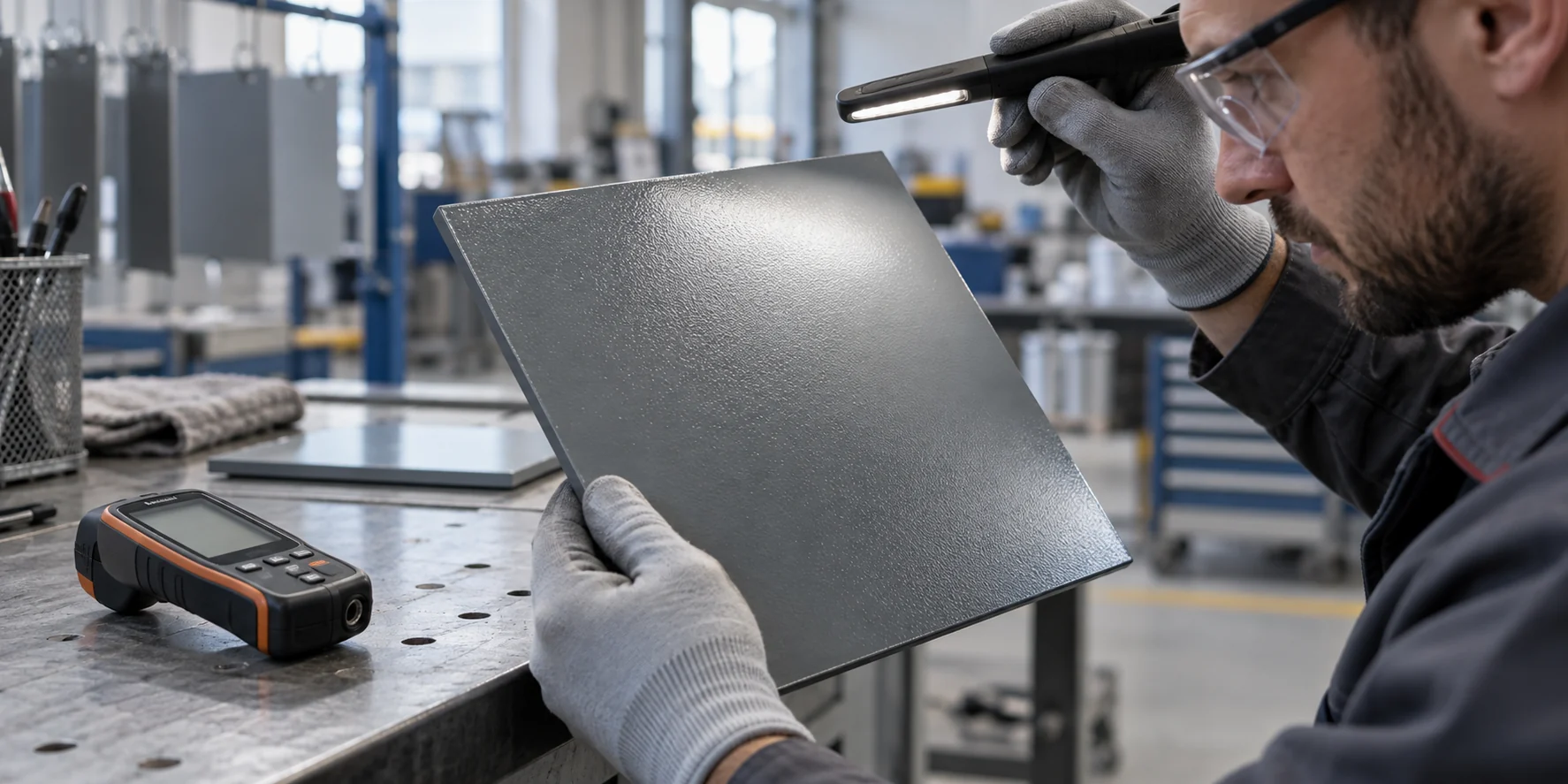
Plan cleaning purpose, solvent compatibility and residue checks for guns, hoses and mixing equipment during changeovers.
Define what cleaning must remove
Colour changes, resin changes and end-of-shift maintenance are different cleaning tasks. A colourless discharge does not establish that the system contains no residue. Consider equipment-manufacturer solvent and maintenance instructions alongside coating guidance.
Keep cleaning solvents separate from paint reduction
A cleaning solvent may not be the coating’s approved reducer. Recovered solvent also has uncertain composition and contamination. Adding it to fresh paint to reduce cost breaks the controlled recipe and undermines traceability.
Use the first component after changeover as a checkpoint
Inspect the first application after cleaning for colour, uniformity and defects. Investigate problems before scaling production. A recorded cleaning procedure reduces variability caused by each operator using a different method.
Technical framework: from substrate to system
Thinner is a process component that influences application behaviour. Selection should not rely on smell, container colour or broad labels such as synthetic or nitrocellulose. Use the exact coating code, application method and manufacturer's approved reducer. A solvent used to clean equipment may be unsuitable for addition to the coating; cleaning and formulation reduction are separate operations.
Increasing dilution simply to improve spray flow can change film build, hiding and surface formation. Viscosity readings cannot be compared without knowing the method, temperature and instrument. For two-component coatings, verify the correct base and hardener and the specified mixing basis first. Thinner cannot correct an unsuitable hardener or restore a mixture that has exceeded its working life.
Start this assessment with the Thinners and Auxiliaries range and refer to the coatings glossary for terminology.
Example project scenario
If the first pale-coloured component after a dark-to-light changeover shows a tint difference, checking the paint container alone is insufficient. Assess residue in the gun, line and mixing equipment. Complete equipment-compatible cleaning, repeat the control panel and record the successful sequence for the next changeover.
Checks before making the decision
- Purpose: distinguish colour changes from resin changes.
- Equipment: verify seal and line compatibility from instructions.
- Separation: keep recovered solvent out of fresh coating mixtures.
- Checkpoint: inspect the first panel before production continues.
Relevant products and system components
These records support comparison and technical discussion. Listing them together does not constitute an approved application system for every condition. Follow the links for packaging, technical scope and product-specific questions.
Nanomix Cleaning Thinner
Cleaning Thinner is a solvent-based auxiliary product for removing oil and dirt from metal surfaces before coating.
Application scope: Removal of oil and dirt from metal surfaces before coating. Suitability for thinning paint must be confirmed separately.
Nanomix Nitrocellulose Thinner
Nitrocellulose Thinner is an auxiliary product developed to adjust the application viscosity of the corresponding coating system in a controlled manner and support professional application quality.
Application scope: Thinning the relevant Nanomix paint, primer or varnish systems; equipment cleaning where expressly specified as suitable.
Nanomix Acrylic Thinner
Acrylic Thinner is an auxiliary product developed to adjust the application viscosity of the corresponding coating system in a controlled manner and support professional application quality.
Application scope: Thinning the relevant Nanomix paint, primer or varnish systems; equipment cleaning where expressly specified as suitable.
Nanomix Epoxy Thinner
Epoxy Thinner is an auxiliary product developed to adjust the application viscosity of the corresponding coating system in a controlled manner and support professional application quality.
Application scope: Thinning the relevant Nanomix paint, primer or varnish systems; equipment cleaning where expressly specified as suitable.
Application, acceptance and maintenance planning
Product labels and safety data sheets are the starting point for solvent management. Define ventilation, ignition-source control, personal protection, spill response and waste collection before work begins. Never transfer solvents into beverage containers; working containers must retain product identity and purpose. Do not combine recovered solvents from different processes into an unidentified general-purpose reducer.
A dry-looking surface does not establish that cleaning is complete. Residues and recontamination can affect the next coating layer. When changing a cleaning or dilution procedure, a small controlled trial with recorded comparisons helps isolate the cause without exposing an entire production batch.
Preparing a technical enquiry and quotation request
Before contacting the technical team, prepare overall and close-up photographs. Identify substrate, any previous product, area or component count, colour and appearance requirements. State the application location, equipment and required completion date. Flag chemical contact, continuous immersion, food-related use or any other condition requiring specific documentation at the beginning of the enquiry.
Request separate identification of primers, finishes and auxiliaries alongside exact product codes. List unresolved technical values as items requiring written confirmation instead of filling them with assumptions. Keeping the approved sample, current technical data sheet and application records together allows purchasing and production to work from the same decision. Packaging information supports ordering, but product-page options do not represent live stock or a guaranteed delivery date.
Send your project details through the quotation request form or discuss unresolved questions with the Versan Boya team.
Frequently asked questions
Can cleaning thinner reduce every paint?
No. The site’s cleaning-thinner record is considered for surface cleaning, not as a universal paint reducer. Any solvent added to paint requires explicit approval for that coating.
Is a clean-looking gun ready for use?
Appearance is only one check. Consider internal passages, residual solvent and equipment maintenance requirements. A controlled first application provides additional verification after a product change.
Sources and technical scope
This article is based on Versan Boya product records, the site's technical descriptions and available archived Nanomix catalogue documents. An archived document does not replace a current technical data sheet. Confirm numerical application values, system compatibility and special-use approvals for the selected product before ordering. The scenario is illustrative and is not presented as a completed customer project or a performance test.
Editorial archive date: 5 June 2026. This new content was prepared and updated on 25 September 2026. Archive ordering does not imply that the article was previously published.
Explore the subject further
- Choosing the Correct Thinner: Epoxy, Polyurethane, Acrylic and Synthetic Systems
- Paint Dilution: Managing Viscosity, Hiding and Film Build Together
- Two-Component Paint Mixing: Distinguishing Hardener from Thinner
- Thinner Inventory Management: Packaging, Traceability and Workshop Control
Related technical publication: Industrial Coating Defects and Quality Control: A Diagnostic Guide for Metal Surfaces.