In a nitrocellulose coating operation, thinner is sometimes treated as a simple way to make material flow more easily. Yet application, wet-film levelling and the appearance of the developing finish are connected. A mixture that sprays comfortably can still produce an unsatisfactory dry surface. Choosing a nitrocellulose thinner therefore requires more than a comparison of dilution convenience or container price. Consider the approved coating combination, application method, actual working conditions and the result on a representative test panel.
This guide provides a framework for relating evaporation behaviour to surface quality. It does not attempt to reconstruct a proprietary solvent blend or recommend workshop formulation of a replacement thinner. Use the thinner specified by the manufacturer for the particular paint, primer or varnish. The recording and comparison steps below help establish whether the correct material is being used under controlled conditions. Current technical instructions and the relevant safety data remain the basis for product-specific application and handling decisions.
1. Ask separate questions about solvency and evaporation
Compatibility with a resin and the way a solvent leaves the film are different properties. Eastman's solvent comparison tool treats resin solubility and evaporation rate as separate areas of evaluation. A fast solvent is not necessarily suitable for every coating. Likewise, reducing the initial viscosity does not establish that the full application process will remain satisfactory. Select within the coating manufacturer's approved system, rather than transferring conclusions from a different resin or from an unrelated workshop operation.
The thinners and auxiliaries range contains different product families because their intended uses differ. It is not a list of interchangeable alternatives. A purchasing request should identify the coating and application method rather than simply ask for thinner. Match the product code, container identity and technical documentation before comparing offers. This prevents a loosely defined benefit such as faster or cheaper from becoming the only justification for an unverified material substitution.
2. Match the thinner to the exact coating document
The accepted Nanomix catalogue archive associates nitrocellulose thinner with the dilution of nitrocellulose topcoats, primers and varnishes. This does not mean that every material uses the same addition level. Establish the selected thinner and method from the current instructions for the specific coating. General wording in an archived catalogue is not a substitute for an application recipe. Record the document date and complete product identification to avoid combining instructions from different versions at the preparation bench.
A mixture record prepared for nitrocellulose varnish should not be copied into a primer job merely by changing its heading. A change in application method also changes the scope of an earlier trial. If the reference was produced by spraying and the new task uses another method, record that distinction. The separate article on choosing the correct paint thinner addresses product-family matching. Here the focus is the next stage: evaluating evaporation-related behaviour and appearance after the appropriate family has been identified.
3. Observe a process rather than a single speed label
Fast and slow are useful conversational descriptions, but neither describes the whole coating process. The solvent blend operates within a particular coating and set of working conditions. Eastman's coatings discussion explains that formulators consider solvent selection, drying profile and appearance together. That principle does not authorise the end user to alter a finished product by adding arbitrary solvents. Neither the composition of a Nanomix thinner nor a suitable adjustment ratio can be inferred from another supplier's general formulation literature.
Separate initial flow, wet-film appearance, later appearance and release for the next operation in the trial record. Do not combine an encouraging early observation with final acceptance. A nitrocellulose primer may have a different subsequent processing requirement from a clear finish. Rapid surface drying does not, by itself, define sanding or stacking readiness for another product. Follow the specific instructions and use workshop observations to establish the conditions under which those instructions were implemented.
4. Describe more than the room temperature
One room-temperature reading may provide an incomplete comparison. Coating material, thinner and components can arrive from different storage areas. An open door, a change in air movement or transfer to another drying area can also change the trial conditions. Record humidity information, ventilation status and meaningful changes near the application area on the same timeline. A number without a measurement location or time does not show which part of the operation it represents.
A result confirmed under morning conditions should not automatically approve substantially different conditions later in the day. BYK's general levelling discussion identifies the relationship between drying conditions, solvent mixture and sensitivity to air movement. Review these variables before deciding that the thinner must be replaced. Do not select quick-drying industrial thinner from another family simply because its name suggests a desired speed. Product compatibility must be established separately, before an assumed drying benefit is considered.
5. Make viscosity checks repeatable
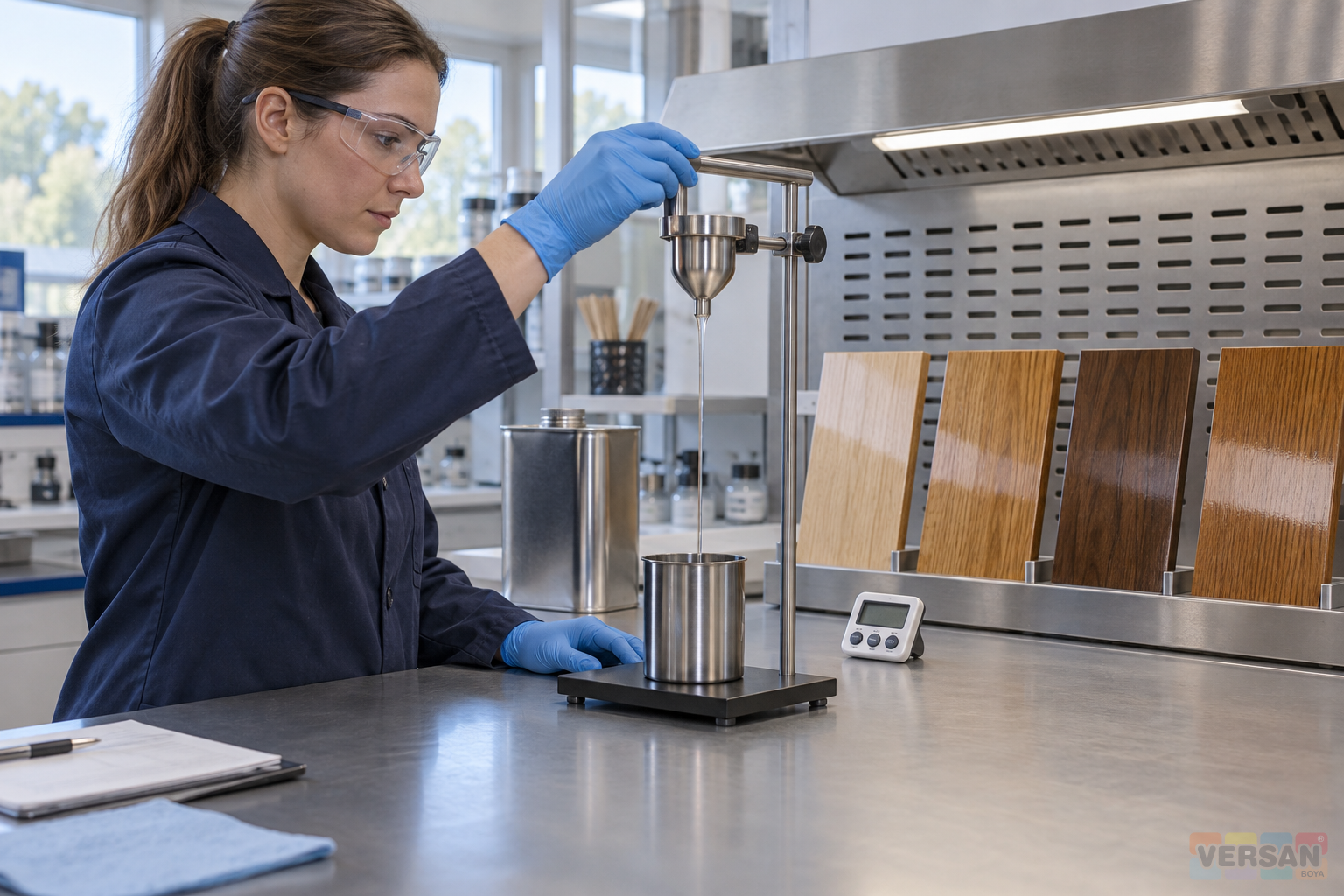
The observation that material looks fluid can mean different things to different operators. Where the product instructions require viscosity control, define the instrument or flow cup, material temperature, preparation method and measurement stage. Times from different cups should not be presented as equivalent measurements. Confirm the equipment's cleanliness and condition. When repeated readings disagree, investigate the measurement setup before making another automatic thinner addition. Otherwise the attempted correction can obscure the original source of variation.
Control additions in recorded steps within the product instructions, rather than relying on memory of how much was poured. However, achieving a target flow value does not make an unsuitable solvent acceptable. Acrylic thinner belongs to another product family and cannot be selected for a nitrocellulose coating solely because the mixture reaches a familiar viscosity. Measurement follows a verified material combination. Record the coating quantity, added-product identity, total addition and measurement time so that a second preparation can be meaningfully compared with the original trial.
6. Keep application settings within the assessment
A textured surface is not automatically a thinner defect. Equipment condition, gun setup, pass sequence, distance and component geometry belong in the trial file. Changing every setting at once makes it difficult to identify which intervention improved the result. Record the original arrangement, then investigate an appropriate individual variable within the technical instructions. Equipment operating limits and safety controls remain applicable during trials. A comparison should be carried out by competent personnel in a suitable working area.
Make the test panel representative of the component's orientation and access. A smooth result on a flat horizontal board does not prove equivalent performance on a vertical edge, narrow profile or internal corner. Results obtained with polyurethane thinner on another line should not be transferred directly to a nitrocellulose operation. Shared experience becomes useful when the product family, equipment and application objective are identified together. State which conditions are the same and which differ before using another job as evidence for the current decision.
7. Separate levelling from readiness for handling
An initially even wet film does not establish that a component is ready to move or stack. Use separate fields for application appearance, assessment time and release for subsequent operations. Touch or one photograph cannot describe the entire film condition. Follow the coating's drying and processing instructions. A production plan based only on spray time can hide the waiting and inspection stages that must occur before components move into the next part of the workflow.
Agree when acceptance will occur so that the applicator and quality team evaluate the same condition. Compare early and later observations through the same panel identity. Adding another material, such as synthetic thinner, to change the drying behaviour may take the mixture outside its approved system and should not be assumed to be a valid solution. When production pressure increases, review the technical decision and work programme together instead of improvising a new mixture at the point of application.
8. Do not assign every surface defect the same cause
Dry-spray texture, orange peel, runs, uneven sheen and whitening should not be compressed into one diagnosis. First describe what is visible: the location, the time at which it appeared and the viewing conditions. Keep photographs together with the process history and visual observations. Whether the issue was noticed during application or later is relevant. Immediately adding another solvent can also remove evidence of the original mixture condition. Preserve the identity of affected material and components before making changes.
The article on whitening and dullness in nitrocellulose coatings considers that particular appearance in more detail. The purpose here is not to explain every defect through evaporation. Contamination, preparation and equipment condition must remain within the investigation. Epoxy thinner is intended for another system and should not be added to a nitrocellulose mixture on the assumption that it might temporarily reduce a visible defect. Establish the correct combination and validate a limited corrective trial before approving a wider change.
9. Design a panel comparison that supports a decision
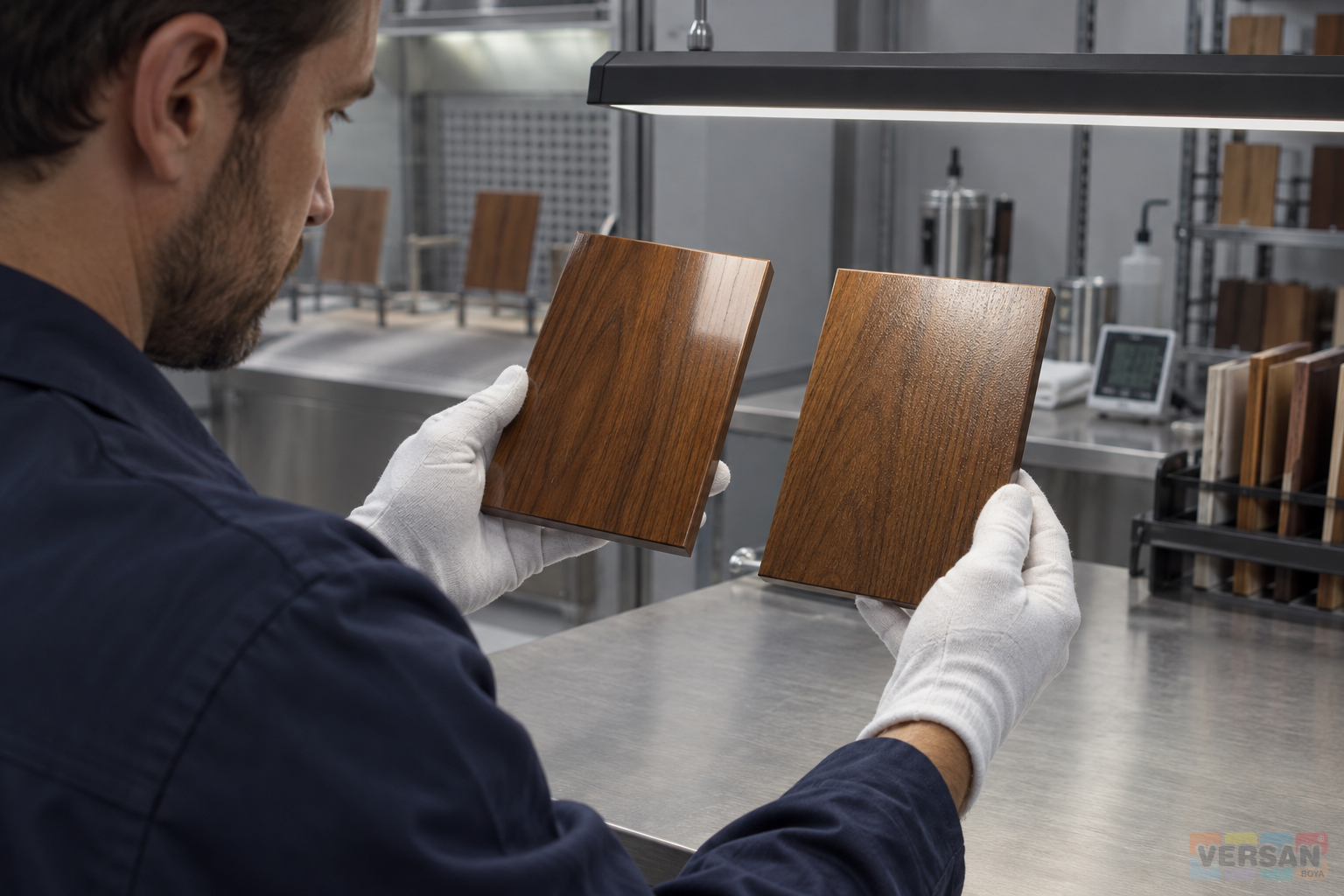
Identify the baseline system, the variable under investigation and the acceptance criterion before preparing panels. Comparable substrate, preparation and application conditions make the results easier to interpret. Give each panel a distinct record number. Samples marked with arbitrary letters but disconnected from process records can lose their meaning within days. Consistent lighting and camera position are useful for photographs, while recognising that an image cannot capture every property of the physical sample.
If a team reports poor levelling with an approved thinner, it can first observe the existing recipe under verified conditions. The next step is a separately identified trial of one adjustment agreed with technical support. When evaluating furniture varnish options, retain the identity of the coating and underlying build represented by each sample. A favourable outcome should not automatically be extended to a whole product family. Separate accepted, rejected and unevaluated points in the report so that unresolved questions are not hidden beneath a general success statement.
10. Review open-container and waiting practices
Preparation time is only part of the mixture history. Material held in an open container for an extended interval should not be treated as identical to freshly prepared material without review. Record the amount prepared, where it was used and how it was protected between operations. Suitable closure, defined containers and retained batch identity reduce unnecessary uncertainty. An unlabelled container cannot be accepted as the correct thinner simply because the liquid appears clear.
Adding a new batch to unidentified leftovers or combining thinners remaining from unrelated jobs destroys traceability. Materials including stoving thinner should retain their own identification and intended use. Storage, ventilation, personal protection and ignition-source controls must follow the relevant safety data and the workplace's approved procedures. This article does not provide exposure limits or equipment-selection criteria. Operational records should make those responsibilities visible alongside the coating-quality requirements, rather than treating handling arrangements as unrelated background details.
11. Distinguish cleaning solvent from application thinner
A solvent's ability to remove residue from a spray gun does not establish its suitability as a coating thinner. Cleaning effectiveness and application compatibility require different decisions. Check which material was used for the last equipment clean and how the equipment was prepared for the next job. Residual liquid or material from a previous product family can compromise a new comparison. If a problem recurs, include equipment history rather than inspecting only the main thinner container.
Evaluate cleaning thinner for its defined purpose. If the container arrangement allows it to be confused with application thinner, correct that arrangement before repeating the coating trial. The guide to coating-equipment cleaning and solvent residues examines this transition more closely. Verify that suitable clean equipment is a genuinely equivalent starting condition in both trials. Otherwise a difference attributed to the selected thinner may actually be connected with the preceding cleaning operation.
12. Link purchasing to traceable application results
Price per litre does not explain the whole production cost. Reworking, waiting, rejected parts and unmeasured additions need separate investigation. Compare equivalent scopes before describing one option as more economical. One attractive sample is not enough to calculate an overall saving percentage. Purchasing evaluation should include approved use, document continuity, container identification and access to technical information, together with the actual application record. Claims about productivity should remain within the evidence available from the comparison.
Use the product range to identify the coating and supporting materials together. Decide in advance which checks are repeated when a supplier proposal, container format or product identification changes. The person checking a delivery label and the person approving an application recipe have different responsibilities. Recording material receipt, trial acceptance and release for series use as separate decisions prevents one signature from implying unspecified technical approval. It also makes information easier to locate when a discrepancy is raised after production.
13. Create a short record that remains useful across shifts
Include coating and thinner identity, document revision, prepared quantity, addition history, measurement method, environmental observations, equipment condition and panel number. Describe the observed surface difference instead of writing only good or bad. Identify the decision maker and the operation released. Approval of one panel's appearance does not automatically release every component for packaging. An unresolved question should be handed over through the record rather than left to an informal conversation between operators.
For example, if the same recipe produces a smoother surface in the morning and a more textured one later, compare the two records directly. Review material temperature, open-container time, equipment settings and changed air movement in sequence. Leave unknown fields explicitly unknown rather than filling them with assumptions. A technical-support discussion based on that distinction can define a more focused next trial. The objective is a compatible coating system that repeatedly achieves the agreed finish under documented conditions, not simply the fastest-evaporating liquid available.
The record should also show when a decision stops applying. A panel approved for one substrate, application method and product combination has a defined scope. If a later order introduces a different profile or preparation sequence, retain the earlier evidence but identify the new question. This avoids discarding useful experience while preventing an old approval from silently becoming universal. Assign responsibility for the next check and keep the affected work separate until that check is complete.
14. Technical sources and assessment scope
- Accepted Nanomix catalogue archive: thinner families. Current product-specific application instructions remain controlling.
- Eastman solvent and resin comparison tool.
- Eastman: coating solvent properties and evaporation profile. General formulation context, not a Nanomix composition or recipe.
- BYK: levelling and air-draft sensitivity.