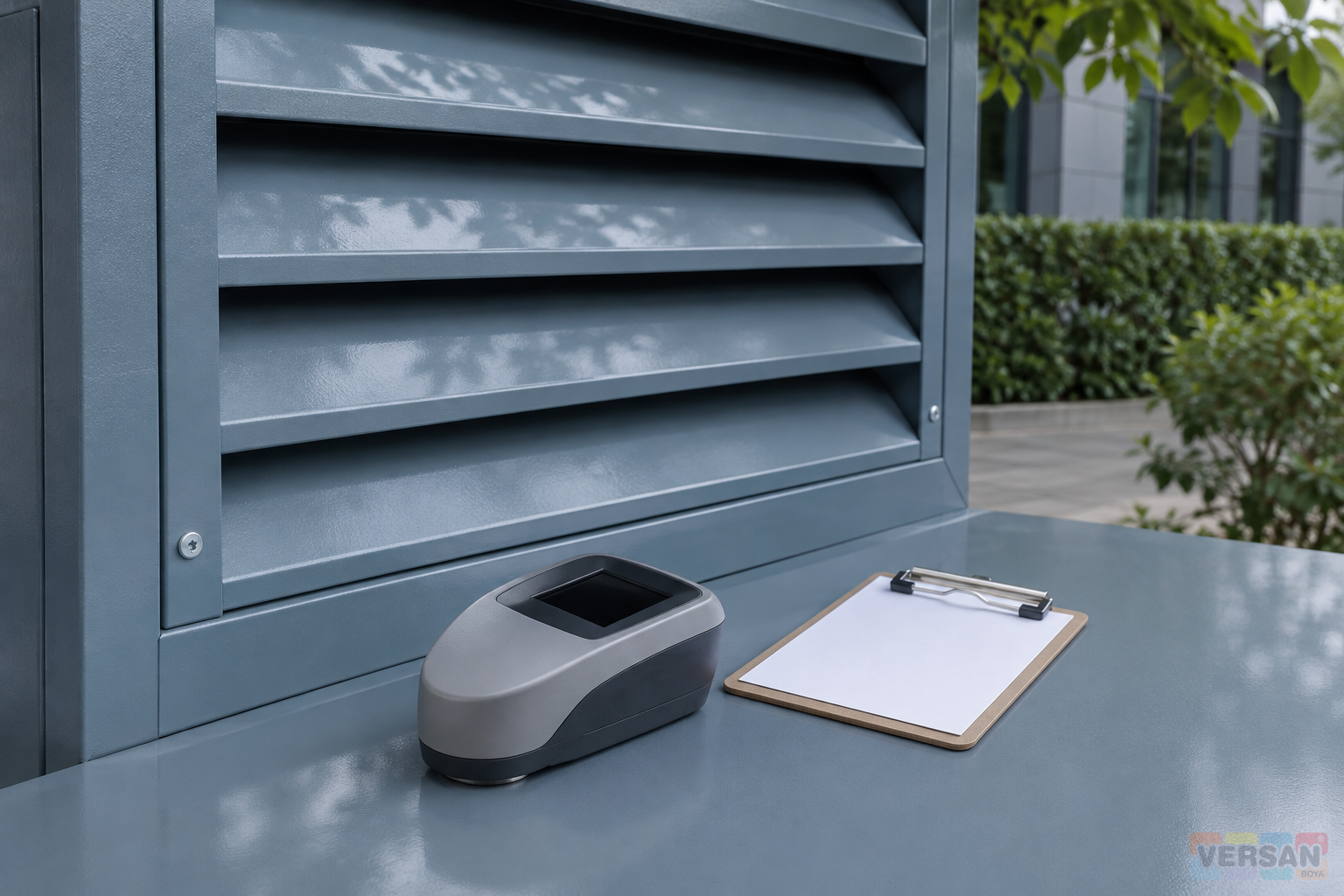
Move from sample approval to in-service observation
Before discussing the appearance of an outdoor painted surface, define the question being asked. Approval of an original production sample is different from a record of the same component after a period in service. An operator may notice that a surface looks less glossy, or that one panel appears different from its neighbour. A telephone photograph can start that discussion, but it cannot by itself establish when a change began, which locations it affects or how the surface looks after appropriate cleaning. A useful monitoring file connects those questions to repeatable locations and clearly described observations.
A record referring to gloss polyurethane topcoat is not evidence of an approved outdoor application or a guarantee of unchanged appearance. The accepted Nanomix archives describe these polyurethane families in a furniture-coating context; they do not establish suitability for every exterior metal component. This article addresses monitoring of an existing surface whose actual system must be identified. It supplies no universal colour or gloss acceptance threshold. For the earlier production stage, see colour and gloss consistency from sample to production. The present task is to preserve a useful in-service appearance history, rather than to approve a new application by product name.
Identify the actual surface and its coating history
An operating record that says only polyurethane paint may leave important uncertainty. Where available, collect the actual product identity, component location, known layer history, application date and batch information. Do not fill gaps with a visual guess. A panel renewed during an earlier maintenance visit does not have the same history as an untouched neighbouring panel. A purchasing record for a colour also does not prove that every visible component received that material. Connect the paperwork to the actual part before using it as the basis of a long-term comparison.
Different families within the industrial coatings range may be present in the same facility. Appearance alone does not identify resin chemistry or the complete layer arrangement. If earlier information cannot be found, state that limitation and let the subsequent technical discussion start from the evidence available. Historical catalogue extracts can identify product families, but they are not a source for an invented outdoor service life or universal maintenance procedure. When requesting current information, specify the component and the existing record concerned. That makes it possible to distinguish an enquiry about a documented coating from an investigation into an unknown one.
Keep different exposure locations distinguishable
Use locations that can be found again instead of selecting a different convenient spot at every visit. A facade zone, panel row, door leaf or railing section can provide a practical address. Distinguish sun-facing and shaded locations, horizontal and vertical components, sheltered recesses and more exposed edges in the record. This classification does not establish the cause of any difference. It prevents unlike service histories from being combined under a single vague label such as outside paint. A reviewer should be able to understand where each observation belongs without having attended the first survey.
Connect a wider location photograph to its close view. Agree a suitable way to identify the point without unauthorised scratching or marking of the coating. A location code on an existing layout may be sufficient. If a panel is replaced, open a record for the replacement instead of pretending that measurements continue on the original component. This discipline is particularly useful when personnel change. The new observer should be able to locate the same area from the file, without depending on a predecessor's memory or an informal description that means different things to different teams.
Treat colour and gloss as separate observations
A lighter-looking surface does not automatically establish a pigment change. Datacolor's technical explanation distinguishes colour from gloss and notes that measurement geometry can affect the evaluation. Keep a visual colour observation, an impression of gloss and any instrument result in separate fields. A gloss reading should not be entered as a colour measurement. Similarly, a tonal difference between two photographs is not an instrumentally measured colour difference. The file needs to identify what kind of evidence each statement represents, so later readers do not attach more precision to it than it actually has.
A surface identified as matt polyurethane topcoat should not simply inherit the starting appearance of a different glossy surface. The objective is comparison against an appropriate reference, not bringing every component to one finish level. If instruments will be used, identify the competent person responsible for choosing the applicable method and settings. This article does not choose a measurement geometry or acceptance tolerance. A clear statement of the operating question allows the technical reviewer to consider an approach appropriate to the actual surface, available instrument and required decision.
Preserve the observation made before cleaning
An initial photograph may document the surface as it is encountered during operation. If cleaning is being considered, preserve that initial condition before deciding whether an approved maintenance procedure should be used. Q-Lab's guidance on outdoor exposure testing explains that surface contamination can affect appearance measurements. Here that is a reason to record cleaning status explicitly. It is not a transfer of a laboratory specimen-cleaning procedure to an unknown installed coating. Physically cleaning a surface and digitally cleaning an image are different activities, and only the former belongs in a description of surface preparation.
A photograph or reading taken after cleaning must not overwrite the first record. Identify the treated area, approved method, responsible team and actual date. Extensive cleaning before documentation can remove information about the first reported condition. Conversely, a reading from a dirty surface should not be presented as the permanent characteristic of the clean coating. Keeping the two states distinguishable makes a technical assessment easier to understand. If a suitable maintenance method is unknown, do not invent a chemical wipe, abrasive treatment or polishing operation merely to prepare a monitoring result.
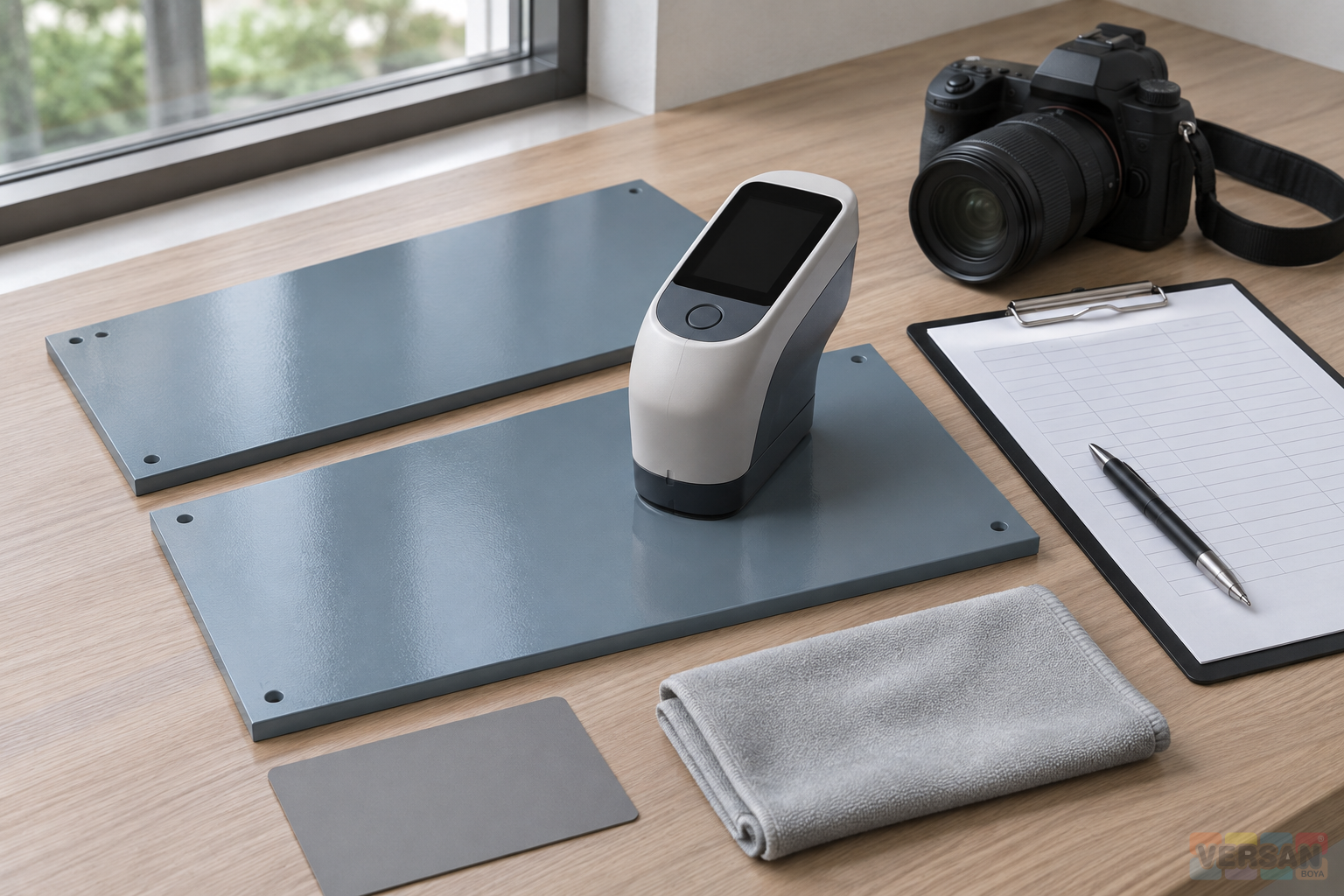
Request maintenance information for the existing coating
A product previously used to clean unrelated equipment is not automatically suitable for a painted surface. In particular, the existence of polyurethane thinner in an application process does not authorise wiping an exterior component with it during service. Connect any cleaning decision to the actual coating, the observed contamination and valid maintenance information. This article supplies no solvent spot-test, polishing or stain-removal recipe. An unapproved cleaning intervention could change the appearance that the monitoring activity is meant to document, leaving the next comparison less informative rather than more reliable.
Where an applicable maintenance instruction exists, record the surface to which it applies as well as its document identity. The team performing the work should have the instruction, and the material actually used should match the record. Catalogue information for the thinners and auxiliaries range does not replace maintenance approval. Have the method owner define appropriate conditions for a subsequent observation. Do not choose an undocumented waiting period or preparation condition just to populate a table. This keeps the information-gathering exercise from quietly becoming a new surface treatment or an unauthorised repair activity.
Use photographs for context rather than numerical colour claims
Photographs are useful for showing the location and distribution of an observed change. Different cameras, automatic exposure and changing light can nevertheless make visual comparison difficult. Record the camera identity where practical, the viewing direction, location and relevant lighting condition. Note reflections or shadows that conceal part of the surface. A retouched promotional photograph is not a technical baseline. Preserve the original file, and if a cropped copy is made for a report, retain the connection between that copy and its source. A reader should know whether the image is an original observation or a presentation derivative.
For a broad surface identified with semi-matt polyurethane topcoat, return to the same area rather than selecting a different reflection at each visit. This is a practical editorial recordkeeping proposal, not a photographic calibration standard. A grey card or other reference object in the scene does not by itself turn the photograph into a validated colour measurement. If instrumental comparison is needed, assess its method and limitations separately. Photography remains valuable when its purpose is honest: it helps locate and describe the observation without claiming a numerical precision that has not been demonstrated.
Keep the measurement method with the result
A number on a screen does not explain the full meaning of a result. Record the instrument, surface point and applicable settings or method. Instrument identity, a reference to relevant verification or calibration records, measurement direction and observations affecting the result can be retained together. If part of the method is unknown, disclose that limitation. Data from another team's instrument should not be combined with an earlier series as though the methods were necessarily identical. First ask whether the comparison is technically meaningful for the question being investigated, rather than assuming that all numerical records are interchangeable.
Appearance monitoring can improve understanding of the existing condition before a new material is selected from the product range. If a colour-difference calculation or gloss comparison is required, the appropriate reference and method belong with the authorised technical reviewer. Writing an arbitrary limit in a spreadsheet does not make the exercise more professional. Where an acceptance criterion exists, state its source and applicability. Where it does not, preserve the observations without calling them a pass or fail. The relationship between the data collected and the decision eventually taken should remain visible to the next person using the file.
Start a new series when the reference changes
The oldest photograph in a folder is not automatically an appropriate baseline. Its location, coating identity and surface condition must be understood. If a separate reference panel is retained, distinguish its storage history from the service exposure of the installed component. A colour card need not represent the same appearance or history as an applied film. Explain whether the comparison is intended to follow the original handover condition, a post-maintenance change or differences between two locations. Those purposes can use some of the same records while asking different questions of them.
After a panel is repainted, continuing the old series without a clear break may be misleading. Identify the intervention, new starting record and relationship to the earlier history. The old series can remain useful, but joining records from different coating histories requires an explanation. If no original handover image exists, a later actual observation may become the starting reference. It must not be described as evidence of an earlier condition that nobody recorded. Stating that uncertainty strengthens the file by defining how far a subsequent interpretation can reasonably reach.
Put maintenance and neighbouring work on the timeline
Keeping appearance data completely separate from operating events may make a reported change harder to assess. Where known, record cleaning changes, nearby construction, component replacement or local maintenance dates. These entries are context, not automatic causes. Two events occurring near the same time do not prove that one caused the other. If a different appearance was first noticed after a change in cleaning arrangements, describe the sequence as reported. Do not turn that sequence into a confirmed explanation of coating behaviour without appropriate assessment. The file should preserve the distinction between correlation, observation and technical conclusion.
If the documented layer history includes polyurethane primer, retain the supporting reference even though the layer is not currently visible. That can be relevant background for a later review. It does not permit diagnosis of the primer from a surface appearance photograph. Keep investigation separate from a recommendation for new paint. This helps avoid a premature conclusion that the whole system must be replaced merely because one area looks different. Any subsequent proposal should explain its own basis, required evidence and scope rather than borrowing authority from the existence of a monitoring record.
Separate appearance from protective performance
A change in colour or gloss does not by itself establish the loss of every protective function. The opposite is also true: a similar appearance does not verify every required function. Give appearance monitoring and any specific performance investigation different headings. If separation, significant physical damage or another concern is observed, do not hide it in a footnote to a colour table. Locate and describe it separately and open the appropriate technical question. This article does not diagnose such conditions or prescribe a repair. It establishes a route for the observation to reach the person authorised to assess it.
The presence of epoxy primer in an earlier record is not an explanation for a new appearance observation by itself. Actual material identity, application history and the assessment scope remain relevant. If corrective work is later considered, the separate article on touch-up and recoating decisions for polyurethane-coated metal addresses that later decision stage. The monitoring file does not grant repair authority; it provides a better starting point for any required evaluation. Keeping these stages distinct prevents a routine observation activity from becoming an unplanned application job.
Show missing data and changes in the method
If a point cannot be accessed, do not fill its empty cell with normal or acceptable. Record that the observation was not made, why access was unavailable and what will happen next. An estimate must not replace an actual missing measurement without being identified as such. Results from different dates can be presented together, but changes in method, surface condition or instrument need a visible note. An average alone may conceal a local difference. Provide enough detail for the reviewer to understand which location needs another visit and which conclusion the available evidence can support.
The article on industrial coating nonconformity records using photographs, location and batch information complements this approach. Not every appearance observation is automatically a nonconformity. If that term is used, identify the requirement being compared and the evidence of a departure. An operator may also collect data simply to understand a maintenance trend. Do not label that exercise a contractual acceptance test unless its purpose and method actually justify the description. A clear report title helps prevent the same set of observations from being reused later for a materially different decision.
Take a defined question to the technical discussion
Instead of reporting only that the surface has become dull, prepare the location reference, dated photographs, known coating identity, cleaning status and any instrument results with their method information. Exclude irrelevant operating documents and unnecessary personal information. State the question: is the request for assessment of present appearance, clarification of a maintenance procedure or investigation of a future application? These are different purposes and may require different technical responses. A large collection of attachments cannot compensate for an unclear enquiry. The intended decision should be understandable before the reviewer opens the supporting files.
If an earlier application record identifies polyurethane hardener, retain that information for identity and traceability. It does not provide an instruction for treating the existing surface. A component name is neither a maintenance chemical approval nor a complete use procedure. Purchasing may separately request new product options, but the actual observations in the monitoring file should remain available when a quotation is prepared. Maintenance, technical investigation and supply can discuss the same surface while retaining their different responsibilities. A replacement order should not erase the evidence explaining why the enquiry began.
Plan observations around purpose and access
This article cannot establish one inspection interval for every outdoor component. Plan around the operating objective, access conditions, known maintenance arrangements and applicable technical requirements. When a future comparison is scheduled, identify who will provide access, update the file and evaluate the next technical question. If the visit is postponed, record the actual later date. Do not complete an old form as though the observation occurred on the planned day. Reliability comes from documenting what happened and when, rather than from writing an ambitious interval that the site cannot actually maintain.
A route can also be defined for unexpected reports between planned visits. Identify the reported component, the first image date and the person responsible for connecting the report to the established record. Keep an incoming report separate from a verified technical conclusion. If the observer can find the earlier series, they can assess the new question without reconstructing the whole history. Monitoring then becomes more than a folder of occasional photographs. It becomes continuing maintenance information whose limits are understood and whose evidence can be used to prepare a specific, authorised next step.
End the file with the decision still required
A useful report is not defined by the number of photographs or readings it contains. It states the area examined, evidence used, limits of the comparison and question still open. If the result remains an observation, preserve that status. If technical review is pending, identify the owner and missing information. When maintenance or further application is authorised, connect that decision to the earlier evidence. A file closed with low gloss recorded does not tell the next team which operation it may perform. The scope of the decision matters as much as the data collected.
The practical sequence is to find the right component, establish its known identity, distinguish cleaning states, preserve photographs and measurements within their proper limits, connect them to the earlier series and assign the next decision to its responsible person. Do not use appearance data to invent a service life, warranty outcome or repair requirement. A technical conversation supported by actual conditions and recorded questions creates a more useful basis for maintenance and purchasing than simply ordering the same colour again. That is the value of a traceable in-service appearance record.