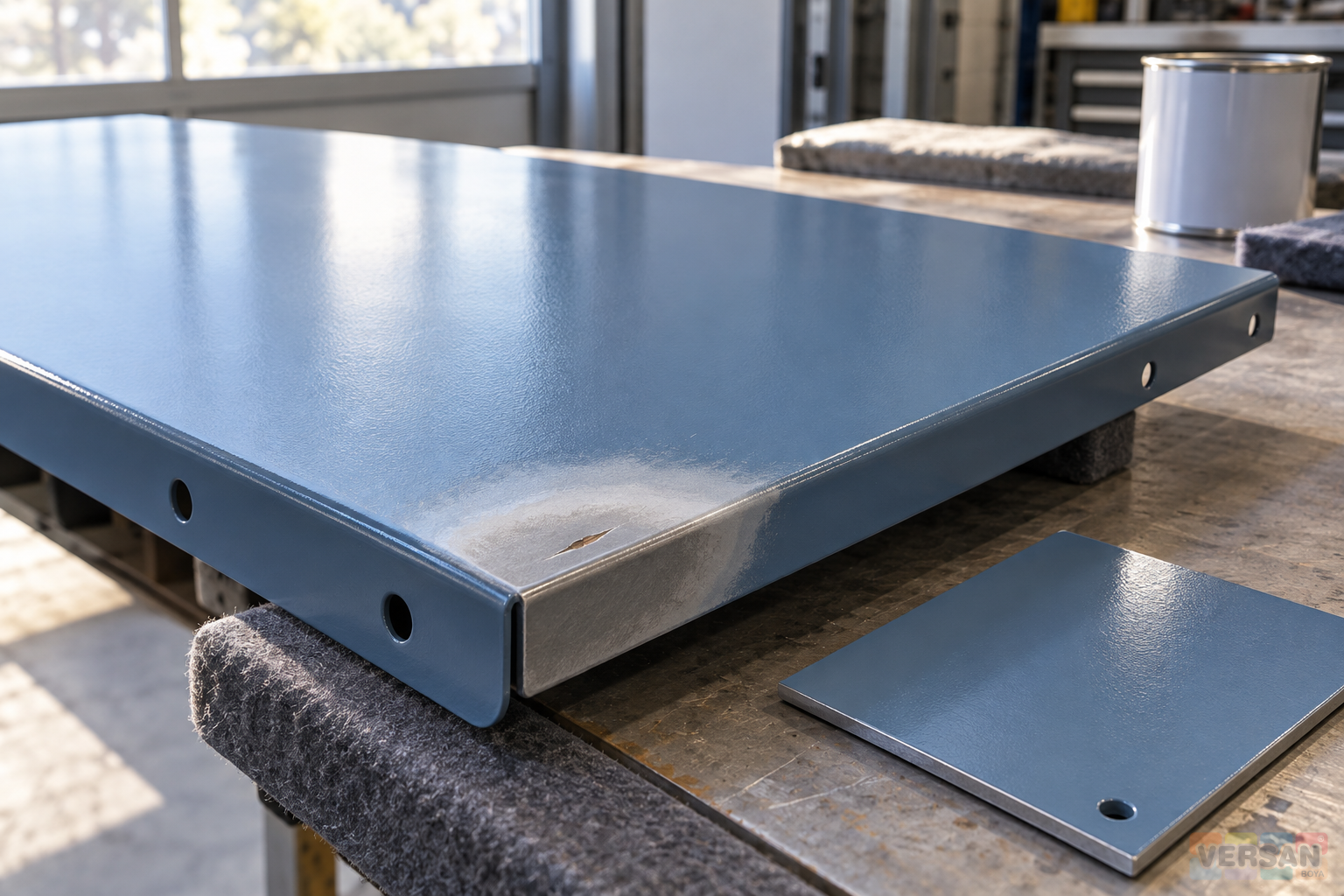
Define the purpose and limits of the touch-up
A small scratch in polyurethane-coated metal is not necessarily only a colour repair. It may expose protective layers, while another maintenance request may concern a sound coating whose appearance no longer meets expectations. Distinguish these needs before choosing between a local touch-up and repainting a complete panel. The work instruction should identify the surface to be retained, the area to be prepared and how the outcome will be assessed. Calling the new material polyurethane does not automatically establish compatibility with the existing layers. This guide concerns maintenance decisions for coated metal in atmospheric service. Special chemical exposure, continuous immersion and structural damage require their own relevant technical assessment.
Before discussing a polyurethane gloss topcoat, establish the customer's practical expectation. Is a small local difference acceptable, must the whole panel look consistent, or must it match the remaining equipment? These expectations can lead to different work scopes and costs. Record protective-system continuity separately from appearance acceptance so that a new requirement does not emerge only on the delivery day. Do not promise an invisible repair or exact matching from a colour code alone. The age, cleanliness and present appearance of the existing surface need to be understood before a reliable maintenance proposal can be prepared.
Describe the old coating by its exact identity
The initial file should identify the component, metal type, known coating sequence and available product codes. Earlier repair records, delivery documents and container information may help complete it. Describing the surface as polyurethane does not identify the primer below it or every subsequent touch-up. A later intervention may have introduced another layer over the original system. If records are missing, mark the identity as unknown rather than deciding the coating family from appearance or recollections of its smell. Two panels on the same machine may have been painted at different times. Retain their separate histories so that the limits of a successful trial on one panel remain clear.
The product range provides current options, but finding a similar name in a catalogue does not identify the coating already on the equipment. A technical enquiry should include the existing manufacturer's exact product code together with the proposed new system. Document revision matters as well: an older sheet with the same title may not represent the current product version. If purchasing changes a material, the trial and application teams need that information too. Compatibility approval should refer to a defined old surface and a defined new system. Anyone receiving the file on another shift should be able to distinguish verified information from questions still awaiting confirmation.
Separate retained sound coating from the damaged area
Inspection should extend beyond the visible scratch. Record nearby blistering, cracking, loose film or repeated separation, and consider an edge defect in relation to the component geometry and use history. Where corrosion is visible, assess the metal condition as well; a paint touch-up does not replace an engineering decision about the component. The technical supervisor should determine the inspection methods and permitted extent of intervention. Identify any openings created during the inspection by location and photograph. Keep them separate from the original damage record. This makes it easier to explain why a scope subsequently changed and prevents new test marks from being mistaken for a larger original failure.
A polyurethane primer and a topcoat should not be treated as interchangeable simply because they share a resin-family description. If the old primer will remain, confirm its relationship with the proposed maintenance system. Bare metal at the centre of a repair and the overlap zone on sound finish may require different preparation. Agree when a local intervention must be reconsidered as wider renewal. This avoids retaining weak film just to stay inside an initial boundary, while also preventing an unauthorised extension across the whole component. The person observing unexpected separation should know which decision is required before continuing and who can provide it.
Verify overcoatability using the relevant documents
A sound old surface is not approval for every new coating. Confirm whether the proposed materials can be used over the retained layers, what preparation is needed and which recoating conditions apply. Jotun's Hardtop XP application guide directs users to check the relevant products' overcoatability and maximum overcoating interval. The transferable lesson is to verify the documents; its product-specific ratios and times do not become instructions for another polyurethane. Nor does an aged surface necessarily remain within the conditions that applied when the original coating was fresh. The present maintenance decision must address the actual age and condition of the retained system.
Versan Boya's official catalogue archive distinguishes polyurethane gloss and matt products, while the application descriptions also refer to furniture substrates. It would therefore be inappropriate to lift a number from that page and present it as a confirmed metal-maintenance recipe. Obtain current instructions applicable to the work. Selecting a polyurethane matt topcoat changes the intended appearance but does not, by itself, resolve compatibility with an old glossy coating. Product identity, finish type, retained coating and preparation method belong in the same assessment. A note saying suitable is incomplete unless it states what combination and conditions have actually been accepted.
Manage cleaning and abrasion as separate operations
Abrading a contaminated surface does not demonstrate that cleaning is complete. First identify the contamination and an appropriate removal method, then follow the approved preparation sequence. Oil, dust, process residue and a weathered surface layer may need different consideration. Also plan how the prepared component will be protected from becoming contaminated again. If it must wait in another workshop, define the handover conditions and any reinspection required. Records of the cleaning material, rinsing where applicable and confirmation of the resulting surface condition are more useful than a final photograph alone. The sequence should remain understandable even when preparation and application are performed by different teams.
Polyurethane thinner should not be assumed to be a general-purpose degreaser for every surface. The cited Jotun guide warns against using paint thinner for general degreasing because dissolved contamination may be spread. Select a cleaning method for the actual contaminant, substrate and product instructions. Record the exact material rather than choosing randomly from the thinners and auxiliaries range. Keep application thinning and preparation of an old surface as separate entries in the work record. This helps the team see which instruction governs each operation and avoids a familiar container being used for a purpose that has not been technically confirmed.
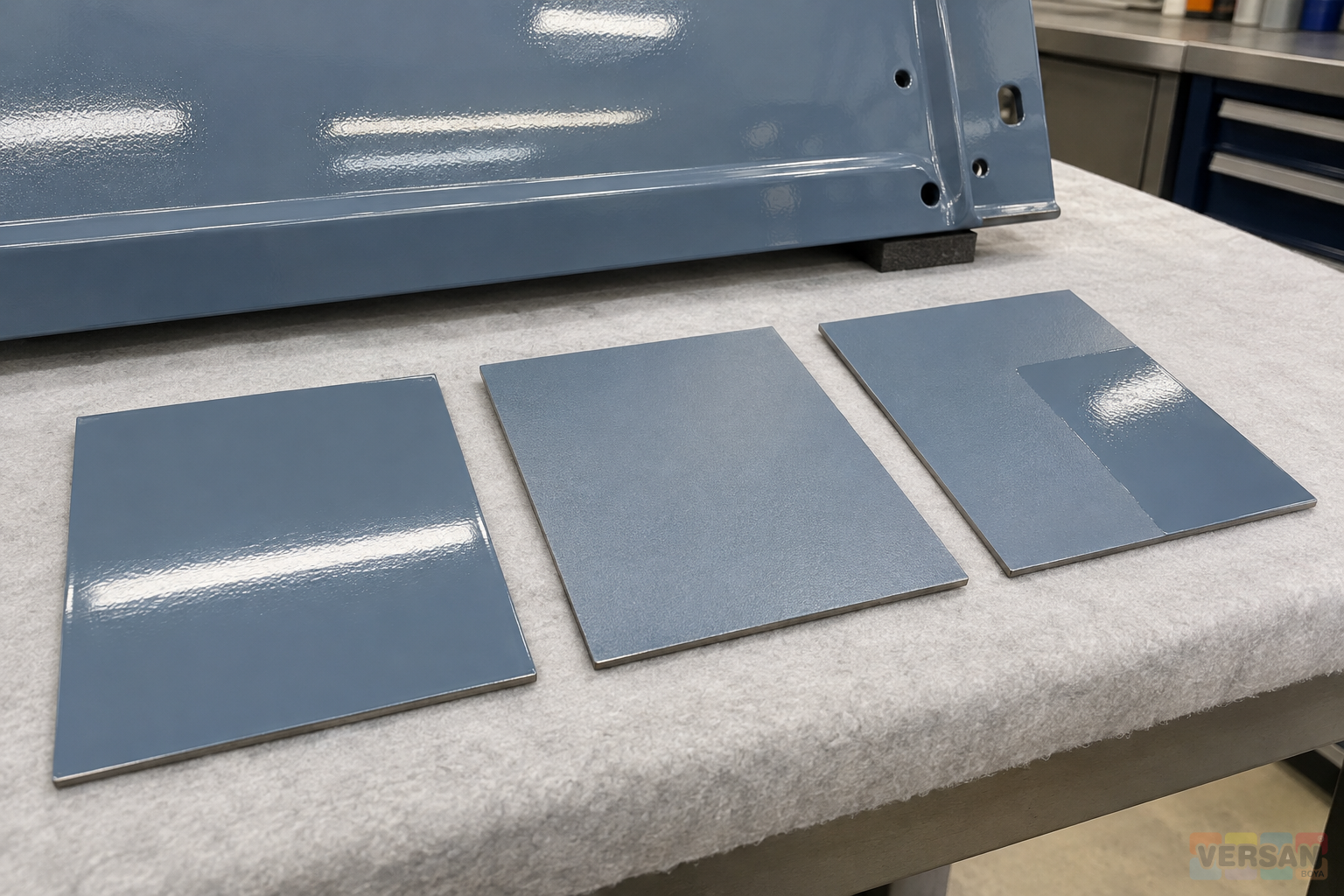
Plan the repair edge and overlap zone
A sharp step between the damaged area and retained film can complicate a continuous repair. Hempel's maintenance and repair preparation guideline describes feathering the boundary and preparing the surrounding overlap. Specify the details for the selected system rather than prescribing one abrasive grade, overlap width or preparation standard for all jobs. A simple sketch can distinguish exposed metal, retained sound coating and the surrounding area to protect. Include labels, seals, connections and machined surfaces that require masking. The sketch should be clear enough for another applicator to understand the intended limits without relying on the memory of the person who first inspected the component.
If an epoxy primer is considered for exposed metal, that does not approve applying it indiscriminately over all old polyurethane. Confirm which surface the primer will contact and how it is paired with the finish. A product with a different stated role, such as an epoxy shop primer, should not become a maintenance primer merely because it is available in the workshop. Inspect the prepared boundary and cleanliness before the next layer covers the evidence. If work transfers to another shift, hand over completed and outstanding areas using the same repair reference and the current approved materials list.
Make the compatibility trial representative
A small trial is useful only when its purpose is clear. Is it examining behaviour over retained coating, the adequacy of preparation or the appearance of the proposed finish? These are different questions. Choose an area that represents the component's real history and condition. A smooth finish achieved on a separate new steel plate does not, on its own, establish compatibility with an aged coating. The technical supervisor may require more than one trial area. Identify the materials, preparation, layer sequence and application conditions for each. Agree the assessment method and timing before seeing the result, so that an attractive early appearance is not later redefined as proof of every required property.
If wrinkling, lifting, softening or another unexpected change appears, do not simply cover it and continue. Record the finding, location and time, then obtain a technical assessment of its significance. Changing to an epoxy topcoat or another coating family is a new system decision, not an automatic continuation of the same trial. Explain what question the change is intended to address. A promising first result should not be presented as an unconditional guarantee for every service condition. Retain the trial's scope and limitations in the acceptance record, including any parts of the component or exposure history it could not represent.
Separate colour and gloss acceptance from compatibility
The same colour code does not guarantee an invisible junction between a new repair and an older surface. Ageing, texture, preparation boundaries and viewing conditions may all affect the appearance discussion. Agree the light, viewing direction and normal service distance used for comparison. Phone photographs are useful records, but different screens should not be assumed to display the same colour. If the customer will assess an entire panel, prepare the trial and reference accordingly. Acceptance of intercoat compatibility does not automatically approve the appearance. The people making each decision should know whether they are assessing a technical requirement, a visual expectation or both under separately stated criteria.
The polyurethane colour and gloss consistency guide helps organise physical references and comparison conditions. However, a sample prepared for new production does not automatically represent a touch-up on aged equipment. If the local transition cannot meet the agreed appearance, assess repainting a complete panel with its technical and commercial implications. This is a way of aligning the achievable method with the expectation, rather than concealing an unsuccessful patch. Do not expand approval of appearance into approval of layer build-up, service readiness or packaging time. State what each acceptance covers and preserve the reference against which it was granted.
Connect material control with the maintenance scope
Even a small touch-up requires the correct components, preparation according to current instructions and a method capable of measuring the intended quantity. Reducing a large-container ratio by eye is not a documented mixing procedure. Consider opened-container condition, storage history and component identity. A change of coating or auxiliary during the work requires technical review and a clear record. The operator, maintenance team and supplier should use the same current materials list. Where different faces of a component carry different systems, a single product entry may not describe the entire job. A useful plan shows which material applies to which surface and which decision approved that combination.
Anticorrosive paint and industrial rapid paint may already be held in the maintenance store; availability is not proof that either belongs in the polyurethane repair system. Evaluate alternatives by their exact identity and any further trial they require. The guide to matching thinner with the coating system supports control of auxiliary materials. An undocumented addition made to accelerate the job creates another variable that may be difficult to investigate later. The maintenance instruction should therefore explain when to stop and request technical support as clearly as it explains how work is expected to proceed.
Leave a usable record for the next maintenance decision
At completion, retain the initial damage record, old layers preserved, new materials applied, preparation sequence and acceptance results under the same component identity. Technical approval, appearance acceptance and release for service may belong to different responsible people. Touch dryness alone is not a complete decision about packaging or use. Determine the appropriate timing from current system instructions and the actual application conditions. Keep outstanding matters visible in the handover form. A closed work order should not lead the next team to assume that every uncertainty was resolved. The record should show what was confirmed and whether any condition still needs observation after the component returns to use.
A useful enquiry about industrial coating systems includes component photographs, metal type, existing product codes, maintenance history and the desired appearance. The recent local repair and coating-transition guide offers a related recording approach; its epoxy product decisions must not be transferred directly to polyurethane. Well-managed touch-up involves more than a smooth new surface. It connects an identified retained coating, confirmation of the new system, a representative trial and explicit acceptance criteria. That combination turns a small present-day maintenance task into a useful starting record for the next repair, rather than leaving another unexplained layer for a future team to investigate.
Distinguish in-place maintenance from bench work
Access can change the maintenance plan even when the coating system is the same. A cover removed to a bench and a large enclosure remaining in position do not offer the same preparation, protection or inspection conditions. Discuss shutdown time, adjacent equipment, masking and the waiting conditions for prepared surfaces at the outset. If a component will be removed, identify its connections and the responsibility for reassembly. The coating team does not automatically accept responsibility for mechanical correctness. For work in place, show which parts of the installation remain in use and which areas require protection during the operation.
Do not assume an inaccessible corner is complete because the visible face looks satisfactory. The supervisor should define a method and acceptance limit for areas that cannot be adequately reached or inspected. Update the file if later access requires another intervention. Moving a prepared component can itself be an inspection point: supports, packaging contact and storage conditions need consideration. A new handling scratch is not automatically covered by an earlier trial approval. Connecting component identity, working location and current condition helps production, maintenance and dispatch teams understand the stage the job has actually reached.
Define when a change requires another trial
Approval of one trial is not a general permission covering every later change. A different component, auxiliary material, preparation method or unexpectedly different old layer can require reconsideration. State which changes need recording only and which need technical confirmation or a new trial. Otherwise a seemingly minor substitution may remove the conditions on which the first approval depended. The same colour code does not show that the whole process is unchanged. A trial record containing the complete material and method identity allows a meaningful comparison when someone proposes a modification.
Track changes in appearance criteria as well. If a customer requests another lighting condition, the earlier reference should show how it was accepted. Comparing a close-up patch instead of a whole panel may also change the original assessment. Record a newly agreed criterion with its date and approval. A short change note can be sufficient; the purpose is not to create excessive paperwork. However, the changed material, method or acceptance condition and the person authorising it should remain visible. An informal assurance should not become an undefined final approval covering requirements that were never discussed.
Test the completeness of a sample maintenance file
Imagine a coated machinery cover scratched during handling. This is an illustrative example, not a report of a completed customer job. The first record identifies the scratch, known coating system and required appearance. Inspection separates exposed metal from sound retained layers. The proposed system is confirmed, the preparation boundary is defined and a representative trial is assessed. If acceptable, application and acceptance continue under the same reference. The next shift does not need to guess which cover belongs to which materials. If another scratch is found before delivery, the initial photographs help distinguish it from the original damage.
A reviewer should find clear answers to a few questions: what is known about the old coating, what confirmed the new system, what did the trial represent and what exactly was accepted? Many photographs or a long material list cannot replace those answers. Make missing information visible before the job is closed. Small repairs may use a simple form, but component identity, system matching and acceptance authority should remain. This turns a quick visual intervention into a traceable maintenance process that the operator can use again when the next renewal decision is required.