Record the condition before assigning its cause
An industrial coating concern often begins with a photograph sent from a telephone. That image becomes difficult to assess if nobody can identify the component, capture time or material batch associated with it. A useful nonconformity file makes the observation retrievable and connects it with the relevant history. It does not become a root-cause report simply because several attachments have been collected. The first objective is a reliable account of what was observed, where it was observed and what information supports the next technical question. That account should remain understandable to somebody who did not attend the initial inspection.
Products in the industrial coatings range may perform different functions in different projects. Opening a record under a brand or resin name alone leaves too much undefined. Identify the component, layer under discussion, expected requirement and available evidence. The structure proposed in this article is an editorial approach that can be adapted to an organisation's own records. It is not a prescribed certification form or an account of an actual customer incident. Explicit gaps help the reviewer identify the next task; they should not be filled with plausible-looking information merely to make the file appear finished.
Establish the event identity and initial scope
Give the event a stable reference distinct from the component identifier. One event can involve several components, while a single component can be involved in separate events at different times. The opening record can contain the location, equipment, component or zone, observation date and the role raising it. Identify whether the first report arrived through a shift note, telephone conversation or inspection. Retain the report time and photograph time separately if they differ. This prevents a later reader from assuming that the first recorded image establishes the moment when the condition originally developed.
A concern involving quick-drying industrial paint should not automatically be extended to an entire consignment. Describe the components actually observed and the records available at the time. If similar items will be inspected, list that as a separate task. Unexamined areas are neither confirmed defective nor confirmed acceptable. Scope statements can influence technical and commercial decisions, so distinguish the observed extent from the extent still under investigation. Add dated revisions when new evidence changes the boundary. Preserve the original report rather than replacing its limited observation with a broader conclusion written later.
Locate the requirement being assessed
A disliked appearance and a failure to meet a defined requirement are different statements. Identify the relevant order, agreed sample, specification or inspection plan, including its revision and the applicable part. If an expectation was only communicated verbally, record that fact instead of presenting it as an established written condition. The ISO 9001 Auditing Practices Group's 2016 educational guidance connects evidence, the relevant requirement and a clear nonconformity statement. It is guidance for audit communication, rather than a current coating product standard or a mandatory test procedure for the component under consideration.
Even where appearance forms part of a product name, such as quick-drying matt industrial paint, the name alone does not establish the project's acceptance criteria. The parties may have agreed a physical reference or a particular examination arrangement. Do not invent a gloss limit, colour tolerance or surface class because the initial report needs a conclusion. Link the actual agreed requirement, or retain its absence as an issue requiring clarification. A reviewer should understand both the image and the expectation against which it is being considered. A formal conclusion can follow once the relevant assessment has taken place.
Describe a location that another person can find
Terms such as front, back or right side need an orientation reference when a component can be rotated or installed differently. A drawing mark, grid, fixed feature or clearly identified face can support the description. Distinguish measured coordinates or distances from approximate position notes. Where marking a surface is necessary, follow the project's authorised inspection arrangements rather than changing the coating merely to create a record. Separate schematic sketches from dimensioned drawings. The location reference should continue to work when the component moves, the inspector changes or the conversation resumes after the immediate workshop context has been forgotten.
The article on edges and welds in metal coating control provides complementary context for records around those details. An event file need not reproduce the whole control plan. It should show the relevant connection between the observed feature and the applicable inspection point. If the next person cannot find the component, a closer photograph may not solve the problem. A detailed image can contain no identifying context at all. Retaining a contextual view beside the close-up makes the evidence more usable and reduces the need for repeated requests that delay the actual technical assessment.
Build a photograph sequence from context to detail
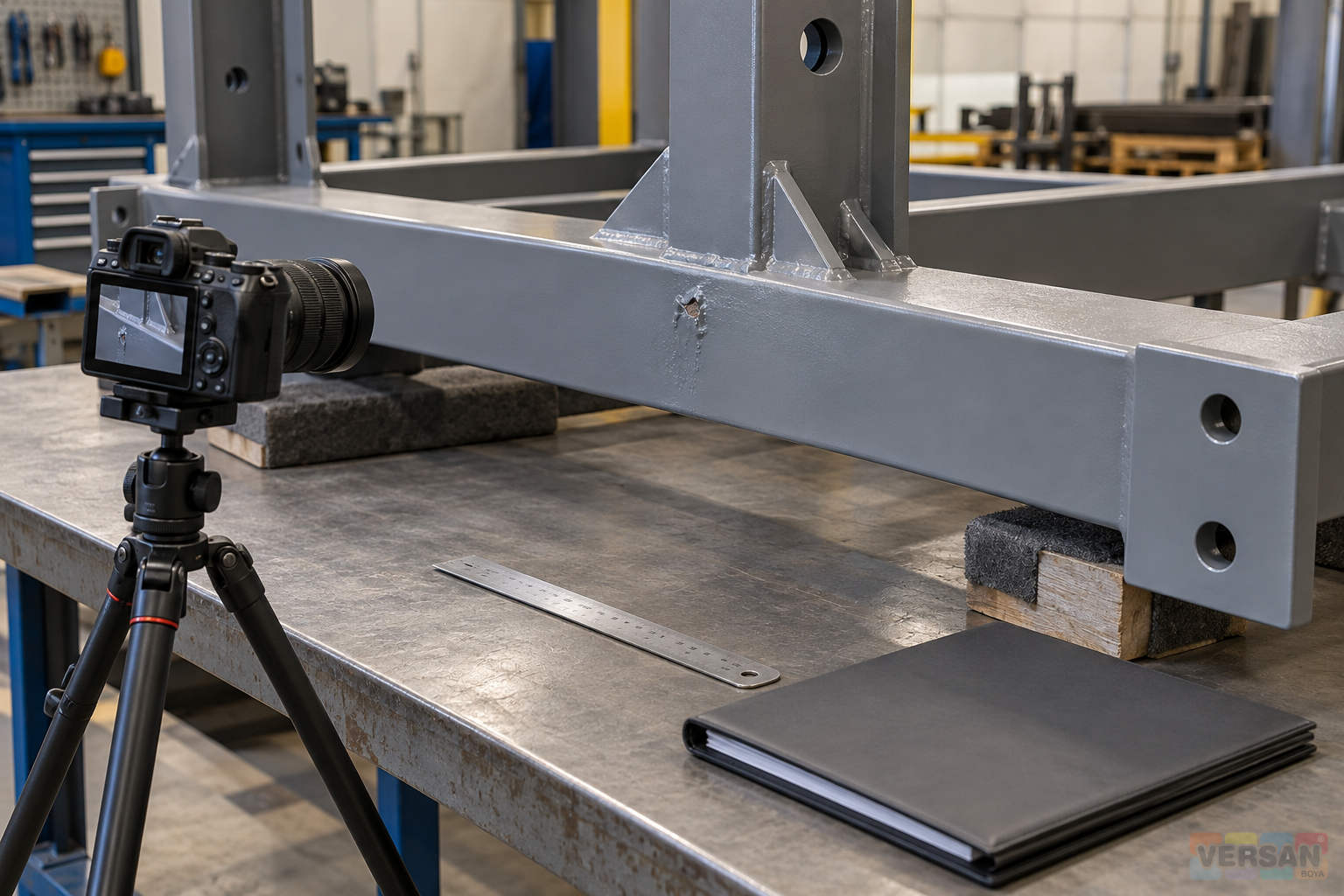
A practical sequence may include the component in its surroundings, the affected face and a close view of the feature. Keep those images under the same event reference with their capture times where available. If a scale is useful, position it safely without hiding the condition. A ruler visible in a photograph is not automatically a valid dimensional measurement. Camera angle and surface orientation can change apparent size. Any attempt to derive a measured result from imagery needs an appropriate method and stated limitations. The ordinary photograph record should not imply that such a measurement has already been performed.
Changing exposure, wetting the surface or otherwise making the feature appear stronger can alter the initial evidence. Preserve the original file and give annotated copies distinct names. Arrows or circles can aid communication when their addition is transparent. If an image contains unrelated personal or customer information, prepare an authorised sharing copy without discarding the original evidence. Excessive cropping can remove location context, so retain a route back to the full frame. A reviewer needs enough information to understand the event, without unnecessary access to operational material that has no bearing on the assessment being requested.
Keep lighting limitations visible
A surface can look different under daylight, grazing light and reflections from a bright fitting. Record the examination context and add another view where it helps explain a limitation. This is not a prescription for a standard inspection light: any project-specific method should remain the reference. A photograph displayed on one telephone should not be assumed to look identical on every recipient's screen. Where colour or sheen is disputed, state who holds the physical reference and what examination is being requested. Keep an appearance discussion separate from measurements or tests that might be required for another property.
A run-like feature on a quick-drying industrial topcoat should not be classified as a proven application error from an image alone. The first description can state the appearance, position and observed extent; possible causes belong in a separate investigation field. Where workshop terminology varies, add a short plain-language description rather than relying entirely on a defect label. The objective is a shared starting point that can support assessment without assigning blame prematurely. A cause can be entered as a conclusion when the relevant evidence has actually been examined and the responsible technical review supports it.
Match product and batch information to individual layers
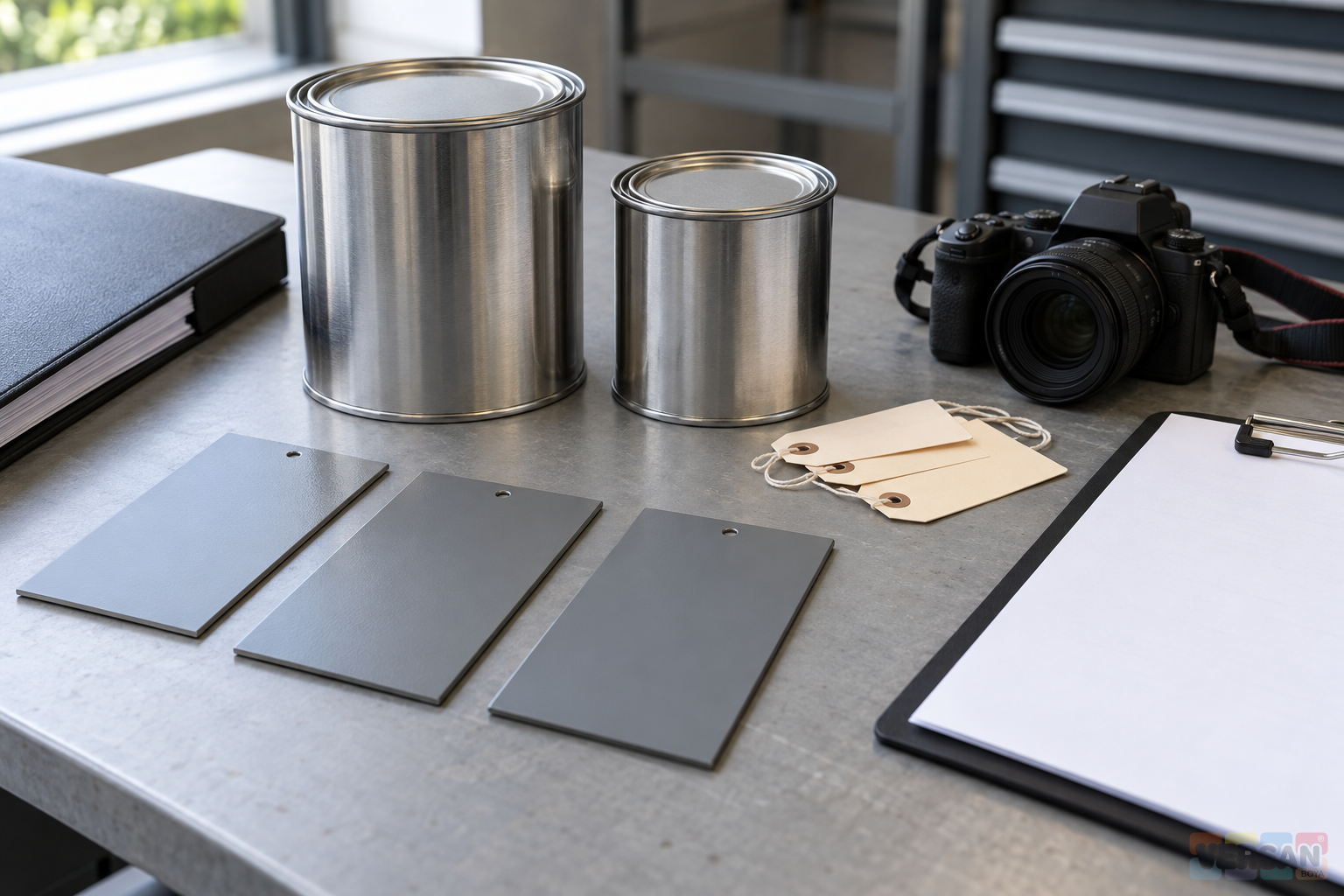
Transcribe the full product name, code, batch marking and available component identities from readable records. A quick-drying industrial primer should have its own entry instead of being folded into the topcoat description. If several tins were opened, the container nearest the component does not necessarily identify all material used. Reconcile the available stores and application records. Where the link remains uncertain, list candidate batches and explain the uncertainty. Do not complete an unreadable batch code by guessing. An apparently complete field is misleading if the underlying identity was never established.
An antirust primer reference might relate to an older maintenance layer. Its presence in the file does not establish a causal relationship with the current concern. Identify the relevant layer or period. A delivery record may establish what was supplied, while an application record may identify what was used; they should not replace one another. If samples or returns are requested, their identity, custody and handling need an authorised process. This article does not instruct readers to open containers, take chemical samples or conduct laboratory tests. Evidence organisation and technical investigation remain separate responsibilities with different methods and controls.
Construct a timeline with identifiable evidence sources
Available dates may cover receipt, preparation, priming, topcoating, dispatch and first service. Link each to its source. An approximate shift recollection is not the same as a timestamped instrument record. Do not invent an exact historical time where none exists. First detection and time of formation are also different. In particular, a condition noticed after dispatch does not by itself establish its presence or absence at every earlier stage. The timeline should describe the known sequence and retain its gaps. Dated additions can extend it as evidence arrives without rewriting the history of what was known initially.
If a system includes an epoxy primer, link any actual intercoat acceptance record. General information about epoxy primer surface checks before topcoating does not establish that those checks occurred on the project. Attach the measurement report, inspection note or photograph if it exists. Otherwise leave the gap visible. Do not copy historic catalogue curing periods into the timeline as though they describe measured project conditions. Product-family information, application history and the present observation are separate data groups. Connecting them clearly is more useful than blending them into one confident narrative that the evidence cannot support.
Separate measurement results from image captions
Where a measurement exists, retain the method, instrument, point identity, time and recorded result. A photograph caption should not contain a number that appears measured when no measurement took place. The location link helps another reviewer understand what the result describes. Compare it with the applicable project requirement and specified method where those have been established. This article provides no universal acceptance threshold for thickness, adhesion or any other property. The need for testing, its potential effect on the surface and the authority to perform it should be agreed separately. An initial report should not imply that unperformed tests have already confirmed a conclusion.
Do not extend conclusions through similar product names
A record concerning an epoxy topcoat does not establish the cause or remedy of an issue involving a polyurethane primer in another system. Similar appearances can arise in different histories. If the events are compared, show which information is shared and which differs. A resin-family label can guide a question, but it cannot supply the missing investigation. Maintaining the scope also reduces the chance that an isolated photograph circulates later as evidence of a wider problem affecting unrelated materials, projects or batches that were never part of the original observation.
If a gloss polyurethane topcoat is proposed as an alternative, a separate suitability assessment may be necessary. The event file is not an automatic recommendation to replace the product. Keep the existing-condition record, the reason for a proposed intervention and the assessment of a new material as distinct decisions. A previous commercial offer should not be assumed to answer every technical question. Where a current document or written response is needed, state the exact question it must address. Do not close that decision simply because a plausible alternative product has been identified in the catalogue.
Identify auxiliary materials by their actual role
If the use of quick-drying industrial thinner is reported, include the identity and source of that information. This is not proof that the thinner caused the feature. Similar names within the thinners range do not establish the material actually used. Separate application auxiliaries, equipment cleaning materials and substances that contacted the surface later in service. Appearing in the same file does not make them equivalent. Where information is verbal, identify the reporting role, time and any supporting record so the technical team can assess its relevance without treating an unverified recollection as a confirmed process condition.
Track immediate containment separately from cause analysis
Decisions to hold dispatch, identify a component or protect an area from further processing belong to the organisation's authorised workflow. Record who made the decision, when and to which items it applies. A containment decision does not mean the cause has been found. Equally, reworking a component does not by itself prove that the source of a recurring problem has been eliminated. Separate initial controls, investigation, proposed correction and subsequent verification. This keeps a temporary operational choice from being reported later as a fully demonstrated technical solution. The file should communicate each decision at the evidence level it actually reached.
Send a concise event summary with purposeful attachments
The opening paragraph can identify the component, location, report time and observed appearance. Follow it with the applicable requirement, photograph sequence and known batch relationship. Finish with the assessment being requested: scope clarification, missing-record identification, an investigation plan or review of a proposed intervention. A large unexplained attachment folder is not automatically a complete technical file. State which question each document addresses. Identify the missing items and the roles responsible for supplying them. This allows the recipient to ask targeted questions rather than reconstruct the event from fragments spread across several message chains.
The article on an industrial coating inspection and acceptance plan describes the broader workflow. A nonconformity file assembles the evidence for one event. Connect the two without counting the same record as two separate achievements. A step listed in a plan is not evidence that the step was performed; an actual project record may provide that evidence. Add dated requests from the technical reviewer, including their responsible roles and outstanding dependencies. Sending the first folder does not close the event. The record must continue to distinguish a completed communication from an investigation or decision that remains open.
Preserve correction, verification and closure as separate stages
The dates of a proposed action, authorisation, execution and verification can differ. Retain the actual source for each. Photographs after intervention should form a new series rather than replace the initial evidence. Where comparison is useful, identify the same location and explain the viewing conditions. Record who assessed the result and the criterion supporting the decision. A better-looking photograph does not prove every functional requirement has been met. If further verification is necessary, the record should remain open in that respect. Closure needs an identified authority and an explained basis, not merely a message that somebody considers the issue resolved.
When reviewing recurrence, compare events rather than folder counts. Several photograph folders may belong to one event, while separate affected locations within that event should remain identifiable. Stable references and sublocations preserve that distinction. If effectiveness must be reviewed after a correction, agree the monitoring scope and evidence separately. There is no universal closure period supplied here. The project requirements and authorised control arrangements determine the necessary follow-up. The record's role is to show that decision clearly, including which observations support it and which uncertainties remain. That distinction is useful even when no formal certification system applies.
Review the sharing copy before handing it over
Separate the controlled internal record from the copy supplied for assessment. State which attachments the copy includes, when it was created and how later revisions will be identified. Compressed messaging images may not provide the same detail as original files. Record which version the reviewer received. Supplying a higher-resolution file later does not automatically renew an earlier conclusion; explain which question the new evidence may affect. Keep the original evidence accessible through the authorised process while avoiding unnecessary distribution of unrelated information. A practical file should support its intended recipient without becoming a general archive open to everyone involved in the project.
Where several suppliers or teams contribute, connect responses with their actual responsibilities. A person confirming material identity may not be able to verify application conditions. A team providing workshop times may not know the subsequent service history. These boundaries explain the origin of information rather than redistribute blame. Keep the question, response and supporting attachment together. Before final handover, confirm consistent component marks, readable batch information, photograph order and document revisions. Preserve earlier versions when new facts arrive. The objective is a dependable account that supports a proportionate technical decision, with neither exaggerated certainty nor missing evidence hidden behind a polished report.