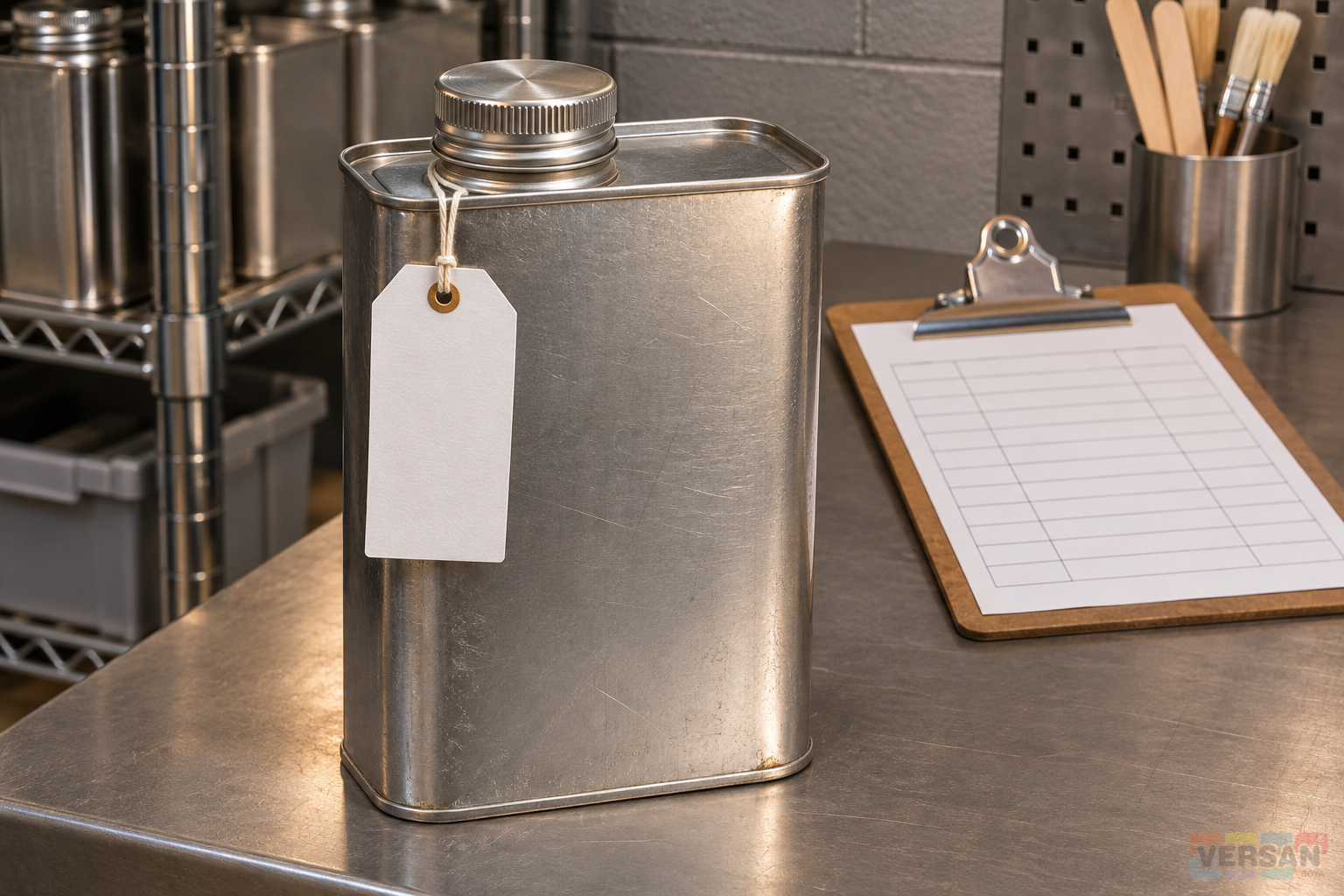
Opening a container changes what a coatings workshop needs to know about it. Two cans can have the same product code and lot, yet one may still have its original seal while the other has been issued to a job and returned. The second container now has a handling and storage history that matters to the next user. A tidy label and a closed cap tell you something about its present appearance. They do not establish what happened between opening and return. The aim of an opened-container record is to make the identity, history and disposition available before another operator selects the material for a coating system.
The NanoMix archive lists epoxy thinner and epoxy topcoat as distinct products. Its catalogue entries help identify those families. They do not prescribe a general lifetime for a partially used container. Use the current manufacturer instructions, label and safety data sheet for the exact product, together with the site's approved procedures. The workshop record helps establish whether the specific container can be assessed against those conditions. Neither a past job approval nor remaining stock quantity tells you whether that can may be used on the next job.
Give every opened container its own identity
The manufacturer's lot number identifies a production lot across multiple packs. A container identifier distinguishes one physical package from another within that lot. A record that groups three opened cans under one stock line will not show which can was kept on the line and which went back to authorised storage. It can also turn a decision about one container into an unintended decision about all three. Add a warehouse or workshop identifier that can be traced back to the original label without obscuring its product and hazard information. Record the package size if it is useful for distinguishing entries and counting stock.
The first record should identify the product and lot, the physical container, the date and time of first opening and the role that opened it. Add the initial issue and the associated work order where there is one. The guide to thinner inventory, packaging and traceability describes the wider stock system. The extra requirement for an opened can is to link each subsequent event to that same physical package. A clear log may show that one product lot is represented by several containers in different states. That view is more useful for the next shift than a single total volume.
If identification is uncertain, keep the uncertainty visible. A similar can, shelf label or cap colour does not establish a match with an inventory entry. A prior receipt photo or a record from an authorised issue point may help establish the identity if it is tied to the same package. If the original hazard information is missing or cannot be matched, follow the site's review process before ordinary use. Do not issue a replacement product label based on an assumed match. An internal tracking label can link the container to the record, but it cannot supply missing manufacturer information.
Keep first opening, work issue and return as separate events
Avoid one overwritable field labelled last handled. Use an initial opening entry followed by events for issue, return and any review. When a container comes back, record the work order, the time, the receiving role and the location at which the return was registered. If the event also establishes storage or closure information, record what the person actually observed. A returned container does not become newly opened just because the stock count has changed. Preserve the initial date even when more than one team signs out the container or moves it to another location.
If a return record is entered late, distinguish the time reported for the event from the time the record was entered. A site-approved correction should be traceable to an actual record, with its previous value, reason and evidence retained as appropriate. Do not fill a gap from an approximate recollection just to make the log look complete. For example, a morning issue and a late-afternoon return may leave a period for which storage conditions are unknown. The custody record should show the gap explicitly so that the next reviewer can find the relevant information or keep the can under review.
A workshop can use several materials on one item. A job may call for an epoxy primer at one stage and a topcoat at another. In a stock record, the fact that a thinner went to that work order only describes where it went. It does not establish that it is approved for both stages. Link the original issue to the applicable material instruction and identify which system it was issued to support. That avoids the impression that any container associated with an industrial paint job may be used wherever a thinner is called for.
Record what can be seen on the outside
Mark the condition of the package, cap area and label separately. If a cap appears incorrectly seated, record that observation without opening the can to investigate. Distinguish a damaged or unreadable label from a known intact identification and any gap in storage history. A new photograph of a well-seated cap cannot establish that the container was closed properly earlier in the shift. Where there are signs of leakage, damage or unknown material on the outside, handle the situation through the authorised incident or review procedure and the current safety data sheet. The inventory log should not instruct operators to improvise an inspection or response.
HSE's HSG51 guidance treats container construction and marking and labelling as separate aspects of storing flammable liquids. That distinction is useful when deciding what the workshop can legitimately record. Integrity of the package and certainty about its contents are separate questions. The guide supports a general approach to checks. Product-specific conditions still come from the relevant documents, and local workplace requirements control handling decisions. Capture the document revision used, rather than reproducing generic rules as if they were temperature limits, approval criteria or instructions applicable to a particular product.
A useful external observation is specific enough for another reviewer to locate it. For example, an entry can describe an unreadable area on the label or a visible difference near the closure. It must separate the observation from the proposed cause. Recording that a mark was seen near a cap is different from stating that the container leaked or that the material is contaminated. If the site allows evidence photos, link the photo to that container and the time and point of inspection. A file called latest inspection cannot distinguish the current observation from the previous return unless both events are explicitly recorded.
Use a hold to prevent unintended selection
An effective hold changes what another worker is allowed to select. It should show the container identifier, the reason for review, the time and the role responsible for the next decision. When safe and authorised, the corresponding physical stock location should also reflect the restriction. Do not move a damaged or leaking container on the strength of a generic example. Its situation may require incident response rather than ordinary stock handling. A hold entered in software without an applicable physical procedure can still leave a can within reach. A physical separation that is not recorded can leave the workshop with an overstated account of usable stock.
Several findings can lead to a hold without having the same cause. A missing return record may require a custody check. An unusual mark on a package may require inspection by a trained person. Conflicting product identifiers may require help from the supplier or inventory owner. Give each finding a reason field, and give each container one current stock status. If the investigation changes that status, retain the decision and the basis. Someone who did not see the original check should be able to tell what was established and what remains an assumption.
Have a clear rule for material that may have been returned from a different operation. A can that contains an unidentified liquid, recovered cleaning solvent or a mixture from the line must not be treated as a fresh product merely because a matching label remains nearby. The cleaning thinner, acrylic thinner and polyurethane thinner entries describe separate products. Appearance alone does not identify any of them. Opening a suspect can to smell its contents or adding the material to known stock cannot resolve an identity or contamination question. Follow the authorised process for unidentified material.
Preserve dates from their original source
Put the manufacturer's relevant dates in separate fields from the first opening date and the workshop's review date. If the manufacturer provides a restriction after opening, record the exact applicable instruction and source. A date for the next stock check is an administrative reminder. It cannot extend the manufacturer's life or replace an absent first-opening record. If the current product documents do not resolve a question about opened stock, keep the question with the container's review and obtain clarification. Avoid deriving a period from another thinner, a similar product family or the date on a different can.
Consider a known product lot returned with a legible label and no visible package problem. The opening date is missing from the record. A worker may recognise the can from a previous job, but an estimate about how long it has been open does not meet a requirement for a confirmed date. Check an authorised issue record or another documented source tied to that container. If the issue cannot be resolved, the hold remains. Conversely, an accurate opening date does not make a can suitable when storage evidence shows an instruction was not met. Good records identify both the evidence and its limitation.
A retained container can have several dates even when the disposition is straightforward. Its original date, first opening, date put on hold, inspection date and date of final decision describe five different events. They should not overwrite one another in an inventory spreadsheet. If the tool offers only one custom date field, use a linked history record for the rest. During an audit, being able to identify the date the decision was made is as important as being able to identify the date of opening. The reviewer needs to reconstruct the order of events rather than assume the most recent entry describes the oldest one.
Tie a release decision to the actual work
Before a container goes back into service, the authorised reviewer should be able to identify the exact product and container, intended job, applicable instructions and history on which the decision relies. The guide to epoxy thinner mixing sequence and use limits addresses controls that apply to the coating system. The opened-container review has a narrower job. It shows whether this container can be released for the identified use under those controls. Enter the decision, date, reviewer role and reference to the evidence. If the permitted scope changes, revisit that decision before a new issue rather than extending it by implication.
A self-levelling epoxy coating and an epoxy shop primer can have different application and compatibility requirements. The thinners and auxiliaries category and the product range help identify the exact product entries. They do not establish interchangeability. Where product matching is unresolved, the guide to epoxy thinner enquiries by coating code, method and conditions helps assemble the details for a technical decision. In professional coating systems, material suitability and the condition of a particular opened container both need to be resolved before a new issue.
One useful disposition model distinguishes released for a stated use, held for a named review and withdrawn from normal stock. Each state should have a clear follow-on action. Release records the approved scope. Hold identifies the missing fact or concern and an owner. Withdrawal sends the matter to the applicable authorised return, waste or other workplace process. A status entry is not evidence that such a process has already been completed. When it is complete, link its confirmation and date to the original stock item. This keeps the person approving use and the person closing the later disposition accountable for the actual actions each completed.
Hand over specific containers and unresolved work
At shift change, communicate which opened containers may be selected under current records and which cannot be issued. Give the location and the unresolved condition for each held item. If someone is obtaining the latest manufacturer instruction, record that action and its owner. If an item is awaiting inspection of its label, say which identifier is in doubt. A general note that some cans have been put aside can leave the second shift with no way to know whether the most prominent can is the one under review. A short handover can point to the full history when an explanation is needed.
Review repeated holds as a process signal. A gap at the same point on several job returns can indicate that the issue and receiving teams are recording different events. A series of unreadable labels can be examined through authorised storage and handling records. A recurring uncertainty about product revision may indicate that people use different references when they authorise a return. Resolve the source of the repeat instead of treating a regularly missing field as acceptable. The workshop can then improve the record without dispensing with a check that protects the next person who relies on it.
The final test of the record is whether a colleague can reconstruct the decision without relying on the original operator's memory. They should be able to identify the container, see when it was first opened, distinguish verified handling history from an omission, locate the instruction and check who approved the next step. If the physical location and the stock status disagree, investigate that difference before selecting the material. A reliable opened-container record does not renew product life or change an approved coating system. It makes the conditions for an accountable reuse decision visible to the people who will apply them.