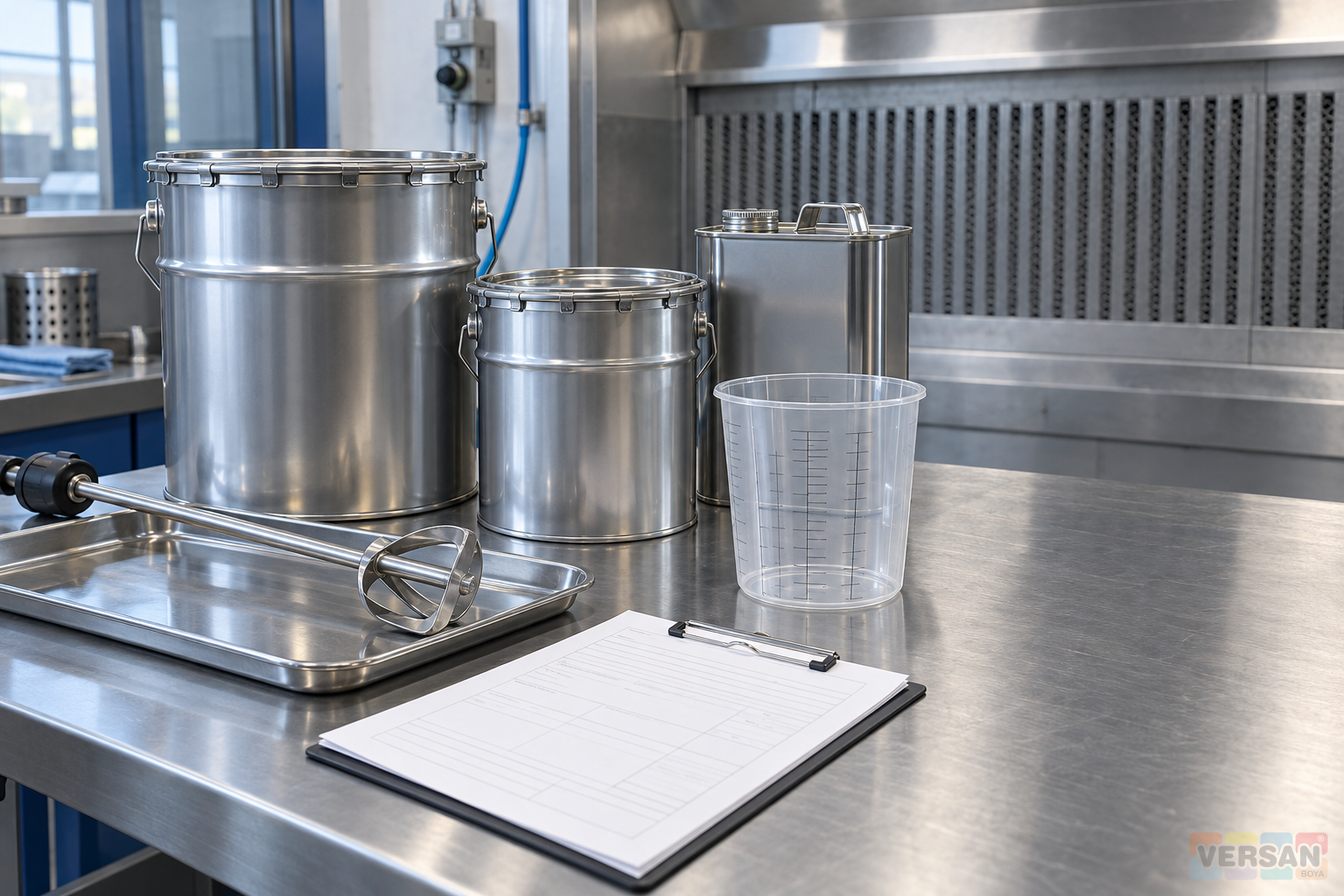
Epoxy thinner should be treated as a controlled part of coating preparation. It is not a general remedy for every difficulty with flow, spraying or levelling. Before an addition is considered, the team needs to identify the coating, its specified curing agent, the application method and the current technical instructions. A mixture that feels easier to apply has not necessarily been prepared correctly. Ease of handling is an observation; compliance with the approved system requires a separate decision supported by records.
This guide explains how to organise that decision when using epoxy thinner. It does not prescribe a universal addition rate, mixing time or temperature for all epoxy products. Instead, it separates product-specific instructions from the practical controls that a workshop can establish around them. The objective is a preparation file that purchasing staff, the technical supervisor and the applicator can understand consistently, including when an unfamiliar product or a revised application method is introduced.
1. Identify the exact coating before selecting its thinner
An instruction that simply says “epoxy paint” is insufficient for selecting an application thinner. Record the full commercial name, product code, batch identification, component arrangement and relevant colour reference. Compare the container label with the heading of the technical data sheet. Similar names should not cause different products to share a preparation record. The thinner also needs its own identification. Receiving the correct main coating does not prove that the auxiliary product delivered alongside it is the specified one.
The thinners and auxiliaries catalogue helps users locate product families. It does not replace the instructions for the selected coating. A broad family description should not be interpreted as unrestricted compatibility across every application method and condition. If the job includes primer, intermediate coat and finish, identify each separately. An approval obtained for one coat only applies to another when that second product and use have also been explicitly covered. Keep this distinction visible in the job documentation.
2. Separate archive information from the current application instruction
The Nanomix archive page on thinners associates epoxy thinner with the relevant epoxy coating family. The epoxy topcoat and primer archive lists coating, hardener and thinner separately. These documents help explain the system, but an old proportion should not be transferred into production without confirming the current product and the measurement basis. Where a document uses the word “parts”, the team must establish whether the instruction means mass or volume before measuring anything.
For an epoxy topcoat, include the document revision or issue date in the preparation file. A changed product code, different curing agent or revised application method calls for another review of the previous instructions. The technical data sheet and safety data sheet have different purposes; having one does not make the other unnecessary. Uncertainty should be resolved before materials are combined. A missing instruction must not become an assumption simply because the equipment and workpiece are already waiting.
3. Keep the hardener ratio separate from the thinning decision
In a two-component system, the specified relationship between base and curing agent is distinct from any permitted addition of thinner. More thinner is not a correction for an incorrect hardener proportion. Nor does a visibly fluid mixture prove that the components were measured correctly. Use separate fields for the base, curing agent and application thinner on the preparation sheet. This allows the person preparing the material to record each operation as it happens, rather than reconstructing the sequence from memory afterwards.
The existing guide to hardener and thinner in two-component coatings explains their different functions. In daily work, responsibilities should also be clear. One role confirms the product match and instruction, another measures and prepares, and a checking step compares the actual containers and record. A small team may combine these roles, but the decisions should remain distinguishable. A signature should confirm something that was actually checked, rather than imply that an unobserved operation has been verified.
4. Decide whether the problem calls for thinning or further investigation
When material appears more difficult to apply than expected, do not begin by adding solvent automatically. Review product preparation, equipment condition, the chosen method and the recorded working conditions. An unsuitable spray tip or an equipment adjustment can create a problem that cannot be explained by mixture consistency alone. If the product is being used outside its specified conditions, establish how that deviation will be addressed. Changing the composition of the mixture does not fill the information gap and may make a later investigation less conclusive.
Hempel's mixing and thinning guideline stresses correct component ratios, the recommended thinner and gradual addition where required for its products. These principles illustrate why product instructions matter; Hempel-specific figures are not Nanomix recipes. For an epoxy primer, the need for thinning must be established against the selected primer's current documentation. A general explanation from another manufacturer cannot authorise a particular quantity in a different product.
5. Make the mixing sequence available before opening containers
The sequence should be agreed before the first container is opened. The job instruction needs to cover component preparation, combination, thorough mixing, any specified waiting stage and the permitted point for adding thinner. Follow the actual product instruction if it defines a particular sequence. An established workshop habit is not enough to justify applying the same sequence to a new product code. Attaching the correct label afterwards cannot make an undocumented preparation process traceable.
A concise preparation card can help the operator follow a longer technical document, provided that it references that document and does not contradict it. If a conflict is found, stop and resolve it. An epoxy shop primer should not automatically inherit the preparation card for a different finishing coat. Membership of the same chemical family does not establish identical packaging arrangements, application methods or working times. The card should be reviewed whenever any of those defining details changes.

6. Write down the unit and the basis of every percentage
Measuring kilograms, litres and marks on a graduated vessel are different operations. A mass ratio cannot simply be reproduced with volume graduations. Where a conversion is required, it needs verified density information for the relevant materials and an appropriate calculation. A useful record therefore contains the value, unit and measurement method. Container tare, the suitability of the measuring device and the identity of the component being measured should remain clear throughout preparation. An unexplained number in a notebook is not a complete dosage record.
The denominator used for a thinning percentage also matters. A percentage calculated from the base alone produces a different quantity from the same percentage calculated from base plus hardener. If the documentation does not make this clear, seek written clarification instead of selecting whichever interpretation is familiar. A worked example for another coating cannot supply a missing instruction. Record the planned addition separately from the quantity actually added so that any difference can be identified and assessed.
7. Give pot life its own time record
Preparation time, application start and work completion are separate events. Confirm when the product documentation starts the pot-life clock, the conditions to which the stated period applies and how any required waiting stage relates to it. Starting the clock at the beginning of the shift or at the first brush stroke may not match the manufacturer's instruction. A clear time label on the mixing vessel is useful, but the expiry written on it must come from the applicable instructions and conditions.
Hempel's explanatory notes to product data sheets state that thinning does not extend pot life. Making an expired mixture more fluid therefore does not demonstrate that it has become usable again. Do not continue application beyond the permitted working period for the selected product. At shift handover, remaining vessels need clear product and preparation-time identification. Combining an uncertain old mixture with newly prepared material also destroys the clarity of the original records.
8. Do not give every epoxy product the same recipe
An epoxy self-levelling coating should not be assumed to follow the application logic of a spray-applied finish. Do not infer whether a product is solvent-containing, solvent-free or otherwise formulated from its name alone. Its documentation must establish whether thinning is permitted and identify the approved auxiliary product. A trial that appears successful on one surface cannot demonstrate the same outcome with another coating or at another film build. Workshop custom must not erase those boundaries.
Appearance requirements also need to be defined separately for a clear epoxy coating. Some effects that are less visible in a pigmented layer may be assessed differently in a transparent system. An epoxy binder requires confirmation of its role in the selected system as well. These product links help locate the relevant family; they do not imply that the same thinner and quantity suit all the products. Separate preparation rows provide a simple defence against that assumption.
9. Use the trial panel to connect preparation and application
A trial panel provides an opportunity to review preparation and application together before committing a complete production area. Identify its product code, batch, surface preparation, mixing record and application method. A panel approved for colour or gloss has not necessarily been assessed for every service requirement. Additional performance checks belong in the project specification. If the exact mixture used for the panel cannot be identified, its result cannot be transferred reliably to the next batch of work.
Avoid changing several variables at once during comparative trials. If equipment settings, substrate preparation and thinner quantity all change, it becomes harder to explain the result. The aim is a repeatable application within the product's permitted limits. Approval should describe the attributes examined and the items still outstanding, not merely say “acceptable”. Acceptance of one panel is not a general authorisation for undocumented recipe changes. Retain its identification so that production staff can compare like with like rather than rely on a photograph alone.
10. Connect the thinning record to the coating-stage inspection
The record should identify which coat is being applied, how that stage will be inspected and the condition for proceeding to the next operation. Easier application does not automatically establish that the specified film requirement or acceptance criterion has been met. The technical supervisor should define the appropriate wet- and dry-film checks for the substrate and system. No common thickness is prescribed here. The preparation file needs to point to the relevant inspection requirement instead of treating consistency as the only result worth recording.
The guide to epoxy primer overcoating intervals addresses the subsequent assessment of timing and surface condition. Usability of material in a container and readiness of an applied film for another coat are different questions. Do not put them into a single time field. If work is interrupted, record the interruption and the conditions for restarting. This creates a traceable connection between mixture preparation, application and the later decision to continue the coating system.
11. Do not make an undocumented thinner substitution
The availability of acrylic thinner or polyurethane thinner in the store does not resolve a shortage of the specified epoxy thinner. Similar containers, a familiar smell or use on a previous job are not evidence of compatibility. If an alternative is proposed, obtain confirmation of its full identity, the coating concerned and the intended conditions. An informal verbal suggestion may lose essential qualifications when it passes to another shift or contractor.
If the approved auxiliary product cannot be obtained, reassess the work plan. Delivery pressure should not turn the production surface into an uncontrolled trial. Give purchasing staff the exact product code, required unit, coating-system reference and documentation request rather than a message that simply says “more thinner needed”. This makes the issue a defined procurement decision with an accountable owner. The applicator should not be left to solve a product-compatibility question alone at the moment application is due to begin.
12. Keep equipment cleaning separate from application preparation
Cleaning thinner and application thinner should not be assumed to have interchangeable roles. Cleaning material also needs to be matched to the equipment, coating and safety information. Distinguish cleaning containers clearly from measuring vessels used for production. A solvent container without reliable identification should not enter the preparation process. Checking that cleaned equipment is in a suitable condition for application is a separate start-up step, rather than an implication of having completed the cleaning operation.
The article on coating-equipment cleaning and solvent residues develops this distinction. Used cleaning liquid should not be treated as approved application thinner: its composition and contamination cannot be assumed to match a fresh specified product. Ventilation, ignition-source control, protective equipment and waste arrangements must follow the applicable safety data and workplace procedures. They are part of preparing the operation, not optional details that can be omitted because a mixture appears to look normal.
13. Record the decision when a deviation occurs
If the wrong material or quantity may have been added, identify the vessel and refer its disposition for technical assessment. Record the stage at which the problem was noticed, the known additions and their identities. Further unmeasured additions made in an attempt to repair the error can destroy the remaining evidence. If application has already occurred, identify the affected parts or areas. The initial priority is traceability, not assigning a definitive defect name before the available information has been reviewed.
At completion, the file should bring together the technical-document reference, component and batch details, measurement units, times, trial result and any deviation decision. When seeking support for industrial coating systems, that file is more informative than a report that the paint is difficult to apply. Specific product and site information allows the next assessment to address the actual situation. Good epoxy-thinner practice begins with this decision structure, rather than with a remembered percentage detached from the product to which it belongs.
- Versan Boya: Nanomix archived technical catalogue, epoxy topcoat/primer and thinner pages. Archive information requires current product confirmation.
- Hempel: Mixing and thinning; Explanatory notes to Product Datasheets. General principle references; manufacturer-specific recipes have not been transferred.