
An epoxy-primed component may wait for its finishing coat because fabrication, transport, installation or weather has interrupted production. When work resumes, the number of days on the calendar is only one part of the decision. The exact primer, its exposure history, the intended next coat and the condition of the surface all matter. Exceeding an overcoating interval does not automatically mean removing every sound layer. Equally, a surface that looks dry is not automatically ready for another coat.
This article sets out a practical assessment process for metal components protected with an epoxy primer. It follows the work from identifying the delay to releasing the surface for further coating. The current technical data sheet and written advice for the actual coating system remain the basis of the application instruction. The process below helps organise evidence; it does not establish a universal interval, a product approval or a performance guarantee for an unidentified surface.
1. Establish which drying or waiting period is relevant
Touch dry, handling or assembly dry, full cure and readiness for overcoating describe different stages. A film that no longer marks under a light touch may still be unsuitable for the solvent action or application conditions of the next coat. A fully cured film can also require additional preparation before another coating is applied. Recording only that the primer is “dry” leaves these distinctions unresolved and transfers the decision to the next operator.
The epoxy catalogue archive on the Versan website describes both primer and topcoat and lists several drying stages. Those figures do not provide a maximum overcoating interval for every possible finishing product. Do not convert an archived drying time into a current intercoat instruction. Even when the next product is an epoxy topcoat, confirm the full names of both products, the relevant document revisions and the application conditions. If a maximum interval is absent, record the missing information and request clarification. An omitted limit is not evidence that the surface can remain exposed indefinitely without further assessment.
2. Reconstruct the application record before making a decision
Begin by identifying the components or areas under review. Parts delivered together may have been primed on different days, with different batches or under different conditions. Collect application start and finish times, product and hardener batch details, mixing records, thinner identification, film thickness results and shift conditions. Keep missing entries visible. Replacing an unknown value with an estimate makes the record appear stronger while reducing its usefulness.
A component may have waited for two weeks in a workshop but also spent several days outside before arriving there. The calendar age can therefore be correct while the exposure history remains incomplete. Check photographs against component numbers and confirm where storage actually occurred. Similar colours within an industrial coatings range do not establish identical chemistry. Compare the container label, purchase record and application sheet rather than identifying a primer by appearance. The handover document should summarise the verified information and outstanding questions, so that the finishing team can understand the situation without interpreting an unstructured collection of messages.
3. Separate ambient conditions from substrate temperature
A measurement taken immediately before recoating cannot describe the whole waiting period. Cold nights, sunlight, humid storage and restricted air movement can all be relevant to the review. Air temperature and the temperature of a substantial steel component should not be treated as interchangeable. The surface may remain colder than the surrounding air after the workshop warms up. Record present measurements alongside the history rather than using them to replace it.
If the manufacturer provides temperature-dependent intervals, compare the actual conditions with that information. Do not invent a linear conversion for temperatures outside the published table. Nor should additional heating be introduced simply to recover a production delay without reviewing the product and facility requirements. Adding epoxy thinner does not reopen the overcoating window of a cured film. Thinner selection concerns the specified application process; it is not a general repair for an aged primer surface. Identify the measuring instruments, locations and responsible person in the work record, and allow time for repeat readings at representative parts of the assembly.
4. Map the condition of individual areas
The visible face of a component is not necessarily representative of its underside, lifting points or sheltered connections. Dust may collect on an upper surface while moisture or handling damage affects another area. Use a simple drawing or numbered photographs to divide the component into inspection zones. Record observations such as sound coating, contamination, mechanical damage, discoloration, suspected corrosion or an unresolved surface condition.
This is an evidence map, not a claim that coating chemistry can be diagnosed by sight. Its purpose is to direct sampling and further examination. Soft, blistered or detached primer should not be placed in the same preparation group as an otherwise sound film that has merely exceeded its specified interval. Areas containing an epoxy shop primer should also be identified separately; temporary fabrication protection is not automatically equivalent to the main project primer. The accompanying control plan for coated steel edges and welds provides a useful framework for difficult details that may otherwise escape examination during a delay review.
5. Reassess the system when the finishing coat changes
Replacing the originally specified finishing product is more than a colour adjustment. The revised product can change the compatibility assessment, preparation requirements and relevant intercoat interval. A technical enquiry should name both products and describe the primer age, recorded thickness, surface exposure and intended service. A general question about applying one resin family over another is usually too broad to resolve a particular job.
When considering a gloss polyurethane topcoat or a matt polyurethane topcoat, obtain approval for the actual combination rather than relying on family names. Include any required preparation or intermediate coat in the revised scope. A purchasing substitution that never reaches the applicator can leave the workshop using an old instruction with new material. Mark the revised system schedule, withdraw superseded copies and compare the containers at the first-component inspection. This administrative check can prevent a significant mismatch without adding unnecessary coating to the structure.
6. Match the cleaning sequence to the contamination
Oil, loose dust, water-soluble residues and possible surface reaction products do not necessarily respond to the same treatment. Abrading a contaminated surface can distribute material or contaminate the abrasive. Establish the likely source of the residue and the appropriate cleaning method before deciding on mechanical preparation. A clean-looking wiping cloth is not conclusive evidence that every relevant contaminant has been removed.
Amine blush can occur with some amine-cured epoxy systems, but it is not an automatic diagnosis for every pale or dull surface. WEST SYSTEM describes water cleaning and subsequent preparation for such residues on its own epoxy systems. That guidance explains why residue identification matters; it is not a substitute instruction for Nanomix. Likewise, a cleaning thinner is not a universal treatment for every surface deposit. The job instruction should state the cleaner, any rinsing requirement, drying conditions and handling of contaminated waste. Release the surface for further preparation only after cleaning residues have been addressed and the resulting condition has been checked.
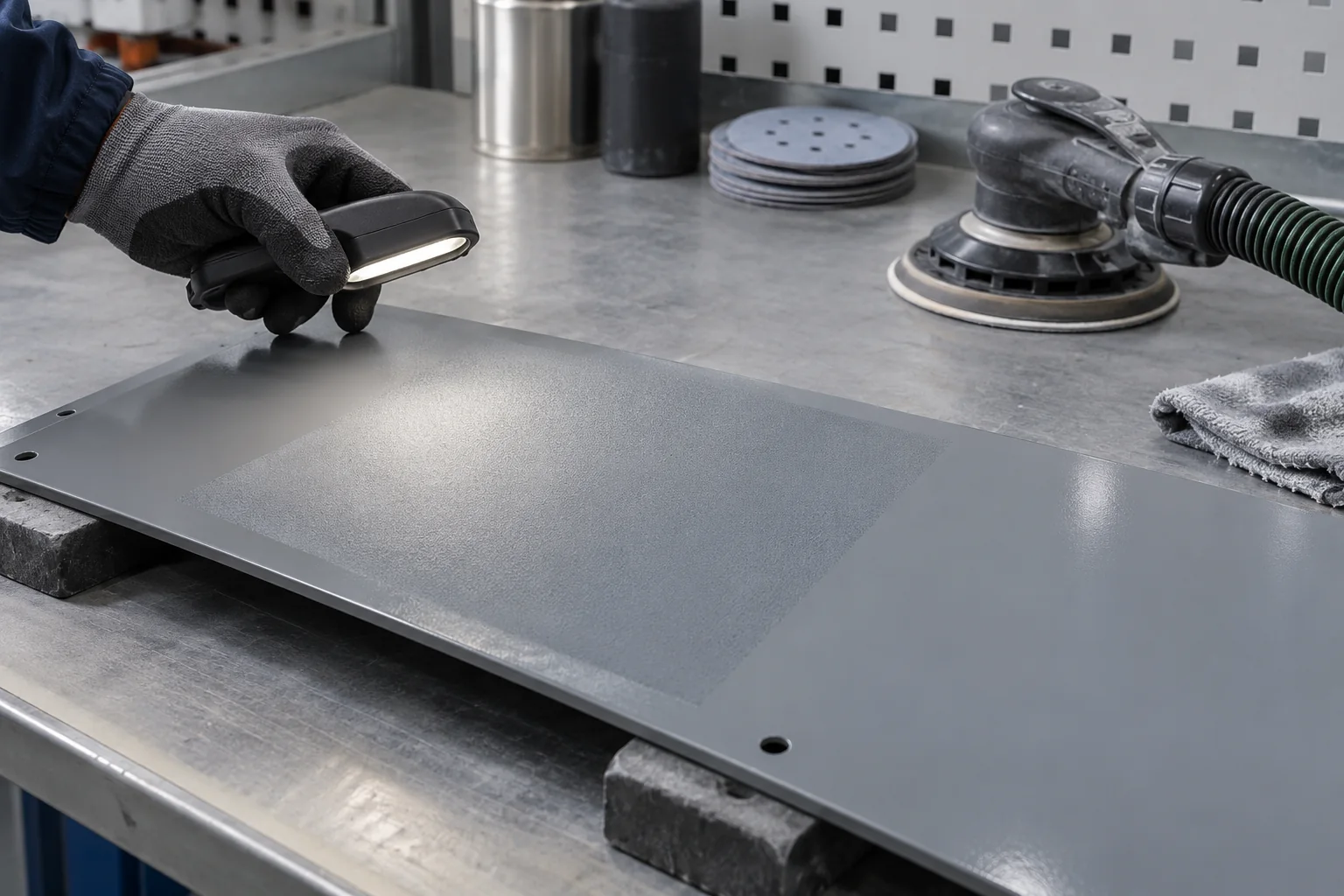
7. Describe mechanical preparation in verifiable terms
A note saying “lightly sanded” does not show whether the complete area was treated or whether sound primer was excessively reduced. Define the equipment, access arrangements, intended surface condition, dust removal method and inspection points. Select abrasive type and grade from the current product instruction and a representative trial. One abrasive grade should not be prescribed for every epoxy primer and every condition.
The relevant Jotun application guidance identifies additional roughening as a possible requirement after an overcoating interval is exceeded. The transferable principle is that the delay requires a preparation decision; the product-specific intervals in that document cannot be assigned to Nanomix. Where preparation exposes bare metal, identify and repair those locations separately. The repair coat has its own application and waiting requirements. If an overall additional primer coat is proposed, review the existing film, the complete system and the resulting thickness. An extra layer is not a reserve of protection that automatically removes contamination or restores the adhesion of a weak underlying coating.
8. Distinguish aged sound film from defective film
A sound primer beyond its specified overcoating interval and a primer with a curing or adhesion problem are different cases. Persistent softness, easy lifting, widespread blistering or corrosion beneath the film calls for investigation before further coating. Applying a new layer can conceal the evidence and increase the extent of later remedial work. Keep the affected area identifiable while its condition is being assessed.
Changing to a polyurethane primer does not make a weak epoxy layer sound. Any alternative system still depends on the condition of the surface beneath it. Present the boundaries of the affected area, the adjacent apparently sound coating and the proposed repair to the technical reviewer. If separation has already occurred, the article on investigating and repairing epoxy coating adhesion loss is the more appropriate starting point. Link samples and photographs to component references. Acceptance should depend on the agreed inspection evidence, not simply on the new colour hiding the original defect.
9. Use a trial area that represents the actual work
A small, clean and easily reached corner may not represent the surfaces that will be coated in production. Different exposure histories or conditions may justify more than one trial location. Use the intended cleaning, preparation, dust removal and coating process, with equipment representative of the job. Record the trial date, product batches, preparation details and environmental measurements so that the result can be reproduced.
Agree the acceptance criteria before starting. Appearance, film continuity and any specified adhesion assessment are separate observations. The responsible technical party should determine the test method, timing and criteria; an improvised tape pull is not equivalent to a defined standard test. Auxiliary products such as polyurethane thinner must be identified in the trial record as well. Substituting a different thinner after approval changes the process represented by the sample. Preserve the trial reference and communicate its approval to both the applicator and inspector before extending the treatment to the remaining components.
10. Keep metal primer decisions separate from flooring decisions
The word epoxy covers systems used on very different substrates. A thin primer on steel and a floor system on concrete do not share identical preparation requirements or service loads. Concrete moisture, absorption, existing treatments and repairs introduce additional questions. An approval for an aged steel primer does not establish the same interval or preparation method for a concrete floor.
Where a proposed floor includes a self-levelling epoxy coating or an epoxy binder, obtain the instructions for that particular build-up. Combining steelwork, flooring and equipment repairs under one purchasing line called “epoxy application” obscures important differences. Separate technical schedules make the approvals easier to trace and prevent an instruction from migrating to an unrelated area. If equipment is shared between activities, plan cleaning and material changeovers explicitly. A successful treatment on one substrate should be treated as evidence for that defined case, not as a general authorisation for every epoxy-coated surface on the site.
11. Convert technical advice into a controlled release instruction
Written technical advice needs to become a usable job instruction. Include the area covered, preparation sequence, finishing product, trial result, environmental requirements, remaining time constraints and person authorised to release the work. “Manufacturer consulted” is insufficient unless the record shows which component condition and product combination the advice addresses. Attach the relevant response and preserve its date and revision.
A prepared surface can become contaminated again. Moving it through busy production areas, carrying out adjacent grinding or welding, or handling it with dirty lifting equipment can invalidate the earlier observation. Organise the interval between preparation and coating accordingly. A controlled storage arrangement for thinners and auxiliary materials helps ensure that only the approved products reach the work area. The receiving applicator should confirm surface identity, appearance and records at handover. Approval by the previous shift should not be interpreted as covering conditions that have changed since that inspection. Record exceptions before coating, while corrective action remains straightforward.
12. Make the cost of delay visible in the production plan
The consequences of a missed interval extend beyond additional paint. Handling, access equipment, cleaning, abrasion, dust collection, trial preparation, inspection and renewed isolation of the area can each require time and resources. Separate these activities in the scope so that the customer and applicator understand what is necessary and which changes would require a revised quotation. Avoid a single undefined allowance for “extra preparation”.
For future work, place the primer application date beside the planned finishing date in the production schedule. Share approaching limits with production and dispatch rather than leaving them solely with quality personnel. Update the tracker when the product, system or technical document changes. The guide to two-component paint, hardener and thinner management complements this planning on the material side. The objective is not to rush every waiting component through the paint shop. It is to make the permitted application sequence a visible constraint when fabrication, storage and delivery dates are agreed.
13. Resolve common questions without replacing the technical review
Can a glossy, apparently sound primer be coated immediately? Appearance alone cannot confirm the remaining overcoating window, absence of contamination or compatibility with the next product. Verify the identity and history of the film and follow the required preparation. A good-looking surface is useful evidence, but it does not cancel the application instruction.
Will another primer coat solve the delay? Only an approved treatment for the actual surface can justify that decision. The new primer still needs to adhere to the existing film. When requesting guidance for Nanomix Epoxy Primer, provide the existing coating details and intended finishing product together.
What if the application date is unknown? Record the uncertainty and investigate batch, purchase and delivery records. Do not manufacture a date to complete the form. If the history cannot be recovered, request an assessment based on the surface condition and the manufacturer's proposed verification steps. Keep unresolved areas separate from areas with a complete record rather than releasing both under the same approval.
14. Assemble a concise technical decision file
The enquiry should allow a reviewer who has not visited the site to understand the case. Put the component reference, substrate, primer and hardener names, batch information, application dates, environment records, available thickness results and proposed next coat on the first page. Include both general photographs and close views. Show a sound comparison area as well as the most concerning location.
End with three explicit questions: can the existing primer remain, what preparation is required, and what evidence is needed before further application is released? Save the response with its revision date and translate it into the site instruction. This creates a defined preparation and acceptance process rather than leaving a production delay to individual judgement. It also keeps two objectives in balance: preserving sound coating where justified and refusing to conceal an unresolved defect beneath a new finish. The quality of the decision depends on the completeness of the evidence and the suitability of the approved treatment, not on the confidence of a generic answer about epoxy.
- Versan/Nanomix epoxy primer and topcoat catalogue archive: product identification and archived drying stages; not a current maximum overcoating instruction.
- Jotun Penguard application guides: product-specific assessment of intervals and preparation; no competing product times transferred to Nanomix.
- WEST SYSTEM Epoxy Problem Solver: surface residues and preparation advice for its own systems.