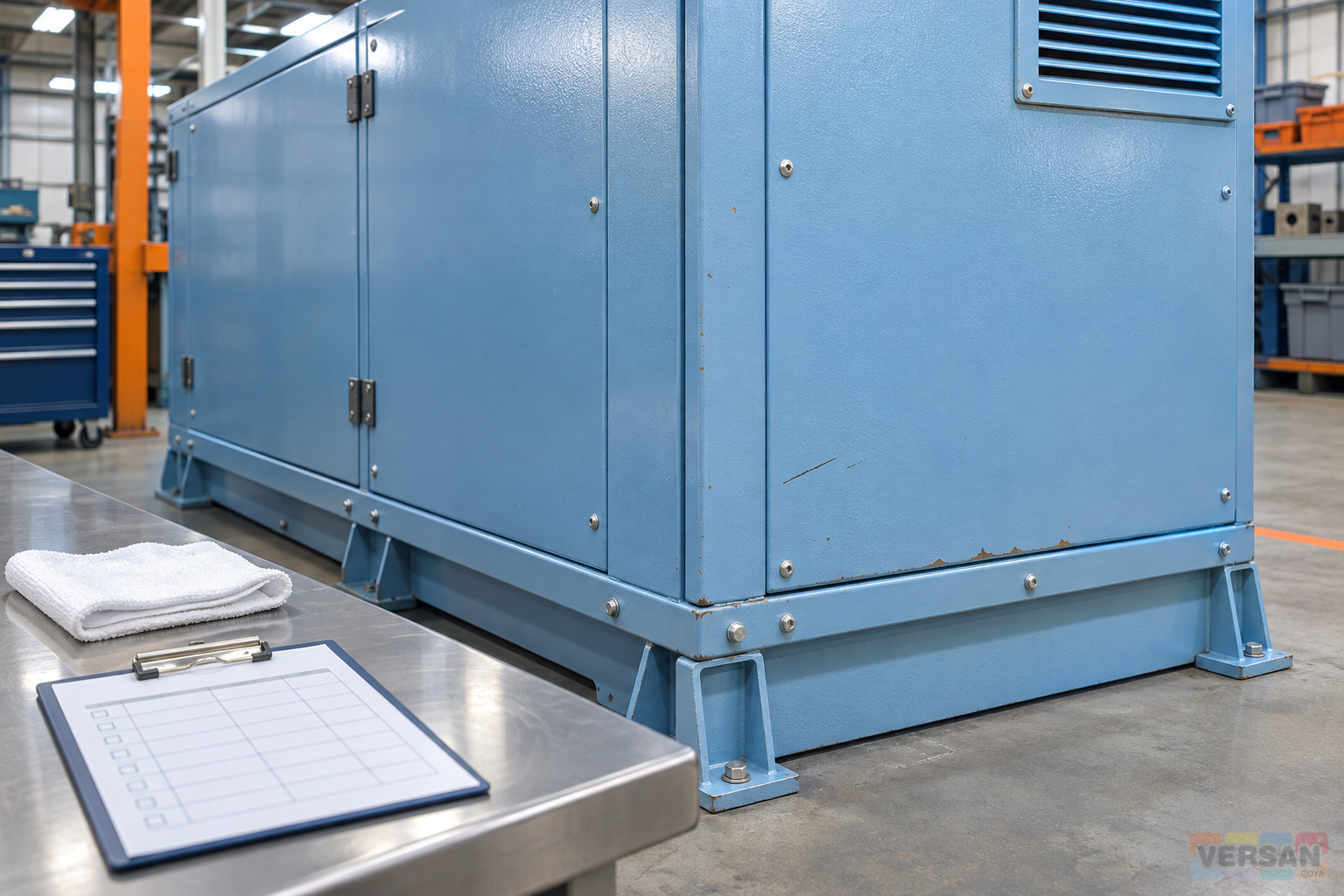
A maintenance instruction often outlives the equipment configuration it was written for. The cabinet beside a production line may still carry its original finish, although the lower access panel was replaced during a shutdown. The instruction at the wash station is sometimes unchanged. Someone who takes a shift at short notice needs to know which surface the instruction covers and how to recognise an exception. An equipment number, a zone description and a verifiable coating record make that possible. They also provide a route for dealing with new cleaning requirements before an old method is extended to a new surface.
Terms used to describe industrial paint tell the reader about a broad product family. The individual maintenance record must identify what is exposed at the point of cleaning. The NanoMix catalogue archive lists NanoMix Epoxy Topcoat and NanoMix Epoxy Primer as distinct products. It can help identify a recorded paint name or function. Approval for an actual cleaning task depends on the exact coating documentation, the equipment manufacturer's instructions and the site's assessment. The record below is a way to bring those decisions together so they can be followed on a work order and traced after a change.
Divide the equipment into surfaces that can be identified
Start with zones that a technician can locate without guessing. On a fabricated enclosure, those may include the main skin, removable doors, bottom frame, junction plate and feet. Use the equipment drawing or a marked photograph to define where one scope stops and another starts. Include adjacent parts where the work can affect them. A keypad surround and a recognition label can have limitations that do not appear in the paint file. If the same schedule is used on several machines, identify the units by their actual number and set aside any unit with a recorded replacement or renovation until it has been reviewed.
Gather the product name and code, coat sequence, work order, application date and any subsequent repair references. A stores entry may tell you when the original product was issued. A signed completion record may connect that product to the base frame. A later drawing change may explain why the access panel bears a different surface. Put the evidence next to the zone to which it applies. Record a gap as a gap, with an owner and a due date for resolving it. Guessing the coating family from a colour code makes it difficult to understand the basis of a future decision.
A glossy panel is a description of appearance. It could be an epoxy finish, a gloss polyurethane topcoat or another coating supplied on a spare. The industrial coatings range helps identify candidates from an old catalogue name, while the asset file provides the connection to the installed surface. Ask whether the record describes the primer, the finishing layer or a local repair. If the face and its lower corners have separate histories, give them separate lines. The guide to local epoxy repairs and coating transitions explains the value of recording the boundary of a touched-up area.
Describe the outcome before reviewing the method
Specify what the task has to achieve. A weekly check may need the identification plate to remain readable. A maintenance handover may require removal of a visible residue in a defined zone. A process sanitation plan may impose its own requirements and verification. Each needs an owner able to say when the task is complete. “Clean the machine” does little to help someone choose the right instruction. A description of the task boundary, the material being removed and the required outcome is more useful. If the existing process includes a dedicated sanitation procedure, cross-reference it and keep its acceptance criteria with the responsible team.
Even when professional coating systems are used throughout a facility, the work the surfaces see may be quite different. A control cabinet beside a dry packing line and a frame adjacent to a process splash zone may be entered under the same paint specification. They can still have different cleaning schedules, risks and nearby materials. Provide a space for the process owner to explain why the task is being changed. A new contaminant, repeat work on every shift, access from a different side or a recurring difficulty around a seam can all be reasons to review an existing approval.
Define where the operator is expected to stop. Equipment instructions may distinguish exterior wiping from work that involves removing a cover or reaching behind a guard. A coating review cannot provide that permission. Give technicians the equipment reference and current procedure number, and indicate how to escalate an access issue. A useful task record gives people enough information to confirm that they have the right instruction before beginning. It leaves the determination of isolation and safe access to the documented equipment rules and the people responsible for them.
Use each technical document for the decision it supports
The coating technical file identifies the installed product or system and may give maintenance instructions or name a route for obtaining them. Read the current issue for the exact product and look at what conditions are covered. A two-line statement about broad chemical resistance does not answer whether repeated work with a specific cleaning product on an aged coating has been assessed. A clear epoxy coating and an epoxy paint binder have different catalogue identities. Keep written technical advice with the exact finishing product and the surface it describes so the advice can be checked when a similar question arises.
The equipment instructions establish constraints for the machine and its components. Record their document number and the relevant section alongside the coating reference. If one supplier's advice appears to permit a method that conflicts with the equipment instructions, record the precise conflict and refer it to the responsible people. Do not collapse two written opinions into a general approval. Record the final decision once all applicable constraints have been taken into account. It should be possible to read the work card and know whether the action is permitted on the surface, the assembly and in the intended operating conditions.
The third part is the information on the cleaning product and the site's assessment of the task. The UK Health and Safety Executive includes maintenance and cleaning products in its guidance on chemicals at work. It explains how an applicable safety data sheet supports risk assessment by describing hazards and relevant handling and emergency information. Keep the version of that document linked to the task. It is useful input for the people assessing exposure. The coating suitability decision has a separate basis. See the guide to an epoxy coating chemical exposure file for the information a technical reviewer needs about a proposed service condition.
Record the method that was actually approved
An approval needs to be specific enough for another person to apply it to the intended task and recognise when it no longer fits. Record the cleaning product identifier, how the method is referenced, applicable zones and exceptions, and the date and author of the decision. Where appropriate, link to the approved limits for process variables like contact time, temperature and mechanical action. Leave those limits to the relevant technical and safety teams. Values found in a different product document cannot be combined into an operating instruction. Put the rationale and supplier correspondence in the equipment file and keep only current operational information on the operator's card.
Review what happens when the work changes. Stores may replace a product because the original is no longer stocked. The team may be given a different tool for access beside a support. A substitute that is acceptable for a floor task may have no recorded approval for a machine enclosure. Give people a simple way to put that change to the owner. The request can state the existing method, the proposed change, the affected zones, the practical reason and the date a decision is needed. Approval should be recorded against the proposed revision rather than being interpreted from the decision made at the previous issue.
Product names can create a misleading association between painting and cleaning. For example, epoxy thinner appears in painting documentation as a related material. Its presence in a workshop inventory is no basis for authorising routine cleaning of a cured and installed finish. Read instructions about preparation or tool cleaning in the context in which they were written. On a shared job board, use different activity names and work references for preparing coating materials and maintaining the finished enclosure. That small distinction helps prevent a relevant document from being used to answer a different operational question.
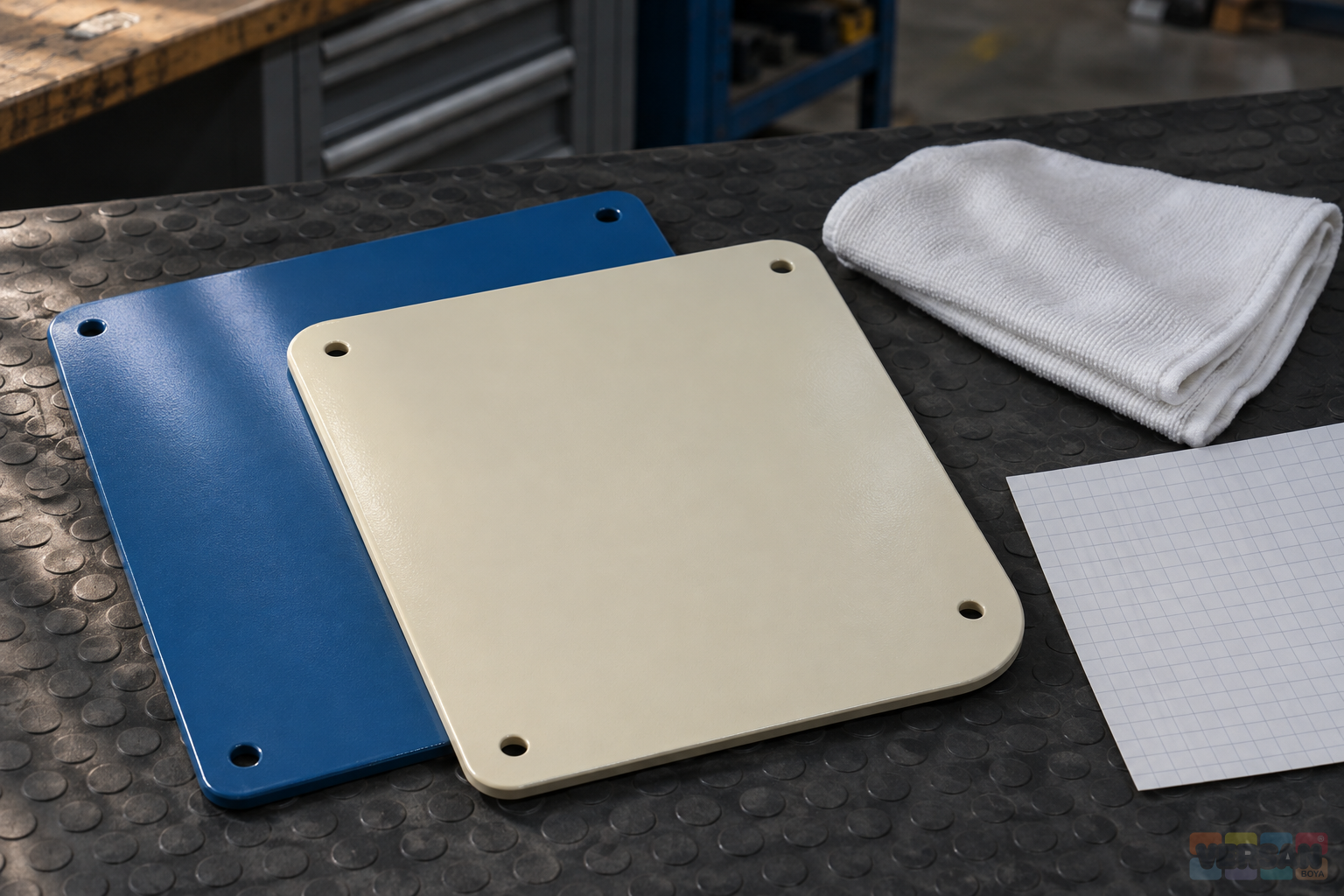
Save a surface condition record that can be compared later
Before evaluating any proposed change, retrieve the last condition report for the zone. If there is none, create a dated entry showing the surface as it is. Note existing chips, a change in sheen near a seam, marks at a handle or an earlier repair. A close view and a wider image used together help a second person find the point being discussed. Identifiers in the record should allow a technician to take the comparison photograph from a similar position under comparable lighting. A written observation remains useful where an image obscures detail or a reflection changes with the viewing angle.
If the people approving the assessment select a spare panel or a limited trial area, record how closely it represents the surface under review. A new panel of the same colour may be a poor comparison for a repaired finish with a long service history. The catalogue distinguishes Epoxyer floor topcoat from Epoxyer transparent primer. Identifying the floor system can be useful for a nearby area, but a record of cleaning a floor sample is insufficient for a painted machine. Preserve the distinction between the trial result, the surface represented and the actual use covered by the technical approval.
After a task, an operator may find a new mark at the edge or report that the finish looks different. Ask for the observation, the affected zone, the work reference, and any departure from the approved method. Avoid assigning a cause from a single visual symptom. Bring the report to whoever decides whether additional inspection or a different procedure is required. The article on investigating epoxy coating adhesion loss provides an adjacent example of separating symptoms, working history and decisions about repair.
Follow the change through a realistic maintenance handover
Consider an assembly with an identified main frame and a replaced access panel whose coating is unverified. A technician receives a request to remove deposits around the nameplate. The record for the frame and the access panel are opened separately. The supplier's drawing for the replacement part is retrieved, but the drawing has a colour code and no finish identifier. The report marks that gap and links it to a request for the relevant finish documentation. The work order tells the incoming shift which zone has an applicable instruction and on which zone it is awaiting a decision.
The stores team proposes a new cleaner before the technical reply arrives. A supervisor records the product proposal against the current procedure, while the maintenance lead establishes which other machines use it. That question matters because a single substitution can affect multiple work cards. The people reviewing the change have the actual cleaning task, the product details and the separate finish information for each zone. They can decide which instructions need revision. The shift handover can then say exactly what is authorised, what has been deferred and whom to contact if the proposed product is already at the point of use.
On the same work order, incidental contact with a self-levelling epoxy floor coating beneath the enclosure introduces another boundary to record. Check which team owns the floor and which instruction covers it. Use a field for affected adjoining surfaces rather than extending the machine approval to the entire room. The owner of each procedure can then assess the real points of contact and confirm any restrictions. This example does not specify a cleaning formulation, a set of operating limits or a general approval for either surface.
Use revision control that the next shift can see
Give each active work card an identifier, a revision and an effective date. Show the equipment zone, decision owner and reference to the method. Keep withdrawn copies where they can be found for incident or maintenance review without allowing them to appear as live instructions at the work station. If the procedure is stored both electronically and on the shop floor, name who updates the printed copy. Ask one member of a different shift to retrieve the current procedure as they would at the start of a job. That simple check tests how the instruction will be found when the supervisor who issued it is elsewhere.
Tie the cleaning file back to commissioning and any coating repair. If a component has just been refinished, the applicable product and equipment documents and the site's release process govern when the planned duty may begin. A record for epoxy shop primer from original manufacture may explain what was under the coating at delivery. A job card from this month should describe the actual finish where the work will take place. A clear connection between the two prevents a purchase history from becoming a proxy for a current surface record. Review the record whenever a new method, a different product or a repaired zone enters its scope.
Make the next technical query answerable
Send the reviewer a short description of the exact zone and what is known about it, along with the equipment number, coating reference, recorded repairs and current procedure. State the change being proposed, why the change is wanted, and whether other zones may be affected. Attach only the current records and enough photographs for the question to be understood. If you can only confirm the base coating or colour, say so. The reviewer can respond to an identified uncertainty more effectively than to a general question asking whether an unnamed epoxy is washable. When completing the coating record, compare the epoxy paint range by coating role and recorded product name; this classification alone does not establish cleaning approval.
When a reply arrives, record the decision date, the decision maker and the conditions of the approval before updating the active work card. Include what action the operator takes if the surface, residue or equipment condition differs at the time of the job. Keep technical correspondence and detailed condition evidence connected to that shorter card, so a future review can reconstruct why the procedure was selected. The next shift should be able to open the instruction, identify its scope and find the record to use if a change is needed.