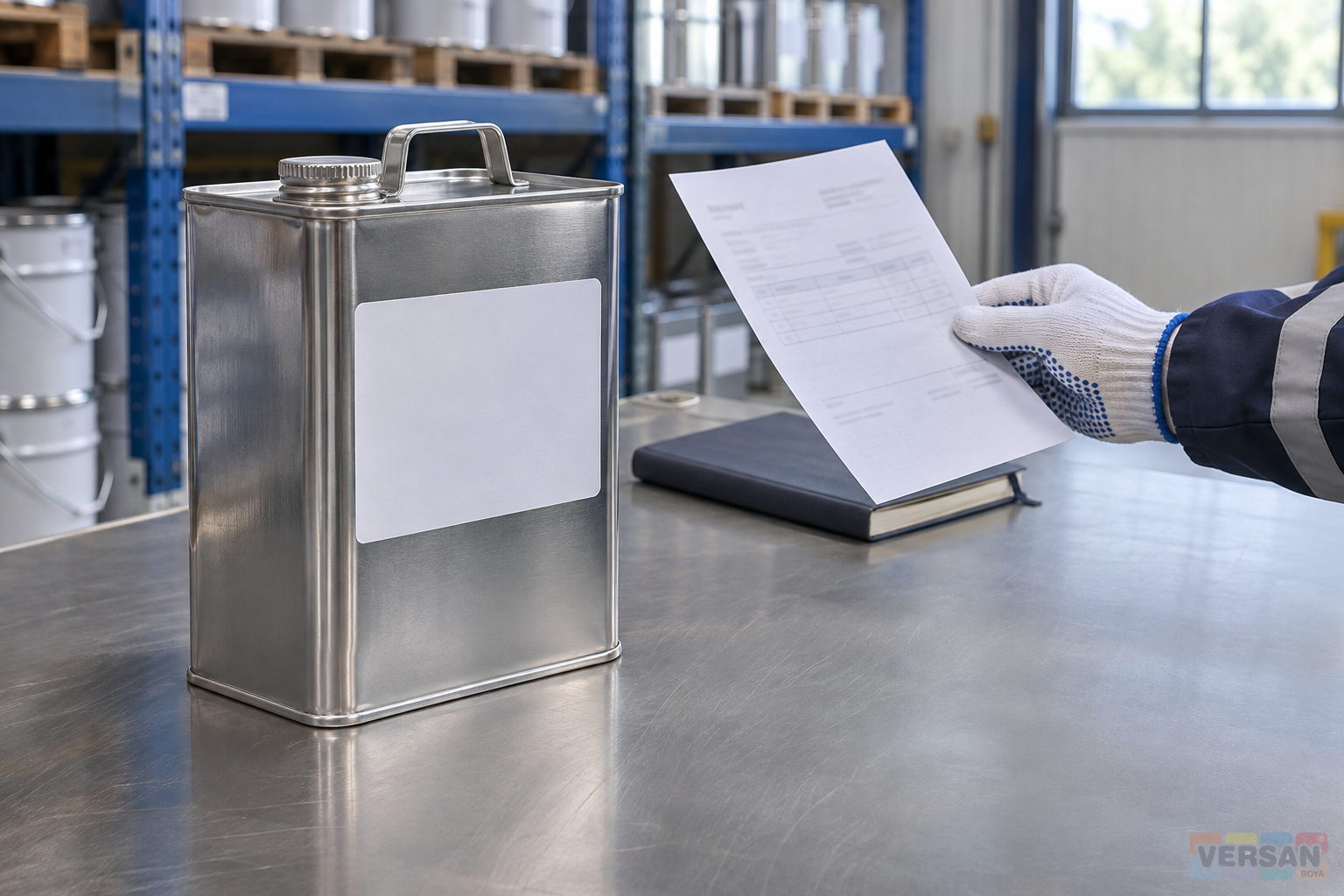
An incoming inspection for synthetic thinner begins with a question you can answer without opening the container: can the shipment be traced to the exact product that was ordered? The purchase order identifies what should arrive, the delivery paperwork records what was sent, and the container identifies the material that could reach the shop floor. A broad description such as “synthetic thinner” does not reconcile all three records. Product identity, container size, quantity and lot number each serve a different purpose. This guide explains how to compare them, how to handle differences and what evidence is needed before a container can be released for use.
A receiving clerk may confirm that the carrier delivered the stated number of cartons while the contents remain on hold. Those two statuses belong in different fields. A warehouse system that immediately adds every receipt to available stock can pass an unresolved product to production before anyone checks the documents. The physical receipt records custody and count; technical release records the decision that a verified lot may enter the approved workflow. Keeping both decisions visible makes the handover easier even when the shipment is correct. It also makes it possible to prevent a mistaken issue without leaving an unexplained inventory shortage.
Establish the expected product before the vehicle arrives
Build the receiving reference from the approved order line and any authorised changes. Record the supplier’s product identifier, your internal stock identifier, the net quantity per container and the expected number of containers. The NanoMix Synthetic Thinner product page is one place to look up a commercial identity. The order and the supplier’s confirmation establish what was purchased in a particular transaction. A size shown in a catalogue is a commercial option; it does not establish what is present in the shipment on the dock.
The supplier code and the warehouse code often differ. They can be linked by a verified product record, a confirmed quotation line or a controlled supplier mapping. A new code deserves its own review. For example, an internal system might remove a prefix or replace punctuation during import. A familiar display name does not tell you whether such a transformation is safe. Confirm the actual identifier with the source and preserve the original value alongside the mapped code. If the same change appears on a later delivery, the next clerk can inspect the mapping rather than rely on a previous shift’s memory.
An order written simply as “thinner” leaves an important decision unresolved. The thinners and auxiliaries category contains several product families, and each has its own product record. The guide to choosing the correct paint thinner addresses the technical selection that should precede purchasing. Incoming inspection uses the documented outcome of that selection. It should not ask the receiving clerk to infer suitability from the name, the appearance of the can or the fact that the supplier has delivered other products successfully.
Read the label on the individual container
Start with the manufacturer’s label or other authorised identification on the closed container. Compare the product name and any product code, then read the lot mark and net quantity. An outer-carton label helps the warehouse handle a shipment, but the identity must remain clear after a carton is split. An internal barcode is useful for scanning only if its record resolves to the identity on the physical package. A mixed pallet or a reused carton can place similar cans next to one another, so the position of the can is no proof of what it contains.
Separate changes in presentation from changes in substance. Capitalisation, line breaks or a verified bilingual translation may still describe the same product. A different suffix, an unfamiliar manufacturer or a word that points to a different intended use requires review. The NanoMix Cleaning Thinner has its own identity. The word “thinner” on both labels is not enough to treat the cleaning product as the ordered synthetic thinner. Do not apply an internal replacement label to make a discrepancy disappear. Identify what is on the container, retain the evidence and ask the supplier to clarify the exact mismatch.
The historical catalogue lists nitrocellulose thinner and polyurethane thinner under different product names. The companion page separately identifies acrylic thinner, quick drying industrial thinner and epoxy thinner. The documents are useful evidence that the product families are distinct. They are historical records, so they do not establish the formulation, current hazard classification or technical approval of a newly delivered can. Nor does a shared brand name authorise substitution between those families.
Inspect the closed package and record what you saw
The normal inspection checks the outside of the container: the closure, body, seam, base and visible label. An obvious scratch on the body calls for a different response from damage around the closure or signs of a leak. Describe the actual observation in the receiving record rather than collapsing both into “damaged container.” A description such as “wet area around the cap” tells the reviewer what raised the concern. Do not use smell, opening or transfer to another container as identification methods. Suspected leakage is an exception to routine receiving; the current safety data sheet and the workplace incident procedure govern the response.
An intact carton does not prove that every inner can is intact. Conversely, minor wear on the carton does not establish that the individual can has lost its integrity. Record the packaging level where the condition was observed. If a photograph can be taken safely, link it to the exact receipt and lot without obscuring the physical label. Where there is an immediate safety concern, follow the site procedure rather than approaching for a better photograph. The purpose of the evidence is to help a qualified reviewer make a decision, not to give a receiving clerk an incentive to handle a suspect container.
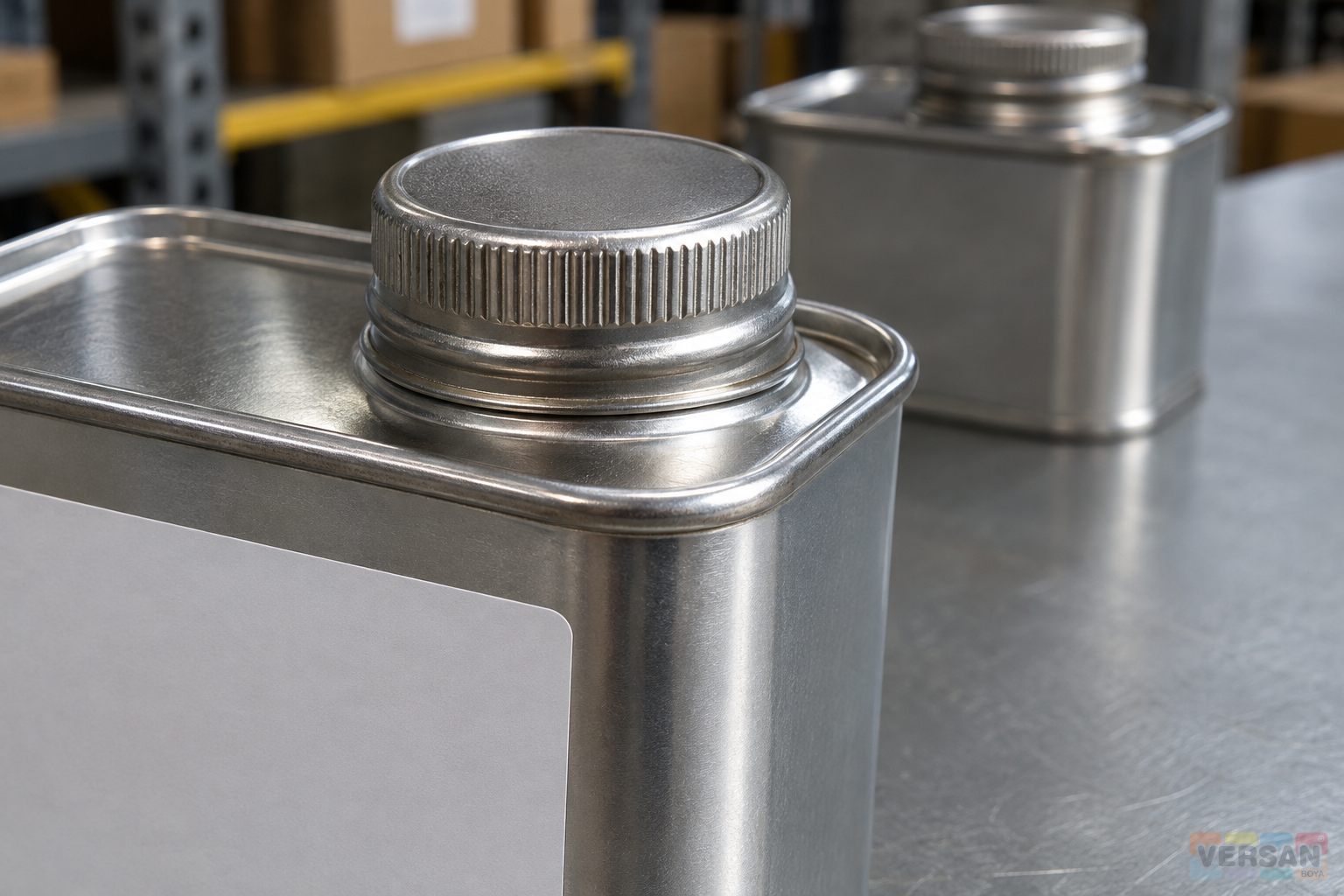
Record pack count and net amount separately. Delivering the expected number of cans with a different amount per can is still a discrepancy. The count can be correct while the purchased quantity is not. Gross weight on a shipping document includes packaging and is not interchangeable with the labelled net contents. Where the order and the package use different units, rely on verified information for that particular product and transaction instead of an assumed conversion. Capture the quantity and unit as printed first. That preserves the original evidence if purchasing or the supplier later needs to correct an order entry.
Check the safety data sheet against the identified material
Use the current safety data sheet, or SDS, applicable to the product on the container. Compare the product identifier in its identification section with the label and confirm the source of the document. OSHA’s SDS section guide is a useful explanation of the document’s structure: identification includes the product identifier and supplier information; hazard identification covers the relevant hazard information; handling and storage covers related precautions. The guide describes section functions. It does not set local obligations for the reader or replace the SDS for a specific product. Worksite decisions depend on the applicable product document and local procedures.
Read the revision date or other version information inside the document rather than trusting a filename. Two documents saved under the same title can cover different identifiers or versions. Keep the revision or issue reference and a stable link to the verified copy. If the supplier says a document covers multiple trade identifiers, ask for enough written evidence to connect the delivered identifier to that scope. An SDS does not have to enumerate every lot number for the receiving record to be traceable. The physical lot mark and the delivery record connect the lot to the product identifier, and the verified SDS is linked to that identifier.
A technical data sheet and an SDS answer different questions. For a system that includes a synthetic primer or a synthetic topcoat, check the current technical information for the main coating before you decide which thinner belongs with it. The SDS does not establish system compatibility. If the purchase specification calls for a lot-specific certificate or report, check its lot reference and the scope of the evidence as well. A historical catalogue, a delivery note and a technical data sheet are all useful in the right context, but none proves a point simply because another document is missing.
Assign one traceable disposition to each lot
Record every lot separately when a shipment combines more than one. Give each lot its own quantity, inspection result and document references. Releasing one correctly identified lot must not unlock another lot whose label cannot be read. The thinner stock and packaging traceability guide explains what happens to those identifiers after receipt. The initial receiving check gives the later warehouse process a reliable starting point. Once packs are moved or broken down into smaller shipping units, it is harder to reconstruct an identification chain that was never recorded.
Make status words understandable across shifts. “Awaiting verification” describes a shipment for which an expected reference or document has yet to be confirmed. “Discrepancy under review” points to a specific issue already observed and recorded. “Released for issue” is an authorised decision on an identified lot. A holding location helps only when the stock system also prevents issue and staff understand the visible status. The physical handling or separation method should follow the workplace procedure. A logistics workaround that moves the can without changing its system availability leaves a route for accidental use.
A sample test is not a method for identifying an unknown container. The article on synthetic thinner and paint batch consistency deals with a subsequent assessment of known products. A plausible result on a sample does not supply a missing product identifier or verified safety documentation. First establish the identity and the applicable documentation and obtain the required release. If the process subsequently calls for a sample assessment, conduct it as a separate documented decision under the approved procedure.
Work through two common discrepancies
In a hypothetical shipment, the order and can both identify the synthetic thinner, and the delivery note carries the same code. The supplier sends an SDS with the trade name of a cleaning thinner. The can looks sound, but the document does not support the identity shown on the can. Record physical receipt, hold the affected lot for use, and ask the responsible purchasing or quality contact to obtain the applicable document. Quote the order line, the full identifier observed on the label and the identifier in the file received. A request that simply says “please send a new SDS” makes it easy to receive another irrelevant version.
When the correct document arrives, add the replacement to the existing record and identify who verified it. Preserve the original discrepancy and the scope of the final decision. If only some of the containers have matching labels, document approval for those identified containers individually or by verified lot. Do not clear an entire pallet because one file was corrected. A wrong product that cannot be approved through the normal process should be addressed through the applicable supplier and quality workflow; damaged or suspect packaging remains subject to the site safety procedure.
Now consider the reverse case: the order and the file match, but the product code on the physical can is unreadable. The outer carton identifies a product, yet the individual container has no reliable connection to it once separated. Record exactly what cannot be read and seek an authorised way to establish the identity. Until that connection is verified, the container remains unavailable for use. This case shows why document approval and physical verification are both necessary. A perfectly organised set of files cannot prove what a specific container holds if the physical identifier is missing.
Use a compact record that the next shift can act on
A practical receipt record captures the order and delivery references, the expected and observed product identifiers, lot, pack count, net quantity and unit, exterior observations, document identity and revision, disposition, responsible person and follow-up date. Attach any supplier explanation or authorised substitution to the same record. A simple answer such as “checked” leaves the next person guessing which checks took place. State the particular match or discrepancy and the evidence that closed it. Someone who was not present at the dock should be able to find the applicable file and the released containers without asking the first shift to reconstruct the event.
When a new supplier, code or pack design is introduced, define a controlled transition before the shipment is received. For example, an order for a premium synthetic topcoat or a semi-matt synthetic topcoat may have a documented thinner requirement tied to an approved technical record. A code migration is not in itself a change to that technical requirement. Purchasing and quality need to distinguish a confirmed identifier change from a proposed replacement with a different product. The two decisions require different evidence, and the receiving record should show which one occurred.
Partial deliveries follow the same approach. Closing an accepted lot does not approve the remaining balance of the order or the next vehicle. Match the physical identifier and paperwork on each new receipt. If the verified SDS remains applicable, refer to that controlled copy; there is no need to create a duplicate file for every shipment. Preserve the new lot and inspection date separately. Where a delivery document alone is wrong, keep the corrected paperwork or written explanation linked to the original reference. Where the physical product is wrong, hold the material itself so an administrative correction cannot release it by accident.
Urgent production demand does not remove the receiving discrepancy. Tell the production team which lots have been released and which are still unavailable. Rescheduling work, expediting the correct shipment or requesting an approved alternative are separate decisions. If an alternative is approved, enter its own identity, applicable documentation and release rather than copying approval from the original product. A good receiving record is brief when everything matches and precise when something differs. Its test is whether the next shift can trace a closed can to the order, lot, verified documents and release decision before issuing it.