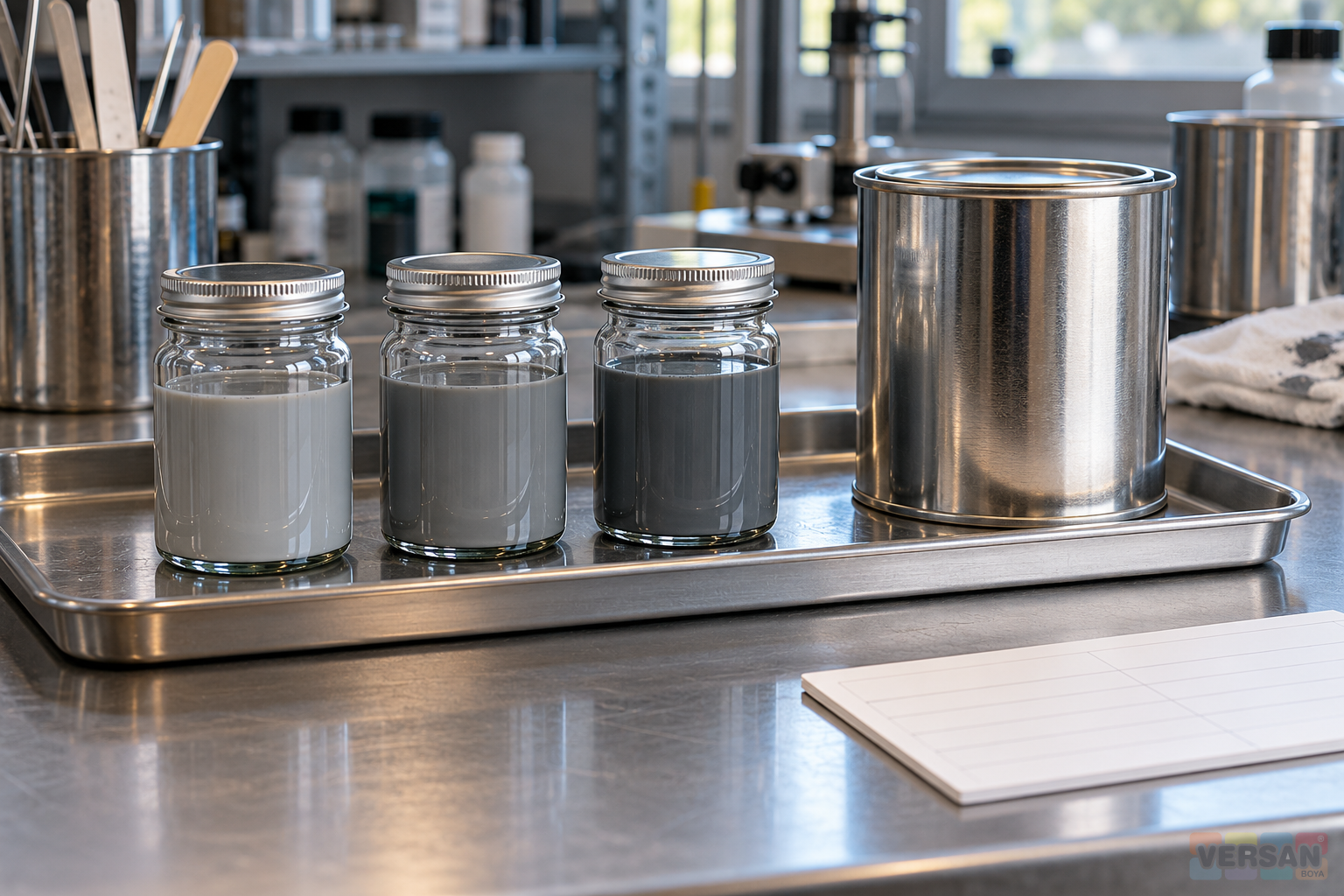
A change in the handling of an alkyd paint batch can appear to be a thinner problem, even when several other things have changed. Paint identity, storage history, sample preparation, the application surface and the timing of the observation may all influence the comparison. A useful small sample check separates these questions before a large quantity is adjusted. Its purpose is to produce a traceable decision about a defined combination and task, rather than to make the contents of a mixing vessel feel familiar.
For synthetic thinner and synthetic enamel, the following approach provides an original framework for organising that decision. It is a proposed working record, not a laboratory standard or a product approval. A satisfactory looking sample cannot establish compatibility with every paint, dilution level or service condition. The proposed paint and thinner combination must first be permitted by the relevant current technical data and safety information. Uncertainty about that combination should be resolved with technical support before material is released for production.
1. Record exact identities instead of family names
A record headed synthetic paint is too broad to support a batch decision. Include the full product name, variant, colour identification, paint batch number and the condition of the container. Record the thinner separately, with its own batch identification. The sample code should connect those two records to the application panel. When somebody reviews the result later, they should be able to identify both materials without relying on the memory of the person who prepared them. Similar colour names do not establish identical formulations or instructions.
An order using synthetic topcoat, for example, should not inherit approval from an earlier trial of a different topcoat. The earlier panel may help organise a comparison, but it cannot replace identification of the new material. If a label cannot be read, or thinner has been transferred into an untraceable container, resolve that issue first. Appearance and smell cannot reliably identify an unknown liquid. An unidentified material is unsuitable as the reference on which the rest of the evaluation depends.
2. Distinguish an archive catalogue from current instructions
Archive catalogues help explain product families and historical trade names. They do not necessarily describe the current variant in the container being evaluated. Keep the document title and available revision information with the sample record. Look for the specified thinner, whether dilution is permitted or required, the application method and any conditions affecting the next operation. An assumed percentage added from workshop habit creates a recipe without a documented basis. Missing instructions should be clarified instead of being filled with a convenient number.
The alkyd systems collection helps locate relevant products, but membership of a family does not itself approve a particular combination. Hempel's general mixing and thinning guidance similarly directs users to the recommended thinner and product specific documentation. Its brand specific recipes must not be transferred to Versan materials. The useful outcome for an application team is a confirmed product pairing, the current instruction and a clearly defined trial. A dated technical clarification tied to the exact product can also prevent repeated uncertainty at the next delivery.
3. Define the question before designing the comparison
A batch check may investigate a new thinner batch with an established paint batch, or a new paint batch with an established thinner. These are different questions. If both materials change together, a different panel cannot show which change caused the difference. Write down the variable being examined and the variables intended to remain constant. Reference material also needs a traceable identity, acceptable storage history and continuing suitability for use. Being older does not automatically make a retained sample a valid reference.
Names in the thinners and auxiliaries range do not remove the need for product specific permission. A comparison must not become a reason to introduce an unapproved solvent into a paint. Confirm that each proposed pairing is allowed, then define the narrower question being asked. A possible conclusion is that one new batch produced comparable observations under the recorded conditions. That is a more useful and defensible statement than claiming that all synthetic thinners are interchangeable because two small panels looked alike.
4. Plan sampling, measurement and clean vessels
Select a sample quantity that can answer the question without creating unnecessary material handling or waste. The vessel must be suitable for the product, clean and free from residues of previous use. Recovered cleaning solvent should not be introduced as clean dilution material. Preserve the measurement basis specified in the product instructions: mass and volume must not be treated as equivalent without a valid basis. The record should identify how quantities were determined, so that a later comparison can use the same approach.
Keep trial material separate from the production container. Returning a prepared sample introduces additional questions about contamination and traceability. If an implement is used for several samples, its cleaning arrangement should be defined and suitable for the materials. Preparing synthetic primer and topcoat in the same vessel does not provide a sound comparison when the cleaning between them is uncertain. A clear sample label, preparation time and responsible person are simple controls that prevent waiting samples from becoming indistinguishable at a busy bench.
5. Separate initial condition from preparation results
Record what is observed when the container is opened separately from what is observed after preparation according to the instructions. Container damage, visible contamination, surface skin or unexpected separation should be documented rather than concealed by an immediate addition of thinner. Such an observation is not, by itself, a diagnosis of a manufacturing defect. Product history and technical assessment may be needed. First decide whether the material is suitable to enter the trial; only then follow the permitted preparation sequence.
When comparing premium synthetic topcoat, both samples should represent their containers in a comparable way. Taking one sample from the upper layer and another from the bottom can create a sampling difference that is mistaken for a batch difference. This article does not prescribe a mixer speed or duration. Those details belong to the relevant product instructions and competent working procedure. The record needs to show what was actually done, so that technical support can distinguish the starting material from the effects of its preparation.
6. Control the variables outside the sample vessel
Two mixtures that look similar in a vessel can behave differently on different substrates. Identify the panel material, surface preparation and any primer already present. Define the application tool, direction and observation timing as consistently as practical. Record relevant environmental and material conditions without using thinner adjustments to compensate for conditions outside the product instructions. Comparable conditions are necessary for a useful trial, but comparison alone does not make those conditions suitable. Suitability must be established from the applicable instructions before the test is interpreted.
The industrial coatings range serves different applications, so another production line's routine should not silently become the synthetic system's procedure. An older reference panel also has a different age and storage history that should be acknowledged. Keep lighting and viewing arrangements consistent when comparing appearance. Side by side photographs make records easier to review, but a phone photograph is not an instrumental colour measurement or a durability test. Describe the observation method honestly when reporting the outcome to another team.
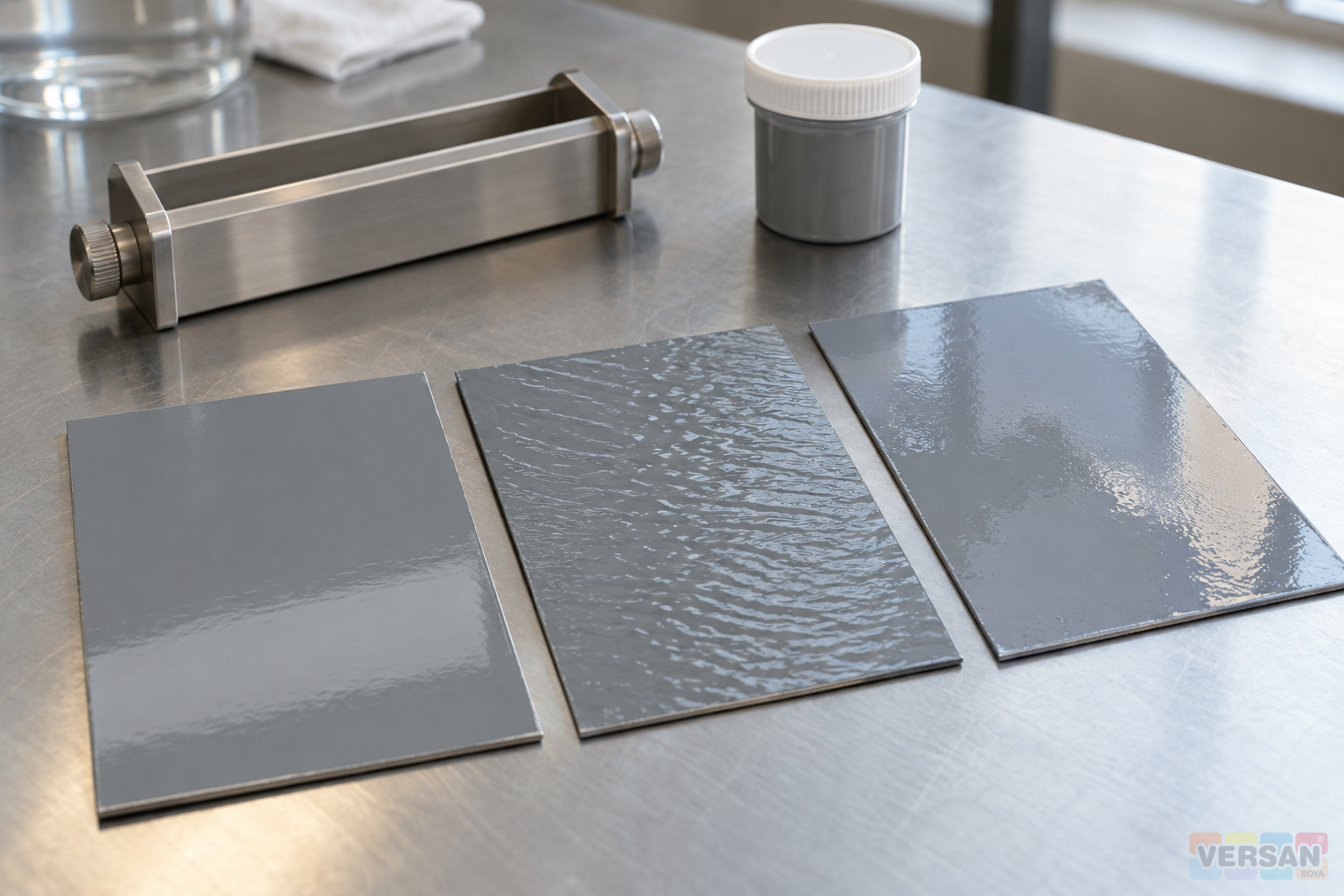
7. Extend the vessel observation onto a defined panel
A uniform looking mixture does not establish that it will produce an acceptable coating film. Controlled application onto a defined panel connects the sample to the intended operation. Record the tool and instruction used, and retain separate panel codes for the candidate and the reference. Observe edges, overlaps and the end of the application as well as the middle of the panel. The objective is not to force a defect by introducing arbitrary conditions. It is to create a repeatable observation that represents the actual task being assessed.
For semi matt synthetic topcoat, compare the intended finish with an appropriate reference rather than with a glossy product. If a panel shows runs, particles, lines or uneven appearance, return to the application record before attributing the result to the thinner batch. The related article on brush marks and sagging in synthetic enamel offers a separate discussion of those application observations. A defect description should distinguish what was seen from the cause that is still being investigated.
8. Plan observations at meaningful stages
The appearance immediately after application and the appearance at a defined later drying stage answer different questions. Agree the observation stages before starting the trial and record the actual times. Relate any drying assessment to the definition in the current product documentation. Casual touching, pressing or scratching should not be presented as a standard test. A short observation cannot establish a performance claim that the trial was never designed to assess. If a required observation is missed, mark it as missing instead of reconstructing an invented result later.
For matt decorative synthetic paint, a change in sheen does not independently prove readiness for another coat or for service. The distinction between drying observations and application history is explored in alkyd drying, wrinkling and film thickness. When a new sample differs, review panel preparation, application and observation age together. Comparing a newly applied candidate with an older, fully developed reference using only a photograph can otherwise turn an age difference into a mistaken material decision.
9. Set acceptance criteria before seeing the outcome
Liking the appearance of a sample is not the same as demonstrating that it meets a defined requirement. State which observations are acceptable and which require further review before applying the samples. For visual assessment, identify the viewing arrangement and reference. Where instruments are appropriate, a competent person should define the method and confirm that the equipment suits the question. Changing a limit after seeing the result weakens the control. Keep a conditional observation distinct from permission to use the material in production.
A decorative reference prepared for architectural coatings does not automatically become the acceptance record for a different metal coating job. The substrate, finish requirement and intended exposure may all differ. The same caution applies to repeat orders: retain the connection between the old approval and the product and task it actually covered. If a result is accepted only for one operation, write that restriction in the decision. A broad approved stamp can hide the limits of the work and encourage later substitutions that were never assessed.
10. Investigate differences without chasing consistency by feel
If the candidate panel differs, the first response should not be an unrecorded extra addition of thinner. Check the paint and thinner identities, quantity record, vessel cleanliness, preparation and application history. Identify conditions that changed during the trial. A further controlled comparison may be appropriate once the question is clear. Questionable material can remain outside production under the organisation's acceptance procedure while the issue is investigated. Uncertainty is not a sufficient reason to scale an unexplained small sample directly into a large production mixture.
A topcoat problem over antirust primer cannot be assigned to thinner alone when the underlying coating's condition is unknown. The evaluation must respect the permitted layers of the complete system. The article on synthetic thinner quantity, flow, hiding and drying explains why easier movement is an incomplete measure of success. Even if an adjustment appears to reduce one visible problem, the remaining acceptance requirements still need consideration. Correcting an observation and changing a product's authorised use are different decisions.
11. Connect the small sample to a controlled production decision
A practical record can connect the order, both material batches, the panel code, preparation and application times, document reference, observations and the person making the decision. Store photographs against the same sample code. This is a proposed organisational arrangement rather than a certification template. Adapt it to the existing quality system and avoid filling empty fields with guessed numbers. Writing not measured or not observed preserves more useful information than giving an impression of completeness that the underlying work does not support.
Consider a hypothetical workshop changing from one permitted thinner batch to another during an order. The accepted panel code can be linked to that order, and the checks required at the change can be agreed in advance. Keep unopened stock, trial material and material released for production identifiable. Forms borrowed from wood and furniture coatings work should be adapted to the actual product system rather than copied by title alone. A record is useful only when it represents the material, operation and decision that people later believe it represents.
12. Close the trial safely and communicate its limits
Solvent containing sample work requires the relevant safety data and an assessment of the task and working area. The HSE solvent guidance supports considering the product and operation together when controlling exposure. Keep unused containers closed and place waste and contaminated materials in the established safe collection arrangement. This article does not select a glove, respirator or ventilation specification. Those decisions require current product information and competent assessment of actual conditions. Smell is not a reliable basis for declaring the working environment safe.
When handing over the result, identify the exact combination, panel and conditions examined. Production permission should remain within that defined scope. A later change in substrate, application equipment, paint variant or thinner batch may require the earlier decision to be reviewed. This approach replaces repeated attempts to recover a familiar consistency with a more useful question: can the same material decision be explained and repeated from the record? Batch consistency then becomes a controlled chain of evidence, rather than an impression formed at the mixing vessel.
Sources and scope
- Versan Boya, Nanomix archive technical catalogue, thinners, page 42 — archived family information; not a current TDS or SDS.
- Versan Boya, Nanomix archive catalogue, synthetic system related pages — family context without an exact match claim for every current variant.
- Hempel, Mixing and thinning technical guideline — general selection principles; no brand specific recipe transferred.
- HSE, Solvents — general exposure control, not Turkish legal compliance or product specific safety instructions.