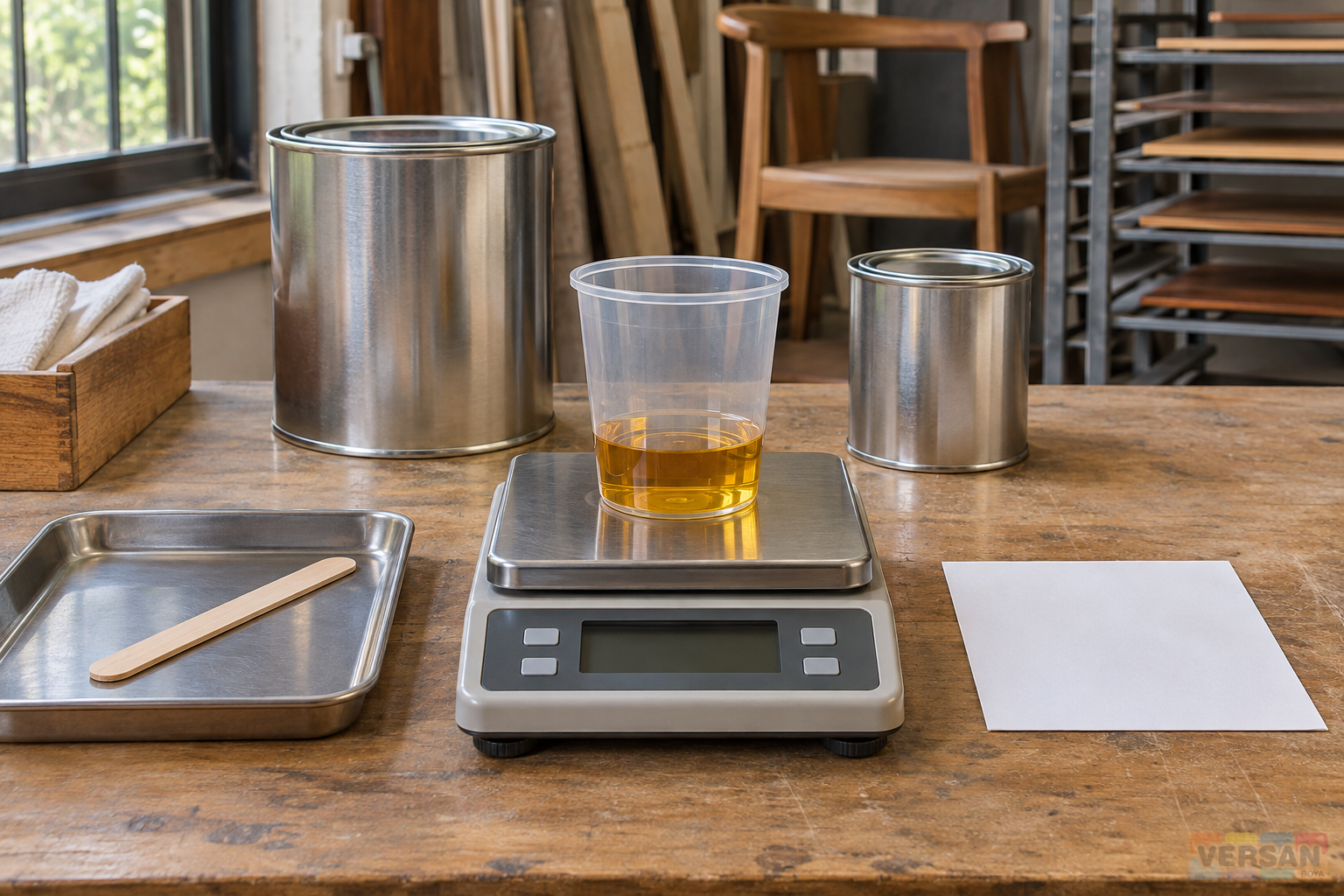
A small batch of two-component polyurethane varnish may cover only a sample board, a few mouldings or one furniture door. Its small size does not remove the need to verify both components, measure them on the stated basis and keep the preparation time with the cup. An operator should be able to tell whether a cup is available for use, which pieces it is allocated to and which technical instruction governs the decision. The next shift should be able to reconstruct the same facts without relying on a memory of what stood on the bench.
This guide is for organizing that work. The current technical data sheet for the exact system governs the product instructions. The current safety data sheets and workplace assessment govern handling, exposure controls and waste. The process below makes those references available at the decision point. It also helps distinguish a batch that can be applied from one whose identity, measurement, time or assigned work still needs to be checked.
Define the work the batch is intended to cover
Begin with the pieces that can actually reach the application station. Distinguish ready components, pieces held for inspection and representative samples. A work order for five fronts may only have two fronts ready now. Preparing material against the order total makes the cup wait for work that may not arrive while its permitted use conditions still hold. Give the batch a specific purpose and decide when the next batch would be needed.
Use observed consumption from comparable work when estimating quantity. Include the planned sample and material normally retained by the method or equipment. Do not assume that a flat panel and a profiled edge consume the same amount. Keep uncertain items outside the estimate until they are ready. Recording the basis of the decision makes it possible to adjust the next run when handling, geometry or queue time differs from what was planned.
Identify the exact finish and the corresponding components
The NanoMix polyurethane varnish page introduces a product family. The pages for silk matt polyurethane varnish, matt polyurethane varnish and gloss polyurethane varnish represent distinct product decisions. Put the actual finish, product code and relevant work order at the top of the record. A familiar family name or a lid colour should never be the only way to identify a component.
Record the code and lot for component A and the corresponding component B on separate lines. The polyurethane hardener page explains a component role in matching systems. The name alone cannot confirm that a particular hardener is suitable for the varnish on the bench. Check the container markings against the current product documents. Where the documents and container do not agree, resolve the mismatch before opening the batch. This is especially important where similar containers serve different finishing lines.
Separate catalogue history from the current work instruction
The archived NanoMix catalogue pages 37 and 38 list different polyurethane varnish finishes and refer to a sealer in their application notes. Page 42 describes the thinner range. Those references are useful for identifying families and reading the original context. Do not combine a finish table from one archived sheet with a component instruction from another and apply the result to a current job. Use the current technical data for the precise products in the intended system.
Put the document name and revision on the batch card or link it to the controlled work order. A new lot of the same confirmed component and a change to the component code are different events. A new lot needs a traceable entry. A changed code also needs a fresh compatibility decision and the appropriate current reference. Where a previous card is copied, check the fields that would otherwise be carried forward unnoticed. The next person should be able to tell which instruction was used on the day.
Confirm the measurement basis and the usable range of the equipment
If the data sheet specifies a mass ratio, use the approved weighing method. If it specifies volume, use a suitable volumetric measure. Put the unit next to the measured amount. Do not translate a mass ratio into marks on a cup without validated density data and a method authorized for that system. When weighing, use a suitable container and tare it as required by the approved procedure. Confirm that the instrument is appropriate for the amount being measured.
Small batches make the minimum reliable reading important. If the smallest required amount falls outside the equipment's reliable range, do not estimate a fraction of the last displayed digit. Select suitable measuring equipment or obtain approval for another batch plan that remains within the product instructions. Record both the intended and actual measurements. If a value is wrong, hold the cup and resolve the deviation through the approved process rather than making an undocumented addition.
Treat thinner as a separately authorized input
The NanoMix polyurethane thinner and the thinners and auxiliaries range are useful references when identifying candidate products. Whether an addition is permitted, which product can be used and when it can be added come from the instructions for the varnish system. An authorized addition needs its own product identity, lot, quantity and time on the record. Do not use a thinner to extend a time limit or compensate for an unknown mixture.
Make a visible distinction between products used for approved formulation adjustments and products held for cleaning. If they can be confused on the same bench, identify them by role as well as code and store them under the site's procedure. The guide on the different roles of hardener and thinner provides broader product context. The small batch record has a narrower purpose. It shows what was authorized for one job and what actually entered one cup.
Label the cup and connect it to a batch record
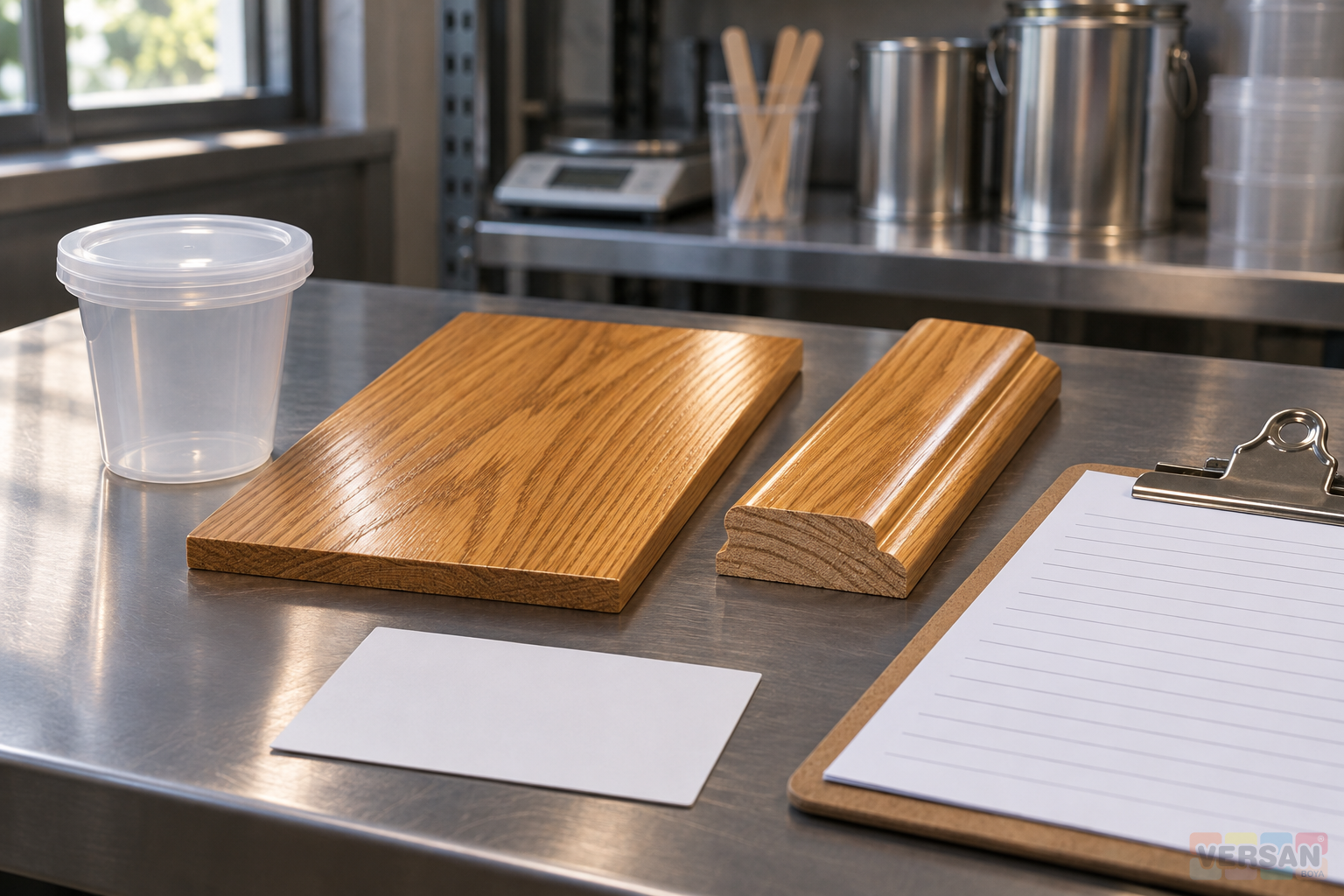
Assign the batch ID before the cup moves into use. The work order, pieces or sets, exact products, component lots, measurement basis, actual amounts and preparation time should all resolve to that ID. Include who prepared it or the responsible role, the current status and the applicable use limit where documented. For two simultaneous jobs with similar appearance, an ID on the cup and the matching record are more dependable than a marker colour alone.
If the mixture has to move into an approved secondary vessel, retain the link to its originating batch and record the allocation. The transfer does not give the mixture a new start time. This matters when one cup is divided across stations or is moved to a different bench for a sample. The receiving operator should know which portion of the job the cup serves and which preparation time travels with it.
Record the event that starts the use window
Read how the applicable product instruction defines the start of the working period and the conditions under which the stated limit applies. Record the event and the actual time as it occurs. If the instructions prescribe a waiting step, record it separately. A required wait, the time in which a mix can be used and the drying or cure time on the workpiece are separate decisions. Writing only ready or dry on the card leaves too much room for interpretation.
A mixture can still look fluid when a documented limit has passed. Do not authorize use based on flow alone or restart the time by transferring, stirring or thinning. Hold the batch if the start is unknown, the documented limit has been exceeded or the stated conditions no longer apply. Make the start and limit readable on the record at the station. If a technical decision is needed, let the responsible person review the complete record and the current document before deciding on disposition.
Use samples for the surface decision they can support
A sample can help compare the intended finish and confirm the appearance of a suitable surface. Choose a sample that reflects the substrate, sealer and geometry relevant to the job. Mark its batch ID and the time of application. An acceptable flat sample may not capture the behaviour of a profiled edge or a different sealer. The separate guide to polyurethane sealer and topcoat compatibility addresses that part of the decision.
A sample does not establish that an unidentified component is suitable or make an undocumented mixture usable. Resolve the batch's identity and time first. Record the sample assessment and the decision to start production as separate items. If two approved samples look different, compare them against the same agreed reference and viewing setup. Determine which pieces were treated and which material and conditions were recorded before assigning a cause.
Link application events to the pieces actually treated
When a batch reaches the station, hand over its assigned piece list and confirm what is physically ready. Record the start of use, the pieces treated and any pause that affects the workflow. If one batch is used on two sets, link it to both. If a set uses several batches, record which pieces or surfaces received each batch. A set-level note such as varnished today will not provide enough detail when one side or profile later needs investigation.
During an interruption, identify both the open batch and the position reached on the piece list. Before resuming, review the documented time, the actual conditions and the state of the surface. If a new batch is required, link the change to the affected pieces and the next approved operation. See the cabinet door and body traceability guide for retaining those component identities through assembly and dispatch.
Start each new batch as its own event
Do not combine a remainder of uncertain age with a new batch to simplify the record. Use a suitable clean container and a new ID when another batch is needed. Keep the earlier batch's disposition on its own record. A repeated product and lot combination can be entered efficiently, but the new measurements, preparation time and allocated pieces belong to the new batch. This makes it possible to distinguish a material lot from a specific preparation event.
For a visible group of adjacent parts, record where a batch change occurs and apply the project's approved comparison and acceptance method. A change does not by itself prove that a finish will differ. It does identify which components are worth comparing together and which preparation and use records need to be reviewed if a difference appears.
Keep product substitutions out of an open batch record
The wood and furniture coatings range and the furniture varnish page help users compare separate finishing objectives. An acrylic varnish or a matt polyurethane topcoat paint represents a different product decision. A shared sheen term or resin description does not authorize substituting it for an exact varnish or component already specified.
If a product change is necessary between sampling and production, record the reason and obtain the appropriate technical and appearance decision. Link the new reference and the new batch to the affected work. Keep earlier cards so it remains possible to tell which material was opened, used on samples or set aside. This is more informative than rewriting the old record as though the change had always been part of the job.
Make holds visible at the point of use
Mark held cups and keep them apart from released material in accordance with the workplace procedure. A hold should identify the batch, the reason and the person or role responsible for the decision. If a doubtful lot or wrong container is discovered before application, keep the materials and records together for review. If uncertainty is discovered after application, identify and hold the affected pieces through the batch record. Do not treat a cup's absence from the station as evidence that the problem is resolved.
At shift change, separate material in use, material on hold and equipment waiting for the authorized cleaning process. Name the authoritative record and keep a traceable correction if the start time or lot entry changes. The receiving shift should know which physical cup and workpieces are affected and what the next permitted action is. A short written handover tied to the batch ID is more reliable than a note that says to continue the same job.
Define handling and waste steps before mixing
Use the current safety data for the actual components and the workplace risk assessment to determine suitable mixing areas, ventilation, ignition controls, exposure controls and personal protective equipment. NIOSH describes respiratory and skin sensitization hazards from exposure to isocyanates used in some coatings. Check the actual product documentation to establish whether and how that hazard applies. The amount in a small cup does not determine the required safeguards on its own.
Plan how the site will segregate unused mix, contaminated equipment and packaging. Follow the authorized procedure for the materials involved. Do not return mixed material to its original component containers. Record the amount set aside where it can be measured safely, the decision and the responsible role. Keep the material identity with it so another person does not mistake a hold or waste container for available production stock.
Close the record with a decision someone else can verify
At closure, the record should answer who prepared the batch and from which verified components, where and when it was applied, and what happened to the remainder. For a short run of mouldings, the first cup might be used on a sample and one part, while the second covers the remaining pieces. Separate records let a later investigation focus on the actual parts rather than the entire order. Make unresolved items visible instead of marking a batch complete simply because the bench is empty.
Start with one real work order and test whether another person can trace one part back to the cup and one component lot forward to every affected piece. Use observed consumption and waiting time to improve the next batch plan. If the test reveals a missing step, add only the field or handover that makes the decision reconstructable. A useful system keeps the mixing bench workable while giving quality and production teams the same history of the finished pieces.