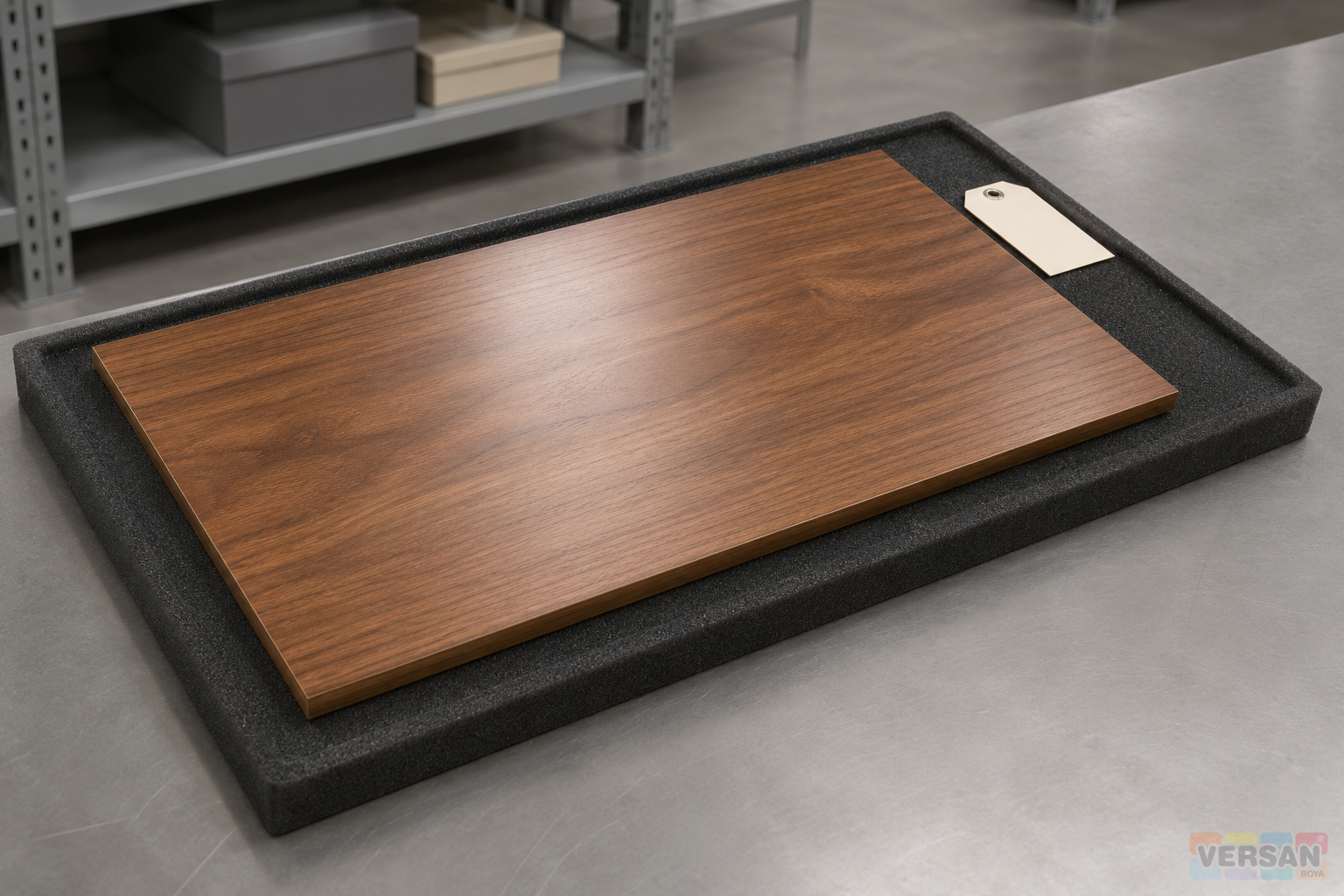
Define the approval the panel represents
A retained polyurethane varnish panel gives a workshop a physical point of comparison after the finish has been approved. Its value depends on the decision it represents. A walnut veneer door approved for one set of cabinets might look close to a solid walnut trim piece, yet the approval could apply only to the veneer faces. The archived record should identify both the finish and the scope of its acceptance, including any items that were shown separately. A later production decision is easier to defend when the person comparing the panels can recover the original scope without relying on the memory of the people who attended the review.
Clear coatings leave underlying material and its variation visible. A difference between an archived panel and a new sample can come from the veneer, stain, sealer, topcoat or handling since approval. A current panel and an old panel that look different establish the existence of a discrepancy under those viewing conditions. The comparison by itself cannot establish which panel moved away from the approved appearance. For professional coating systems, keeping custody records makes that second question easier to investigate. The work begins after the first decision. Projects still defining finish expectations can use the separate guide to approving colour, texture and sheen for furniture finishes.
Give each physical piece an identity
Assign a permanent identifier to the panel and maintain a record that can be searched by contract, room, component or finish revision. The unique identifier travels with the panel when it changes shelf or container. Put the mark on a suitable back or edge area, away from the finish used for review, and label the container so that a reviewer can check the two match. A second piece associated with the same approval receives a distinct identifier. If a loose panel and an empty box are found together, keep the discrepancy open until approval photographs, the handover log or another reliable record ties them together.
Record the wood species and construction, whether solid or veneered, the direction of the grain and any relevant cut or matching information. Keep the finish designation, coating sequence and the reference to current product documentation in the same record. For a system selected from the Nanomix Polyurethane Varnish range, the product family name helps find the range, while the individual product designation identifies what was used. Where the system includes a polyurethane hardener, record the matching component and any available lot references separately. A similar name on another container offers limited evidence of interchangeability. Refer to the documentation for the identified system to resolve component questions.
The archive entry also needs the approval date, scope, approving party and the decision itself. Record whether the sample establishes a single visual target, illustrates one point in an acceptable range or carries a restricted approval. If multiple samples were shown in one approval photograph, map the physical identifiers to their positions in that image. Keep the original approval message or signed sheet accessible in the same record. Months later, these details let the operator tell the difference between an approved panel and a very similar sample that was submitted at the same time but declined.
Capture the condition at the moment of transfer
A simple condition record identifies which face was reviewed, where the inspection area sits and which parts already show small defects or natural variation. Use an overall image to show the panel with its edges, then a closer view of the representative areas. Record how the panel and light were oriented. A grain feature that appears prominently in an oblique image can be much less visible when the light is diffuse. Where practical, include the back and identification area in the handover record as well, so the connection between the photographs and the physical item is clear at the next review.
An archive can contain both an actual production part and a witness panel prepared with the same declared finish sequence. Record which it is. Differences in dimensions, surface preparation and construction can matter when a witness is used to review appearance on a larger finished component. The accepted Nanomix catalogue archive distinguishes gloss polyurethane varnish from silk-matt polyurethane varnish. This helps explain why the finish designation belongs in the record alongside the coating family. Archive catalogue process values are historical product information. Decisions on whether a particular sample is ready for handling should use the current technical documentation and the workshop's validated process.
Keep the master and working samples connected
Use a master sample for decisions that require the approved reference and a working sample for routine checks where the history of that piece is adequate. A working sample might have been made alongside the master or at a later date. If it was made later, record how it was compared to the master, what differences were seen and who agreed it could be used. A batch named after the master and a sample approved against the master are two distinct links in the record. A reviewer who can see that relationship can decide whether a working sample is adequate for the current decision.
Give workshop users a quick way to record where a working sample went and what happened to it. A box moved to a different line, a sample displayed near a window or a panel loaned for an installation discussion has acquired handling history. A shorter log that people actually fill in generally serves the comparison better than a comprehensive but abandoned form. If a new rub mark or patch appears, record the area and date before deciding whether the sample can still be used. The master can remain available for a higher-level review while routine screening continues within the remaining authorised scope of the copy.
Treat storage, packaging and handling as part of the history
Store each sample so it is supported, protected from direct light and kept clear of avoidable contact on the review face. Choose storage and separator materials based on experience or compatibility checks with the relevant finish. A soft package can still leave a texture or hold dirt against a finished panel. Place the label so staff can identify the sample without repeatedly sliding it across adjacent pieces. A simple drawing in the register can show how a difficult shape should sit in its support, particularly when a profiled surface has been approved as part of the project.
Conditions should be monitored where they are relevant to the project and the variability of the archive environment. Record observed departures, spills, relocation, accidental exposure or an unlogged period. Where there is no measurement, keep the record explicit about the gap. An operator investigating a change in an old sample gets more value from a dated note about an open window, hot cabinet or storage move than from an estimate entered months later. The presence of different materials within the wood and furniture coatings group is one reason to make storage guidance specific to the sample and its identified system.
An archive container and commercial packaging for finished furniture have different jobs. The archive container is opened repeatedly and preserves a known comparison area. Goods packaging must protect parts through its defined delivery and use sequence. The guide to packing and first care for polyurethane-varnished furniture describes the production side. Returning a comparison panel is a separate action with a condition check of its own. If someone finds residue on the face, photograph it before cleaning and consult the recorded handling instructions before making a change that would remove evidence of contact.
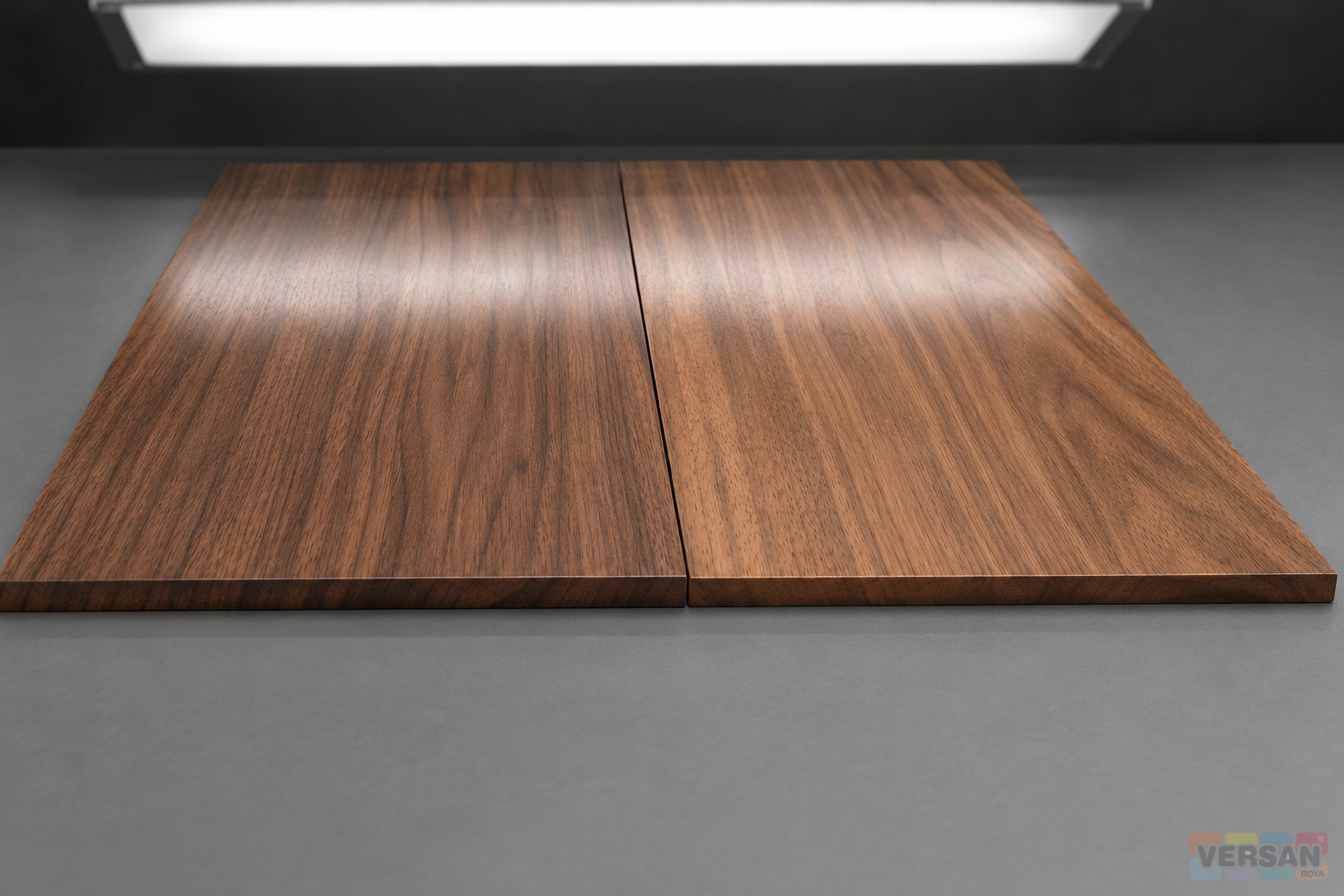
Compare under repeatable viewing conditions
Start by confirming panel identities and the usable areas on each. Set the boards with grain in the same direction and provide a comparable background. Review similar areas of the face before judging edges and profiles. If the final assembly is normally viewed from a particular position or under a second relevant light source, record that condition as a separate comparison. A coating can make a timber feature look stronger from one position even when it is less prominent in another. Define which observation drove the decision, so a later operator can reproduce the comparison instead of attempting to recreate a vague impression.
If the project uses a gloss meter, keep the measurement geometry, instrument checks, measurement locations and the relationship to the visual review. ASTM D523 describes measurement of specular gloss for nonmetallic specimens. A reading under a defined geometry helps track a property of reflected light. It leaves questions such as grain clarity, texture and colour for other observations. For example, a new surface finished with matt polyurethane varnish can give a similar instrument reading in a selected area and still show a different grain image across the face. Record the measured and observed differences as separate pieces of evidence. Tolerances and test geometry should follow the applicable project requirements and method, with recorded agreement where the specifications are incomplete.
Investigate which sample may have changed
When a production part looks warmer than the working reference, repeat the observation under the documented light and orientation. Compare the working copy with the master, then review each panel's history. A difference seen only beside the line-side copy may point to a change in that copy, especially if the affected area corresponds to its handling history. Two older copies that have always been stored together can agree with each other after the same exposure. The original condition photographs and any separately kept witness sample can help in that case, with due attention to viewing conditions and to the limits of photographs.
Then examine the new component. Check whether a change in the timber lot, leaf matching, surface preparation or finish sequence could explain the observed pattern. A difference running through the grain has a different appearance from a broad change in sheen across several comparable areas. The article on sealer and topcoat compatibility in polyurethane varnish describes the role of the coating sequence. If additional trials are needed, label the trial panels separately and retain the original comparison evidence. A freshly prepared diagnostic sample can narrow the possible causes. Grant it authority for routine use only through the applicable approval route.
Open a new decision when the represented system changes
If a project reviews an alternative such as acrylic varnish or matt acrylic varnish, keep the comparison with the retained polyurethane panel as part of the proposal. The physical reference still identifies the older decision, and the proposal needs its own identification and documentation. Use the same distinction when evaluating a decorative wood varnish for another component or specifying a new veneer cut. The examples in AWI 100's sample requirements connect representative construction and finishing information to the submission where that standard applies. Project teams should record the particular materials, approval scope and decision route for their own work.
Keep supporting product records near the specimen information. If polyurethane thinner appears in the application record, link to the documented product and process entry for the panel. The archive's purpose is to show what the workshop used and under what revision. Mixing or application instructions belong in the current controlled technical documents. A buyer or quality technician can then trace a discrepancy to the approved sequence instead of assuming the old sample was prepared exactly the same way. This is particularly important for a job that has two legitimate finish revisions in production at the same time because different orders entered the schedule on different dates.
Suspend or retire references with a clear record
Use a status that tells the operator whether a panel can currently support a decision. Common practical states include approved for comparison, restricted to certain areas, held for review and superseded. Give the hold a date and a reason, identify the person responsible and record which production decision is waiting for an outcome. A lost identifier, damaged inspection area or disputed approval provides grounds to suspend routine use while the team checks the evidence. Mark that status both in the register and in the controlled identification of the stored item so someone picking from the cabinet sees the restriction.
Consider a replacement door ordered after the original installation. The line-side copy has a rubbed edge and appears brighter than the new door in that area. On the untouched surface, the difference is harder to distinguish. The decision owner can restrict the copy, inspect the master and repeat the comparison in the agreed viewing conditions. If neither specimen now provides an adequate reference for the order, request a new approval and describe the gap in the evidence. When the new panel replaces the earlier one, record the effective order or serial range and keep links to both files. A historical review can then reproduce which reference governed each production release.
A short retrieval exercise tests the arrangement. Ask an operator to select a current furniture paint or clear-finish job, find the physical reference and recover its approval, current use status and latest comparison without help from the original operator. Next, take an archived panel and attempt the reverse path from its identifier back to the orders it governed. Record where the connection breaks. Improving a difficult search field, a worn label or a missing transfer note makes the next comparison more reliable. A panel becomes useful evidence over time when the physical item, its approval and the history of its use remain connected.