Base the overcoating decision on the existing film
Painting over an old antirust primer is not a decision to make from faded colour alone. The condition of the layer that will remain underneath is a central input to maintenance planning. Some areas can appear intact while joints show lifted edges or local corrosion. Treating the entire item as one uniform surface can make the repair scope either too narrow or unnecessarily extensive. This guide provides a structured way to decide what may remain and what needs further investigation or removal. It does not approve an unseen surface or provide one overcoating recipe for every product described as an antirust primer.
Selecting an antirust primer should be considered alongside the identity and service history of the existing coating. A red-brown appearance does not establish binder chemistry, product identity or compatibility with a new layer. Define the item location, substrate, service environment, access conditions and intended outcome in the maintenance file. Separate a request to refresh appearance from a need to repair the protective system. An even new colour does not prove that an underlying weakness has been resolved. Keep unanswered questions visible, so the person responsible for the decision can distinguish confirmed information from assumptions that still need investigation.
Investigate the old coating through records rather than colour
Start with previous orders, container labels, maintenance reports and application records. Look for the full product name, component information where relevant, and the layers used in the earlier system. A container in an old photograph is insufficient unless its connection to this surface is established. Another product may have been used elsewhere in the same premises or in the same colour. Conflicting records should not be closed with a confident but unsupported identification. Distinguish a known product from a suspected one. Explaining uncertainty to the technical adviser helps define an appropriate investigation and trial instead of disguising an important gap in the decision.
Even a confirmed product name does not automatically approve retention. The same material may have been applied at different times with different preparation and conditions. Age, exposure and intermediate repairs can alter the present system. If historical records use synthetic primer and antirust primer interchangeably, confirm what was actually supplied. A product-family archive is not a current datasheet for an unidentified old film. If documentation cannot be found, do not borrow another product's mixing ratio, thinning instruction or waiting time. The appropriate investigation route should be defined by the technical responsible person with the uncertainty explicitly recorded.
Divide the surface into condition zones
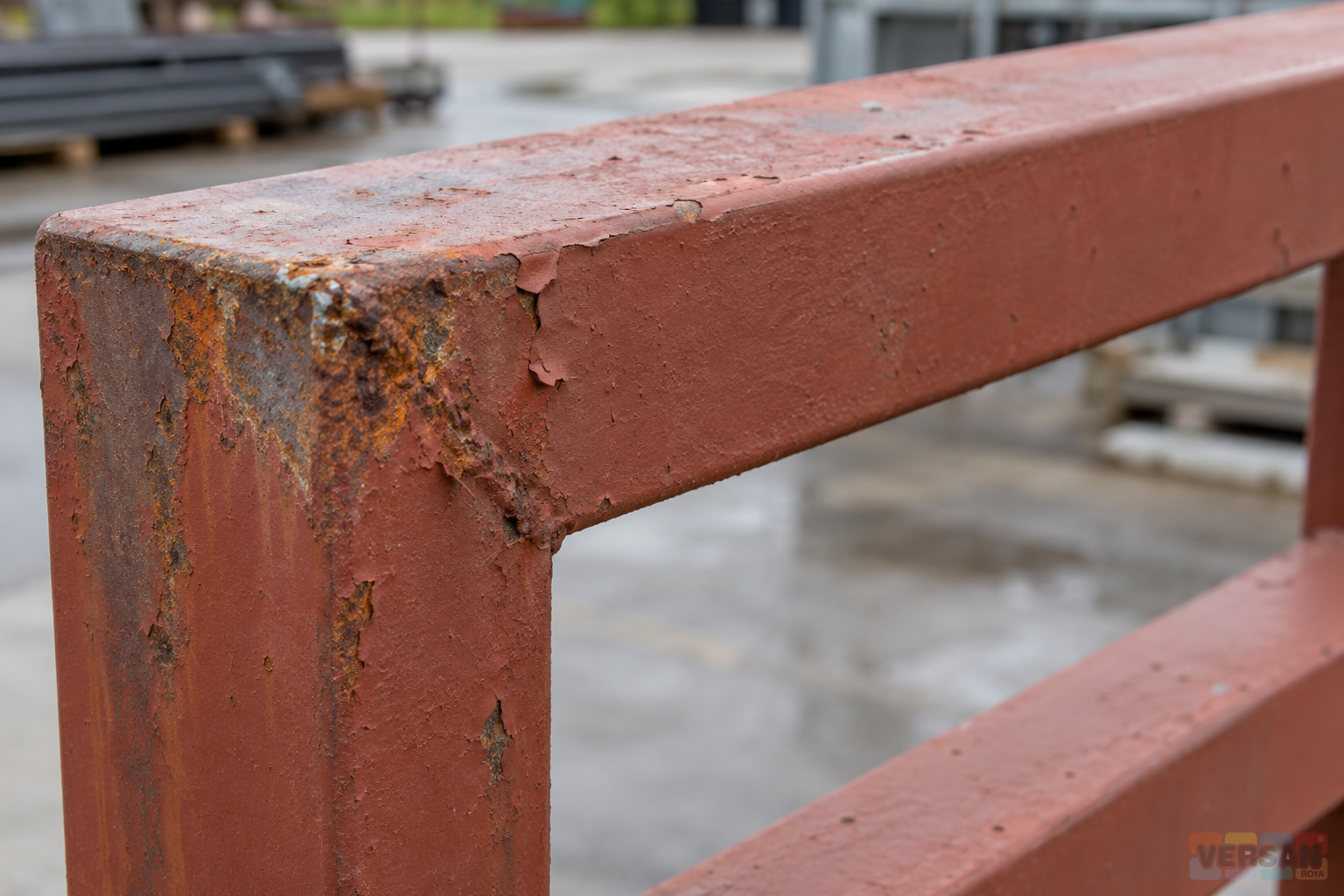
Photographs linked to a simple item drawing can be more useful than trying to fit the whole surface into one image. Mark apparently intact coating, lifted edges, exposed metal, rusted areas and unidentified repairs separately. Give each finding an item or zone reference. A close photograph should be accompanied by enough context to locate it again. The purpose of mapping is not to prove the cause from first appearance. It is to make later changes traceable, show what preparation revealed and define the area to which a maintenance decision applies. Retain the original observations rather than replacing them with an unqualified conclusion.
A defect at one joint does not prove failure across the whole item. Equally, widespread separation should not be described as a few isolated touch-ups simply because a small repair is convenient. Areas that look similar may have different histories. A section welded during a previous modification may require a different decision from an undisturbed flat surface. If cleaning or removal of loose material changes the apparent damage boundary, preserve the initial map and add the revised boundary. This separates discovered scope from the first estimate. Changes in quantities and duration can then be explained by actual findings instead of appearing as unexplained additions to the quotation.
Do not confuse intact appearance with verified suitability
A continuous-looking old film does not prove adequate attachment to the substrate or successful support for a new coat. A weak underlying layer can remain in the system even when the new finish looks smooth. Conversely, removing every old layer is not an automatic answer to select before investigating its condition. Define the extent and acceptance conditions of any film proposed for retention. If adhesion assessment is needed, the project technical responsible person should select the method, locations and acceptance criteria. An arbitrary scratch or hand check should not be presented as a standards-based acceptance report for the entire surface.
A new primer must not be assumed to stabilise a loose old layer. A good-looking new film does not eliminate weakness left beneath it. Keep loose or uncertain areas separate from those being considered for retention. Selecting a primer for exposed metal and confirming compatibility over an old film are different questions. The published guide to antirust and synthetic primers in metal maintenance complements the interpretation of product roles. The central issue here is which existing layer can reliably remain on this particular surface, under a defined system and acceptance scope rather than on the strength of a generic primer description.
Assess contamination separately from coating damage
Oil, dust, loose residues and other contamination are not resolved merely by renewing the coating colour. Investigate the type and extent of contamination. The cleaning approach should suit both the existing film and the proposed new system. Applying the same solvent to every metal surface, or treating all contamination with one mechanical operation, is not a universal procedure. Review the condition again after cleaning; a mark initially attributed to dirt may reveal coating loss. Record the operation and subsequent check so the maintenance scope can be traced to the actual condition being assessed, with remaining uncertainties carried forward to the next decision.
The name synthetic thinner does not establish suitability for cleaning every aged coating. Products in the thinner range should not be substituted simply because their names appear similar. Application thinning and surface cleaning have different purposes, and appropriate use requires the relevant product information. Uncontrolled chemical treatment of an unknown film may change the evidence rather than help inspect it. Record who approved the method and what was observed in the trial area. Odour or rapid evaporation is not an acceptance measure proving that contamination has been removed or the surface is suitable for overcoating.
Define the transition around a local repair
Where local repair is selected, consider the surrounding coating boundary as well as the visibly exposed rusty point. A weak layer beneath a loose edge does not become reliable because new material gives it a smooth appearance. The preparation scope should address the transition to the film proposed for retention. Hempel's repair preparation guide discusses partial or complete old-coating removal and preparation of repair boundaries as general maintenance principles. It does not establish a preparation grade, equipment pressure or application instruction for a particular Nanomix product. Select the project method separately, with the proposed retained film and repair system included in that decision.
If preparation reveals more extensive deterioration than expected, reassess the boundary. A quotation describing a small repair is not a reason to leave questionable coating beneath the new system. Nor should all previously accepted film be removed automatically merely for operational convenience. Record the zone reference, original finding, preparation undertaken and newly revealed extent. Covering findings with the next coat before the intermediate check can destroy information needed to make the decision. Define a stopping point and responsibility for technical reassessment before work starts. The discovery can then be managed as an explained scope change rather than becoming an undocumented adjustment during application.
Use a representative trial over retained coating
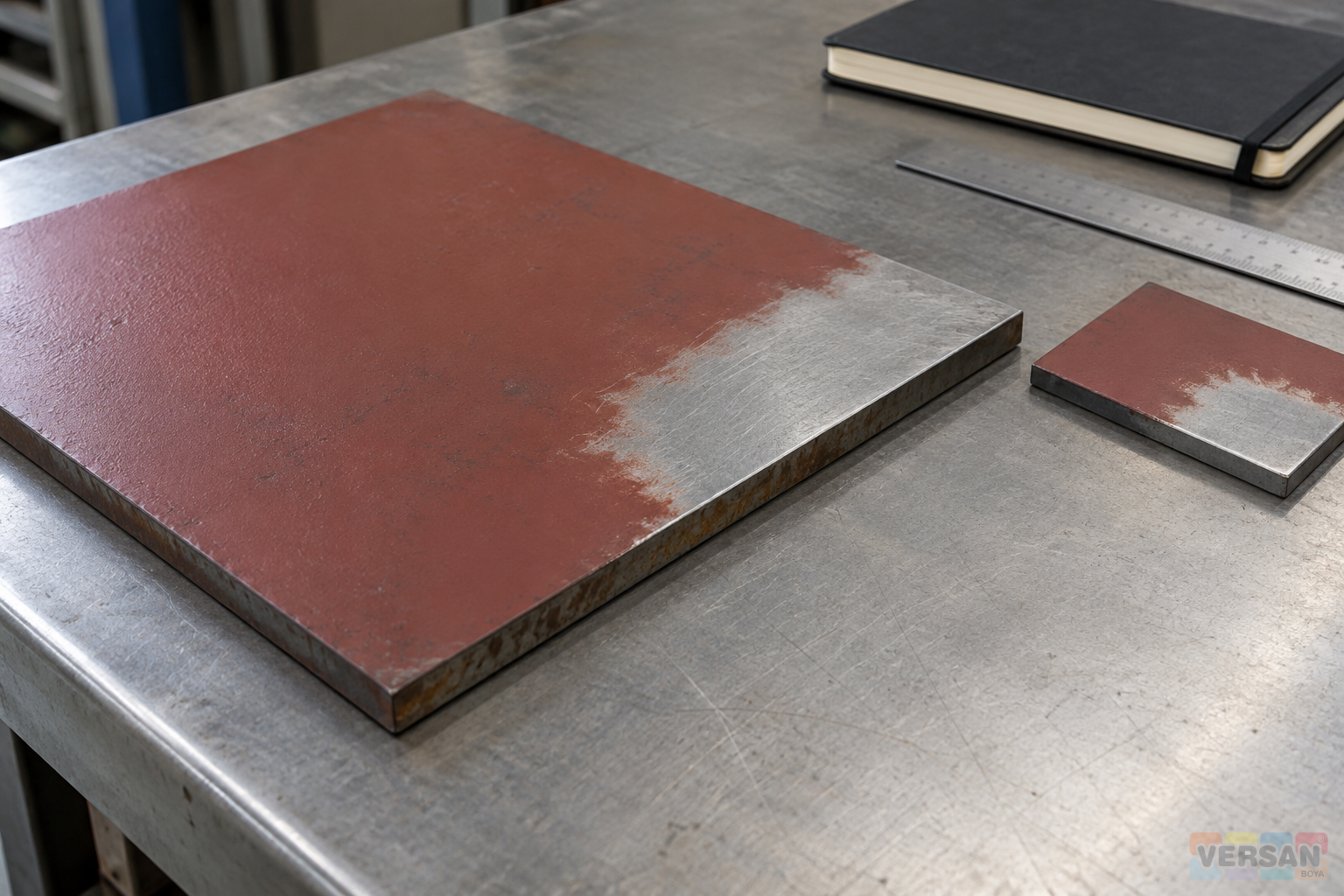
If some old coating is to remain, assess the new system's compatibility with that prepared surface. The trial should represent the real work. Application only to a new plate cannot answer every question about an aged existing film. Record the location, known identity of the old coating, preparation and new products used. Set application and assessment conditions from current instructions. The absence of an immediately visible problem such as lifting or wrinkling does not prove every longer-term service expectation. State which question the trial is intended to answer, which observations were made and which limitations remain relevant to the maintenance decision.
Even when a synthetic topcoat is proposed, a shared family description does not establish the system match. If an alternative involving an epoxy primer is suggested, reconfirm preparation and compatibility with the retained layer. Links to these products do not mean either can be applied directly over an unidentified old film. The technical responsible person should define observations that stop the trial and outcomes requiring wider assessment. An unfavourable result should not be concealed by adding a heavier coat or an unapproved amount of thinner. Preserve it as evidence that informs the next decision.
Confirm the substrate and service environment
The term antirust does not place every metal under one preparation method and one product selection. Steel, galvanised surfaces, aluminium and materials introduced during earlier repairs may need separate consideration. If substrate identity is uncertain, do not infer it solely from rust colour or surface brightness. A different surface revealed during preparation should trigger a review of suitability. Different materials can occur within the same assembly. Removal of the old coating does not automatically make one primer suitable everywhere. Treat substrate uncertainty as a visible control point in the work programme, with a named person responsible for deciding what information or assessment is required.
The service environment also affects the decision to retain film. A dry indoor item and an outdoor joint where water can collect do not necessarily carry the same expectations. Define the maintenance objective and acceptance scope alongside these conditions. The industrial coating range supports discussion of system options; a family name is not evidence of resistance to every exposure. If service conditions have changed, a trouble-free earlier period does not guarantee the same outcome in the future. Give the technical team the new conditions. Historical performance is a useful input but does not replace a current suitability assessment for the changed duty.
Inspect edges and joints separately from broad flat areas
Show joints, weld surroundings, sharp edges and areas difficult to reach as separate features on the maintenance map. A sound-looking broad surface does not prove equivalent condition at these locations. Photograph where local corrosion or lifting appears, and record observations such as retained water, mechanical damage or access difficulty without prematurely declaring a cause. Do not assume that changing the paint product alone resolves every contributing detail. Assessment may include maintenance access and conditions around the component. If a structural concern or an issue outside the coating work is identified, refer it to the appropriate responsible person rather than making it invisible beneath a new finish.
The guide to early corrosion around edges and welds explains how to treat those findings separately. The metal-coating edge and weld inspection plan complements pre-application records. These checks matter when old film is retained because the receiving surface will not consist entirely of newly prepared bare metal. There will be a transition between a repair area and the preserved layer. Track the condition on both sides and at the boundary. Keep the accepted reference area identifiable under the same code so later checks compare the intended location rather than a different, more favourable surface.
Treat an alternative system as a new technical decision
An epoxy topcoat or polyurethane topcoat may enter the maintenance discussion. Neither becomes automatically suitable over the existing layer merely because a higher protection expectation is stated. Assess the complete system, surface preparation and product matching. Check whether alternative quotations cover an equivalent scope. If one assumes complete old-coating removal and another assumes local repair, selecting from topcoat price alone conceals a major difference. Explain which assessment and assumptions led to each proposal before comparing material totals, preparation effort or the proposed work programme.
Mixing ratio, thinning, overcoating intervals and return to service depend on each product's current instructions. A time used on another job or a ratio copied from an archive is not a shared rule for all maintenance options. Check application conditions against the selected instructions as well. Programme pressure does not turn an unconfirmed stage into an accepted one. Make preparation, intermediate inspection, application and assessment visible in the schedule. Define who decides when a required condition is not met and which record must be updated. This keeps an unsuitable condition from turning into a silent change of method that nobody later recognises as a departure from the agreed system.
Record technical acceptance separately from appearance
Colour and gloss are visible outcomes of maintenance, but they do not represent the entire technical assessment. Retained-film condition, repair boundaries, preparation and product compatibility need their own acceptance records. Approval of an appearance sample does not mean the whole surface is technically accepted. A technically suitable repair may also require separate discussion of its visible transition against the owner's expectations. Identify the responsible person and scope for each decision. Looking satisfactory in a photograph and establishing an accepted coating system require different evidence. The completion file should make those distinctions clear instead of compressing all observations into an unexplained statement that the work passed.
When a trial is accepted, describe where and under which conditions that result can be used. Do not extend the approval without limit if another old coating, substrate or unexpected contamination appears. An inspection list should identify changes, not merely collect completed boxes. If no technical acceptance method has been chosen, a random experiment cannot be declared a successful test. Where measurement is needed, select the method, equipment and criteria with appropriate competence. Record the control that was actually performed. A test that was not undertaken or a resistance that remains unknown must not appear as verified information in the handover documents.
Divide a hypothetical railing into separate decisions
Consider an invented coated steel railing solely to illustrate the decision structure. Most of a flat profile appears intact, one joint has lifted edges and another area contains an unidentified touch-up. This is not a real customer or site record. First code the three conditions separately, investigate the existing product information and define the inspection scope. Preparation may clarify the boundary of the joint repair, while the unknown touch-up may require additional assessment. The flat area is not automatically approved for retention merely because the other two areas are small. Each proposed retained or repaired zone should have a reason that can be reviewed.
After assessment, record which film can remain, which areas need preparation and which system will be trialled as separate decisions. If the trial produces a different finding, update the earlier estimate. This gives a more explainable scope than classifying the entire item as simply sound or failed. Calculate material quantities from the resulting scope; the visible rust-spot area is not automatically the order take-off. At completion, the map should still distinguish retained film, repaired areas and the extent of new application. A later maintenance team can then see how the decision was reached and which information supported it, without having to reconstruct the history from colour alone.
Leave a maintenance file that supports the next inspection
The final record should show what was learned about the previous coating and which uncertainties remain. Connect zone photographs, preparation extent, product identities, trial observations and acceptance decisions through the same item reference. Identify the areas to observe during follow-up and the contact responsible if the condition changes. This is not a promise of service life or a guaranteed maintenance interval. It provides a reliable starting point for later assessment. The next team should understand why the old layer was retained and the limits of that approval. A short success statement that conceals uncertainty cannot replace this practical record.
Before requesting technical advice, assemble the full product identity, substrate information, service conditions and condition map. When exploring the Versan Boya product portfolio, define the maintenance scope before confirming the suitable system. Decisions to retain sound coating, repair locally or remove more extensively should follow the actual condition. A new coat cannot replace missing knowledge about the film beneath it. A recorded investigation, representative trial and clear acceptance conditions make the decision understandable across teams. They also allow the appearance objective and the technical needs of the protective system to be managed together without treating them as the same form of approval.