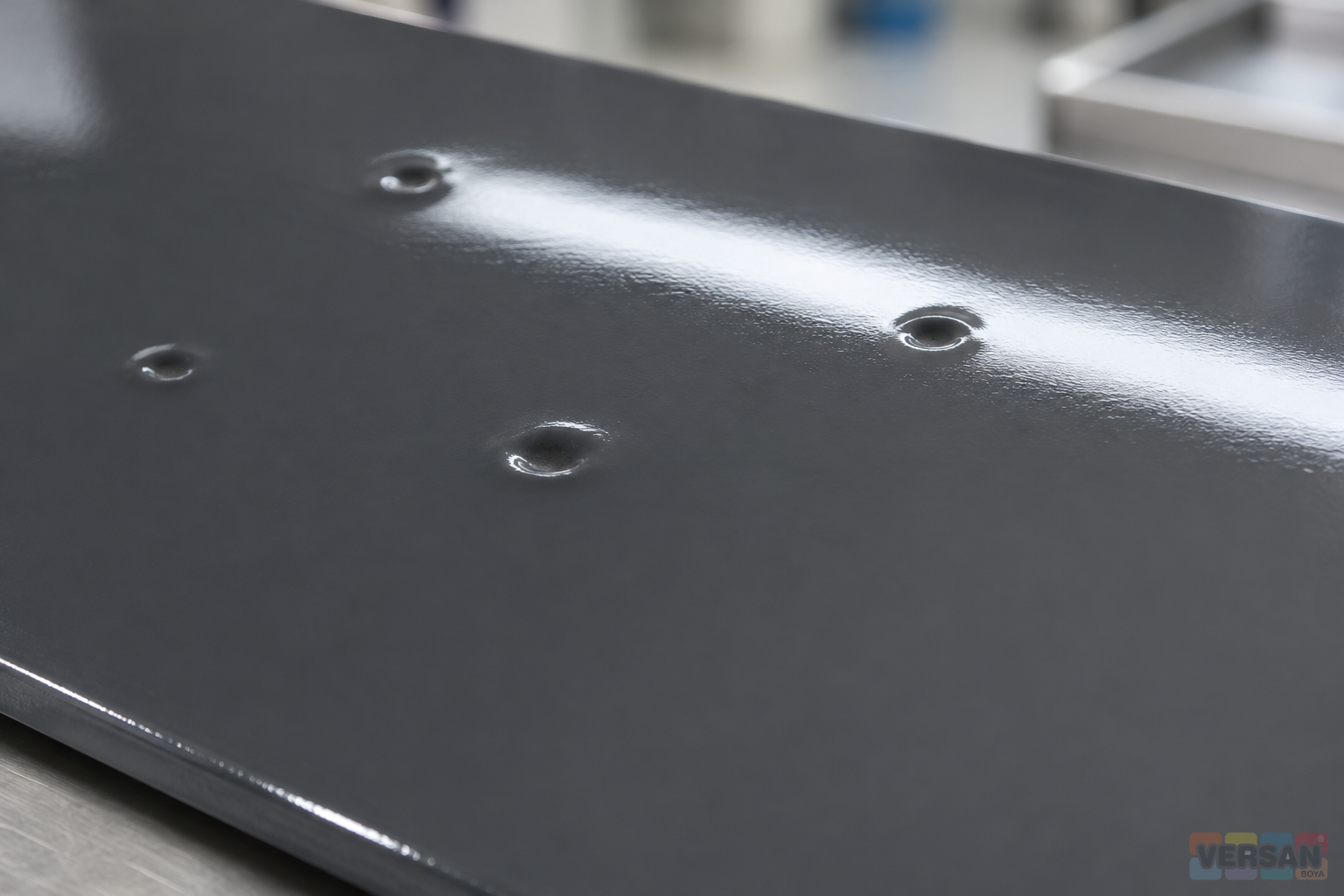
A few circular depressions on a nitrocellulose-painted component can quickly lead to competing explanations. One person may suspect the thinner, another the compressed air, and another a product batch. The useful first step is to preserve a clear record of the surface and its history before those explanations become conclusions. Wiping, sanding or recoating the affected area may change the evidence available for investigation. A well organised initial file gives production staff, quality personnel and technical support a common starting point, even when the cause remains unknown.
This article describes that file for work involving nitrocellulose gloss paint. It proposes a practical documentation method rather than a laboratory diagnosis or a universal repair procedure. The current technical data sheet, safety data sheet, actual coating system and written manufacturer guidance remain decisive. Other coating families may benefit from similar record keeping, but their preparation, cleaning and repair instructions are not interchangeable. The objective is to make observations traceable, identify missing information and define a controlled next question. It is not to assign liability from the appearance of a defect.
Describe the appearance without naming a proven cause
PPG describes fisheyes as depressions that can develop in the wet film shortly after spraying, with possible contamination routes involving the substrate, air supply and materials touching the surface. BASF explains a possible mechanism involving local surface-tension differences caused by contaminants. Neither general explanation proves that silicone is present on a particular component or that a particular batch is defective. The opening observation should therefore describe circular depressions and when they were first noticed, leaving the cause explicitly unconfirmed.
Record what can actually be seen: the rim, centre, distribution and viewing conditions. If a lower layer appears visible, describe the observation without claiming a measured defect depth. Sherwin-Williams treats fisheyes, pinholing and solvent popping as separate troubleshooting categories. Similar small marks should not automatically receive the same diagnosis. Where the appearance is uncertain, write that it requires further examination. A provisional description can later be revised after appropriate inspection, while the original photographs remain available. That separation between observation and interpretation helps prevent the investigation from being constrained by its first label.
Connect the component to the expected finish
Identify the component, work order, substrate and existing appearance requirement. A visible furniture face and a concealed metal return may have different agreed acceptance criteria. Those criteria should come from the order, approved reference sample or specification rather than being invented during inspection. Record which surface matters to the customer and which viewing conditions were originally used for approval. A statement that a component is unacceptable becomes more useful when the file explains the actual requirement against which it was assessed.
Avoid identifying the coating only by a familiar workshop name. Records for matt nitrocellulose paint should include the product and colour identification rather than being merged with a gloss product. An apparently unaffected job using semi-matt nitrocellulose paint does not by itself establish a chemical comparison. Differences in lighting, orientation or earlier inspection can affect what was noticed. Listing these differences allows the technical team to select meaningful reference pieces instead of assuming that every visually similar component provides equivalent evidence.
Preserve the condition before intervention
The responsible production or quality person should decide which component will be retained for investigation and what controlled production activity may continue. This article does not determine whether an entire shipment must be stopped or accepted. Identify the retained piece, its location and who may authorise work on it. If cleaning, sanding or another coat is proposed, first consider the need for photographs and samples of the existing condition. Record the decision so that the investigation piece does not accidentally re-enter routine rework and lose its original surface.
Keep the handling history with the component. Storage position, protective covering and packaging contact may help establish the sequence of events. They are questions to investigate, not automatic contamination findings. Unknown residues should not be identified by smell or by an improvised solvent wipe. Sampling, containment and transport need to follow the relevant material documentation and the instructions of the qualified technical team receiving the sample. The initial file should state what has been retained and what is still required; it should not imply that an informal workshop observation replaces an appropriate analytical method.
Map the affected and unaffected areas
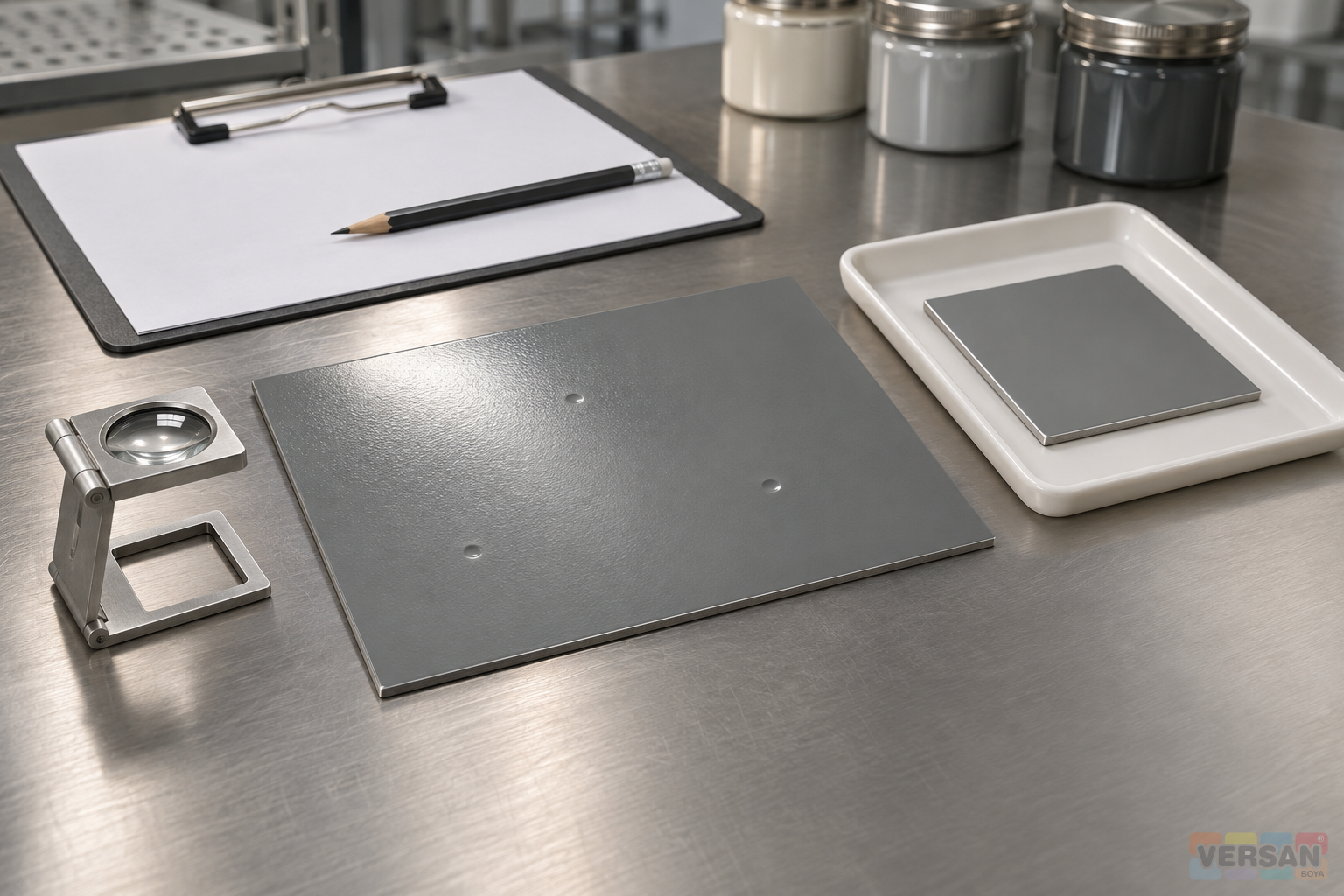
A general photograph, a small number of close views and a consistent component orientation provide complementary information. A close photograph alone cannot show whether the marks are concentrated at an edge, distributed across the face or associated with a particular handling area. Use the existing drawing or component features to identify top, bottom, front and rear. Make the location of each photograph understandable to somebody who did not take it. If a scale is introduced, consider how it can be positioned without contaminating or altering the surface being examined.
Retain a basic lighting and camera arrangement for comparison, even when additional raking-light photographs are helpful. Strong image processing can change the apparent contrast of small depressions. Save the original files, capture times and a brief description of the lighting. Put arrows and annotations on separate copies. Include apparently unaffected areas in the map instead of photographing only the most conspicuous defects. This prevents a selected group of close views from being treated as a complete description of the component. Do not estimate the number of defects in areas that have not actually been inspected.
Separate the time of formation from the time of discovery
The first time somebody notices a defect is not necessarily the time it formed. If there was no immediate inspection after application, the file should preserve that uncertainty. Record application time, first inspection time and discovery time as separate events. A change of lighting, a shift change or turning the component over may have made an existing mark easier to see. Replace an unsupported statement such as “it happened during drying” with the known observation interval and the evidence supporting it. Missing observations remain missing rather than becoming assumed process history.
Set out the preparation, priming, sanding, cleaning, waiting, topcoating and handling sequence. Where nitrocellulose primer was used, identify the actual primer, the layer beneath it and the recorded inspection before the next operation. A general preparation description in an archived catalogue does not establish compatibility with every unknown existing coating. If the previous system is unidentified, retain that uncertainty prominently. A written sequence helps distinguish changes that occurred before the first affected component from adjustments made afterwards in response to the problem.
Trace the batch and the actual preparation record
Identify the coating code, colour, batch, container opening history and the source of any quantity recorded for the mix. An operator's recollection and a retained weighing or measuring record have different evidential value. Mark the difference so that an estimate does not later become a verified mixing ratio. Container identity and the history of materials prepared in it may also be relevant questions. An incomplete record does not prove that the container was contaminated, but it tells the technical team where the preparation history cannot yet be reconstructed confidently.
Writing only “cellulosic thinner” provides limited traceability. Link the exact nitrocellulose thinner product and batch to the particular coating mix. Comparison with the current product instructions belongs in the technical review; a ratio remembered from another product should not be imported as the correct value. If a colour was prepared using a nitrocellulose paint binder, include the associated colour-making records. A ready-made topcoat and a material that passed through additional preparation steps are not equivalent test specimens merely because their final colour looks similar.
Record the cleaning task as well as the cleaner
A useful cleaning record identifies the surface, process stage, material and documented method. The archived description of cleaning thinner is not permission to add it to every paint mix or use it on every underlying coating. Dilution, substrate cleaning and equipment cleaning are distinct tasks. Identify the applicable manufacturer-approved method and record the cloths or other materials involved. Also identify the inspection point at which cleaning was considered complete. Without that process information, a product name alone leaves important questions about actual use unanswered.
The storage of cloths, their reuse and where the component was placed after cleaning can be investigated without declaring any of them the cause. The record-keeping approach in nitrocellulose colour changes and sample approval provides related context. The purpose is to establish whether a proposed contact route actually existed, not to label every material in the workshop as suspect. Where there was no written cleaning method, record that gap honestly. Do not reconstruct a completed inspection retrospectively simply because the investigation would benefit from having one.
Verify equipment history against maintenance records
Use existing equipment identifiers for the spray gun, hose, filters and connections wherever possible. “The usual gun” does not establish which item was used, when it was serviced or what other work it performed. Map the movement of material from preparation to application as well. An equipment change close to the discovery of defects is an observation worth examining, but timing alone does not establish causation. Determine which components passed through the process before and after the change, and whether their relevant preparation conditions were comparable.
Request air preparation and maintenance information from the responsible personnel. If cleaning, servicing or a filter change occurs during the investigation, record the boundary between the previous and revised arrangement. Otherwise a later trial may appear to reproduce the original process when it actually used a different setup. The distinction discussed in equipment cleaning and solvent residues helps keep that activity separate from thinner selection for the coating. Maintenance must follow the relevant operating and safety instructions. This record-keeping guide does not provide a procedure for opening a pressurised line or conducting an improvised workshop test.
Give environmental and contact observations an evidence level
A neighbouring operation, newly introduced packaging or a maintenance material may become part of the investigation. Describe the actual event, location and time rather than writing a general judgement that the environment was dirty. Distinguish a direct observation from a contemporaneous record and from somebody's later recollection. Even when a possible contaminant was present, its route to the affected surface remains a separate question. An investigation file should not compress presence, transfer and causation into a single unqualified conclusion.
For an industrial coating system, review relevant environmental records alongside the current product documentation. A temperature value alone cannot settle the cause of crater-like marks. If the instrument, measurement location or time is unknown, explain the limitation before comparing numbers. Today's reading cannot fill a gap in yesterday's conditions. The proposed discipline is intended to prevent unnecessary product substitution and overlooked process differences. It does not claim that completing an environmental checklist establishes the source of a defect or removes the need for qualified technical assessment.
Choose a reference component for a stated reason
A component that looks sound is useful as a reference only when its similarities and differences are understood. Sharing the same coating batch is relevant, but substrate, preparation, equipment, sequence and waiting conditions may still differ. Explain why the reference was selected and what information supports its history. If there is no sufficiently comparable component, state that limitation instead of treating a convenient piece as a controlled reference. This makes it less likely that an unrelated difference will later be presented as the result of an experiment.
For example, a panel finished with nitrocellulose varnish is not automatically a control for a different nitrocellulose topcoat. Record the differences in product, film and substrate. Similarly, an archived reference to antirust primer does not establish that a new topcoat may be applied directly to every existing metal coating. The catalogue provides product context; current system selection still needs confirmation. A useful reference depends on the comparability of its documented production history as well as on a broad similarity in material names.
Define the question before arranging a controlled trial
A trial should start with a specific question rather than the broad instruction to eliminate the craters. The technical team might, for example, assess whether two preparation routes produce a different appearance under otherwise defined conditions. The team must decide whether that comparison is appropriate and how it should be performed. Specify the variable being changed, the conditions to be retained and who will assess the result before proceeding. Changing several factors at once can produce an improvement without revealing which difference was responsible for it.
Include component identity, document revision, observation time and lighting in the trial plan. Comparable photographs help the subsequent review. Adding an additive, replacing a thinner or moving to a different coating family is not an automatic first step. Selection from thinners and auxiliary products depends on confirming the actual system. A smoother-looking sample does not by itself establish adhesion, durability or service suitability either. Any additional checks must come from the requirements of the job and the responsible technical assessment, with their scope stated before the sample is treated as approved.
Keep the repair decision separate from the investigation finding
A file may contain a sound description and useful findings while the repair method remains undecided. That is a legitimate stage of investigation. The information does not become more reliable by filling the remaining gap with a generic instruction to apply another coat. Whether recoating is sufficient, how far material should be removed and which products should be used depend on the actual system and the established extent of the defect. Record the repair proposal and its approval separately, with a link to the relevant trial or written technical guidance.
Keep the initial photographs, trial results and post-repair acceptance record distinct. State exactly what the approval covers and what remains under review. The broader discussion of root-cause assessment for industrial coating defects can support the structure of the investigation, but a general defect list is not evidence for this particular job. Avoid a confirmed root-cause statement or a guaranteed result where findings remain incomplete. A technical-support summary should make the boundary between verified information and the proposed next action easy to understand.
Assemble a concise handover that another person can follow
The first technical-support package can bring together the work and component identifiers, product and batch details, process sequence, defect map, original photographs and interventions already performed. Make the surface and time represented by each attachment clear. A few well connected records are often more useful than a large collection of unlabelled images. Also distinguish the purpose of the discussion: a commercial quotation, production investigation and warranty assessment may require different decisions. State the question to be answered rather than expecting the recipient to infer it from the attachments.
When locating a product in the product range, use the complete container name and code. Present observations, possible explanations, requested documents and decision ownership separately. Add dates and sources when new information arrives, preserving earlier versions where they explain a change in understanding. If a sample moves between teams, retain its identity and the requested examination. A clear first file cannot promise a rapid cure, but it gives the next person a reliable basis for deciding what to investigate, what to test and what can responsibly be approved.