Establish the boundary of the repair before choosing its size
A small chip on a painted cabinet front or a scrape on a steel cover may call for a repair far wider than the original mark. The decision depends on what the damaged coating needs and on how the finished work will be viewed. Map three areas before estimating the work. Mark the footprint of the visible damage, the area that may have to be prepared to reach a sound surface, and the area where a change in the finish might still be visible. The preparation footprint follows the condition of the film. The visible footprint follows the shape of the part and the light that falls on it. Those boundaries often need different decisions.
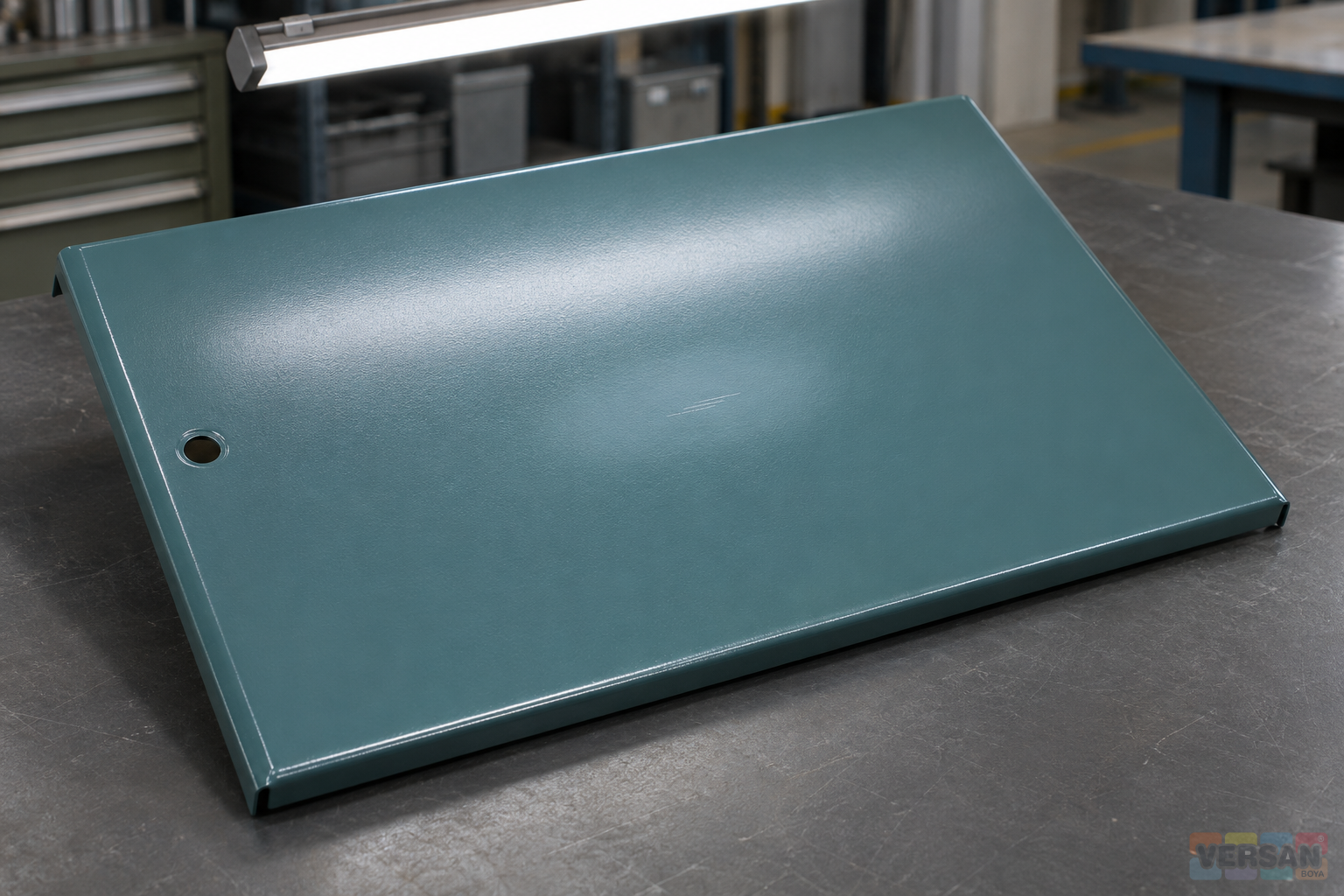
Take a close photograph and a wider one before disturbing the coating. The close view should show the mark and any lifted edge or exposed layer. The wider view should identify the face, the part number or position, nearby joints and the direction in which someone normally approaches the surface. A short mark near a handle may sit outside a continuous reflection. A similar mark in the centre of a flat door may interrupt a reflection that crosses the face from one side to the other. Ask where the finished piece will be installed. Inspection under bench lighting is useful, but it may not reveal the effect of a long overhead light in the finished installation.
The nitrocellulose paint collection contains products with distinct roles. This discussion concerns an opaque coloured finish, where the retained surface and the repair have to read as one face or meet at an agreed boundary. A clear finish over timber also shows the grain and the colour of the underlying material, which adds another source of variation. The temperature, exposure and use of an item still govern the choice of industrial paint. A coating in the right colour must also suit the part and the old finish. Where the old film is unidentified, record that uncertainty and seek a supported compatibility check before approving work on the visible face.
Establish whether the retained film can carry a repair
Inspect the coating around the mark. Raised edges, flaking, corrosion or repeating pinholes can signal that the apparent damage extends beyond the area first reported. Some marks turn out to sit on top of the film. If that is plausible, document the original view and confirm a cleaning method suitable for the existing coating before treating the mark as lost paint. Separate what was seen from what was inferred. A light spot can result from a loss of surface texture, exposure of another layer or material sitting on the coating. Appearance alone rarely establishes which explanation applies.
The Nanomix catalogue archive distinguishes the topcoats from Nanomix Nitrocellulose Primer. That distinction matters when the mark goes through several layers. If preparation exposes a substrate or reveals unstable surrounding film, the applicable system documents must establish the substrate preparation, which undercoats are required and how corrosion protection will be restored where necessary. A visual finish trial does not prove that an improvised layer stack is suitable. If a compatibility sample wrinkles, softens or lifts, set it aside for technical investigation even if its shade seems convincing. A repair limit can be estimated only once the retained film is sufficiently well characterised.
A suspected coating defect calls for a record of the pattern across the component, including areas that appear sound. The initial assessment of craters in a nitrocellulose finish covers this diagnostic work in more detail. Here the next decision is whether a healthy face can retain most of its existing finish. If additional faults become apparent during preparation, photograph what changed and update the scope before continuing. A small local repair may remain feasible on one face even when an independent problem makes a different face unsuitable. Keep the decision tied to each part and its condition.
Compare colour, gloss and texture under repeatable conditions
Start with diffuse illumination so that the main visible difference is colour. Introduce a directional light to see how the reflection moves across the repair and around its edges. Inspect from the expected viewing direction and then from an oblique position. In one direction both areas may appear to match. In another, the repair can have a sharper reflection or a different surface texture, even when the hue looks close. Use separate notes for colour, gloss and texture. Describe where a change begins and whether it is confined to the centre, lies along the edge or runs across the whole face. A useful record gives someone else enough information to find the same effect.
The archive shows separate finishes for Nanomix Gloss Nitrocellulose Paint, Nanomix Matt Nitrocellulose Paint and Nanomix Semi-matt Nitrocellulose Paint. Treat those finish names as selection information. A new panel labelled gloss will not necessarily match a glossy panel that has been in use. Cleaning, handling and service exposure can leave different parts of the same piece looking different. Agree whether the reference is an undamaged area on the current face, an adjacent part or a retained production sample. If the reference is a new sample, consider how it contrasts with the installed neighbouring surfaces before recording approval.
Where the specification calls for gloss readings, record the method, geometry and location and compare like with like. ASTM D523 describes the principle of specular gloss measurement for nonmetallic specimens and identifies the geometries covered by the method. A curved face, pronounced texture or a small region that cannot support the instrument properly may make a reading difficult to interpret. Mark sampling points, note relevant limitations and keep the instrument results alongside the visual observations. A number from one location cannot describe the whole finish. Define a project acceptance range only when supported by the applicable requirements and an agreed reference. The article on sample approval for colour, texture and gloss gives a way to structure those records.
Make the sample show an actual transition
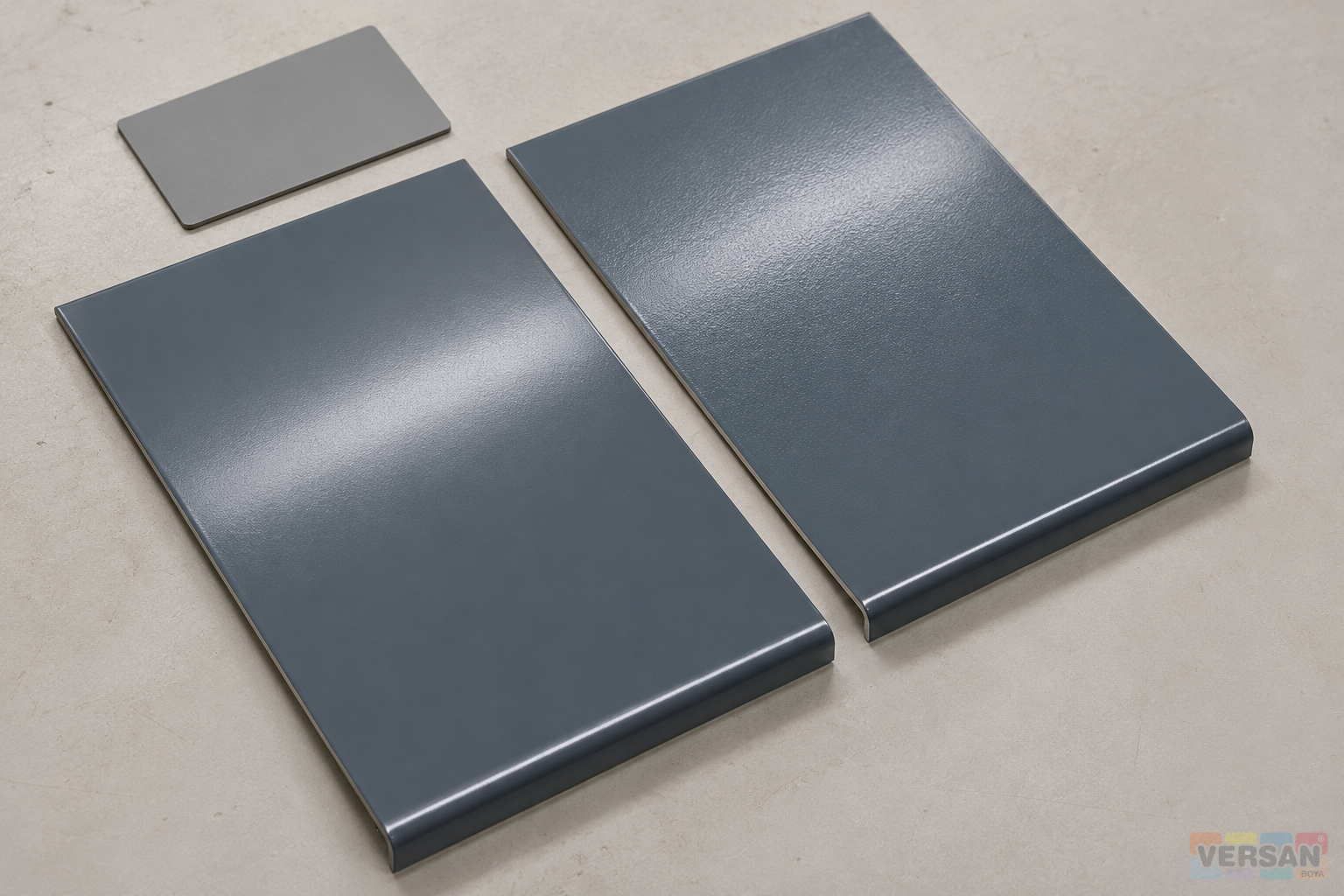
A flat colour chip can narrow the choice, but it does not show what happens where new film meets existing film. The comparison piece should contain an area representing the original surface, the centre of the proposed repair and the zone between them. A spare piece with known coating history can be more informative than a fresh plate finished from bare material. If a fresh coupon is the only suitable option, record which substrate, undercoat and surface conditions it reproduces and which it does not. Keep the target surface and sample at the same angle to the light when judging them side by side. A useful test can still be made on a spare part, provided its limits are stated.
PPG's procedure for preparing a spray-out card in its vehicle refinishing systems is a primary example of matching the sampling equipment and technique to the expected work and inspecting at more than one angle. The comparison principle transfers to this decision. Its vehicle coating products, required layers and drying intervals belong to the systems it describes. For a nitrocellulose repair, obtain those instructions from the current technical data for the products under review. Record the product code and batch, the underlying layers represented, the application method, relevant film conditions and the point at which the sample was inspected. The record should allow a second sample to be prepared under recognisably similar conditions.
Read the record for Nanomix Nitrocellulose Thinner and the thinners and auxiliaries group as product references. The authorised application sheet determines which thinner and conditions apply. A nitrocellulose paint binder listed as a separate product should not be treated as an adjustment ingredient for an existing topcoat. Keep the sample representative by changing one documented decision at a time where feasible. For instance, establish whether a wider repair boundary improves the result before also changing the selected finish. The guide to colour changeover and sample approval addresses contamination and previous colour carryover. The boundary trial examines whether the prepared and retained areas look acceptable together.
Compare a spot repair, a wider transition and a full-face finish
A local repair can be appropriate when the surrounding coating is sound and the test shows an acceptable visible boundary. Record which parts of the finish are to be kept, where the prepared zone ends and how the visible face will be checked. The chosen limit should be possible to reproduce on the actual part. A sample viewed at arm's length at the bench may pass while a cabinet front with overhead lighting shows the same transition clearly in use. The aim is an agreed level of appearance under stated conditions. Even for a repair in a less prominent location, check that the agreed layer structure protects the affected area.
Consider a wider transition if an otherwise sound flat face makes the edge of a very small repair apparent. The assessment is about what an approved technique can achieve over the available surface. It should account for the condition of the retained coating, room to work and continuity of the specified finish. A fold, seam or profile change can be a reasonable point at which to assess a change in appearance. Extending work across a functional seal, into a joining surface or over a label can create a separate issue, so identify the relevant boundaries before preparing adjacent areas. Have the person responsible for the system confirm that the proposed finish and the transition can meet its requirements.
A full-face refinish is a practical option if a visible boundary persists on the open face, or if the existing film does not support a narrower scope. In a series of front panels, refinishing one can move the mismatch from the middle of the panel to the joint between two panels. Compare those alternatives with the surfaces held in their installed positions. A difference divided by a real gap can be less conspicuous, but the surrounding panels still need to meet the agreed acceptance criteria. The industrial paint range contains other coating families. Any proposal to switch family should be assessed against the retained film and intended service, including separate substrate and system approval.
Set the observation conditions and the point of acceptance
Agree on a viewing distance and the part orientation before running the trial. Describe a primary lighting condition that matches service, and a secondary condition to reveal any obvious texture or edge. Set the piece next to the retained reference when neighbouring surfaces matter. For a row of coated cabinet doors, check all relevant parts face on and then follow the reflection along the run. If the decision is recorded with photographs, keep lighting, angle and camera settings as consistent as possible. Automatic exposure can make a small difference look larger or hide it entirely. The photos explain the inspection location and the appearance found there. They do not replace the physical side-by-side comparison.
Record the stage at which the sample is assessed. An apparent match while the film is wet is not a finished acceptance result. Use the current product documentation, the agreed process and the working conditions to establish a suitable inspection window. In a factory sequence, the release for visual approval and the point at which the piece may be handled, stacked, packed or assembled are separate milestones. Discuss handling restrictions with those who will move the item. Retain the approved sample and the written observation conditions so that a later inspection can account for the sample's age and how the part has been placed.
Aesthetic comparisons also have limits when different materials or finish types are involved. A contractor choosing professional coating systems for mixed substrates should identify which surfaces share an appearance reference and which have their own. For example, Nanomix Nitrocellulose Varnish is a clear-finish product record. It is not an instruction to add a clear coat to an opaque repair to alter the shine. Any proposed change in the film stack needs approval and another representative sample. A thicker or different final layer could change the visible result even on a surface that originally looked acceptable. In the written record, state whether the revision is about the appearance or the protection required by the specification.
Use a common record for each trial option
Set a question for each option before making the samples. The spot trial tests whether a tight boundary is acceptable. The broader trial tests whether the edge can be made inconspicuous within the usable face. The full-face trial assesses the mismatch at the next joint. Record observations at the same positions and under the same lighting where this is possible. Note a missing inspection condition explicitly. A blank field for the installed lighting cannot support the conclusion that the edge was invisible there.
Agree when the scope has to be reviewed. If preparation uncovers loose film beyond the marks on the original sketch, reassess the sound boundary before committing to a bigger area. If the colour matches in diffuse light but the reflection is interrupted at an agreed direction, record the reason as an appearance issue at the boundary. Preserve the approved sample and a view that shows how it was inspected. When more than one operator will carry out a series of repairs, this gives them a shared reference and helps identify changes in the finish that require a fresh trial.
Document the repair decision on a two-cover example
Suppose two blue painted covers form the front of one machine. Both have small marks and the surrounding coating has been checked. On the first cover, the mark sits near a handle. The spot trial is acceptable from the agreed direction, and the light at the installed position does not reveal a distracting edge. On the second cover, the mark lies nearer the centre and crosses a long bright reflection. The centre of the sample matches the colour quite well, but the outline breaks the reflection. A wider test is considered. If the outline still interferes with the agreed finish condition, the first natural break at the edge of the second cover becomes the proposed scope. The two covers do not automatically need matching work instructions.
For that example, the decision record should identify which cover was examined, what was retained, the exact boundary approved for each repair, and any rejected trial that explains the choice. Add the sample identification, the colour and finish reference, the inspection date and conditions, and photographs that show the part in position. If the assembly has not yet been installed and its final lighting is unknown, keep that as a specific inspection item at handover. A single approval for the colour code would leave the most important question unresolved, namely how conspicuous the repair is on each finished face. Tying the acceptance to location and viewing conditions also helps resolve a later review if the assembly is moved.
Before production work, check the current technical data and safety data sheets, and follow the site's controls for ventilation, ignition sources and worker protection. The archived catalogue identifies coating roles and finish options. It does not establish a project-specific approval for the old film or a universal technique for blending these finishes. If the sample reveals a compatibility concern or the team cannot identify a suitable boundary, return that point to the responsible technical reviewer before opening up more of the part. The completed decision should state what will be repaired, where work will stop and how the appearance and condition will be checked after the repair.