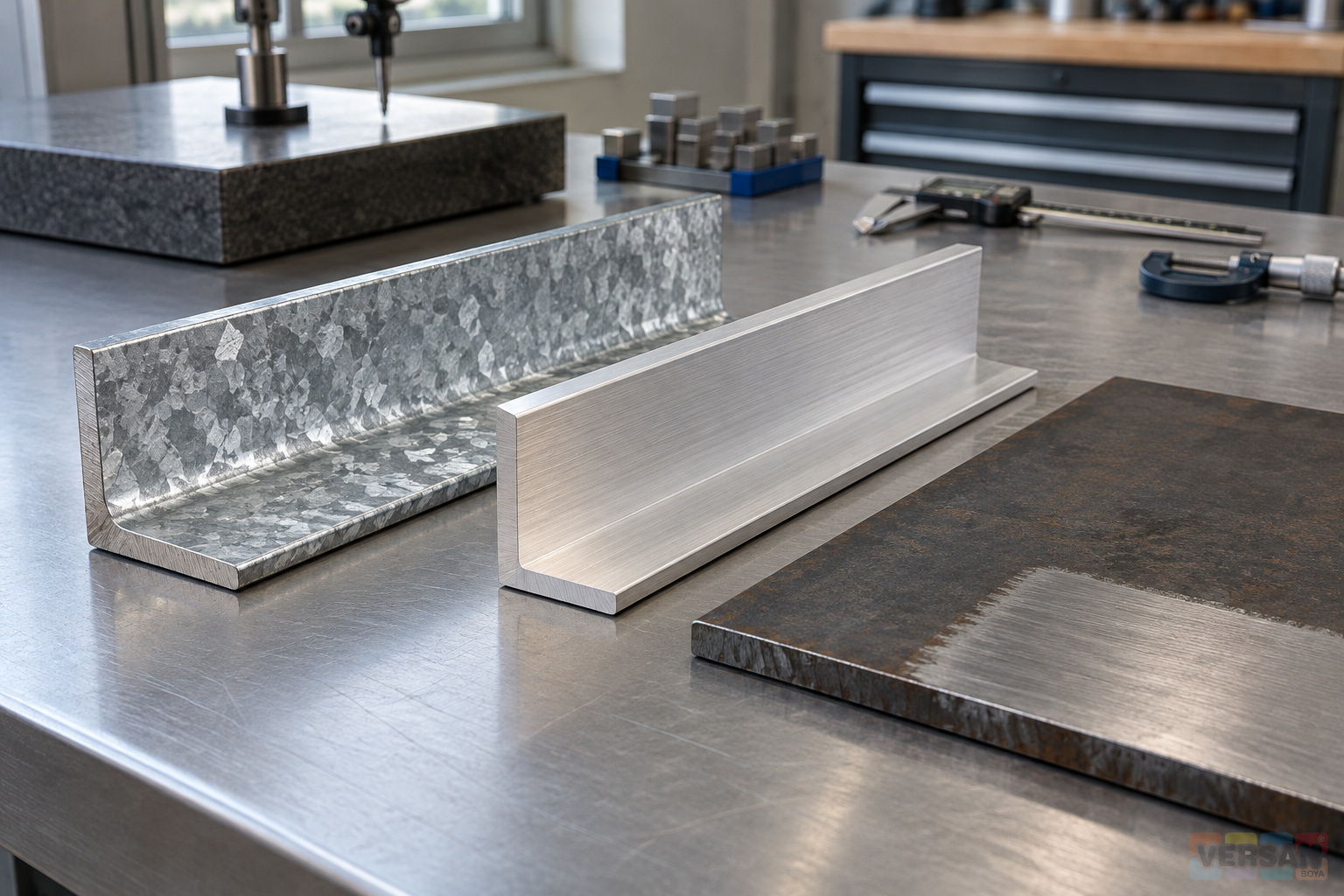
A common colour specification can give a mixed metal assembly a consistent appearance. It does not establish that every component can receive the same preparation, primer and finishing procedure. On galvanized steel, the coating is applied to a zinc surface. An aluminium component may arrive bare, anodised or previously painted. Carbon steel may carry rust, mill scale, fabrication residues or an existing coating. Describing all these conditions simply as metal removes information that the coating supplier and applicator need. Selection should therefore begin with an accurate substrate inventory rather than a preferred paint name.
This guide provides a practical framework for discussing industrial coating options across galvanized steel, aluminium and carbon steel. It does not assign a universal product to any of those materials. Exposure, existing layers, access for preparation and the required appearance must be considered together. A known product family is not confirmation of suitability for an unidentified surface. When drawings, delivery condition and service information accompany the enquiry, the supplier can address a defined coating problem. The accepted system and the limits of that acceptance should remain available to procurement, production and subsequent maintenance teams.
Record the surface that the paint will actually contact
A machine enclosure, door or support assembly may combine a carbon steel frame, aluminium panels and galvanized brackets. Although they belong to one finished item, they do not necessarily present the same coating substrate. Match material descriptions in drawings and delivery documents to individual components or clearly defined zones. Colour, shine and a simple magnetic check cannot resolve every alloy, coating or treatment distinction. Where identification remains uncertain, record the missing evidence and the party responsible for supplying it. An unsupported assumption should not become an approved material description merely because the production programme is already under pressure.
Include delivery condition alongside the base material. Bare metal, oily sheet, anodised aluminium, galvanized steel and old painted surfaces should not share one preparation line without explanation. The word galvanized also needs clarification: guidance for after-fabrication hot-dip galvanizing cannot automatically be extended to every zinc-containing coating. Ask about temporary protective treatments, films and transport protection, including their identity and removal requirements. Photographs can locate the relevant areas, but do not replace the material declaration. This inventory is particularly useful for surfaces that will become inaccessible after assembly and must therefore be addressed at an earlier production stage.
Define exposure independently of the material name
Substrate identity is one axis of selection; intended service is another. Steel in a dry internal space does not necessarily require the same system as steel exposed to rain, repeated washing or chemical splashes. An outdoor description is still incomplete if water traps, sheltered joints and cleaning practices are unknown. Record whether the component is exposed continuously, intermittently or only during particular operations. Do not assume that changing the finish coat can compensate for an unsuitable preparation or primer. The technical review needs the actual operating conditions and relevant design details, rather than a broad environment label alone.
Appearance requirements deserve their own entry. Colour, gloss, texture and visual agreement between adjacent components may all matter, but none proves that the same treatment is suitable for their different substrates. Identify areas excluded from painting, contact faces, moving interfaces and machined tolerances on the drawing. A material substitution should update this area map as well as the purchasing record. Otherwise, the coating team may discover the changed substrate only after processing has started. The conditions under which appearance will be assessed should also be agreed, so that an accepted sample is compared with production in a consistent and relevant manner.
Separate carbon steel condition from preparation acceptance
Oil, loose corrosion products, mill scale and fabrication residues are not interchangeable contaminants. Combining them under a single dirty surface description makes it difficult to explain why a preparation method was selected. Cleaning, creating the required profile and removing residual dust are related but distinct tasks. Hempel's surface preparation guideline treats carbon steel separately and refers the required condition to the relevant specification or primer data sheet. That does not establish one blast-cleaning grade for every project. The coating work should follow the approved system requirements, with a defined assessment before the prepared surface is released for painting.
Welds, cut edges and restricted internal areas can require different access and inspection arrangements from a large flat plate. The existing metal coating edge and weld control plan discusses these fabrication details. At the selection stage, the immediate question is whether the specified preparation can actually be achieved in those locations. Assigning an inaccessible surface a preferred method on paper does not solve that problem. Assembly sequence, shop application and later site repairs may need to be coordinated. Changes in accessible area or work sequence should remain visible in the coating scope and its acceptance record.
Treat the zinc surface as a defined starting condition
On hot-dip galvanized steel, the paint system encounters the zinc coating rather than bare carbon steel. The American Galvanizers Association distinguishes newly galvanized, partially weathered and fully weathered surfaces in its preparation guidance. These conditions can require different treatment. Elapsed time alone is not a complete description: actual surface condition and prior processing also matter. Ask about storage, packaging and moisture exposure, and identify the areas represented by each observation. A newly delivered component is not automatically ready to paint. Its history should be available to the coating specialist before preparation and primer selection are finalised.
The purpose of preparation is not to treat the zinc layer as unwanted material to be removed by a generic steel-cleaning operation. Cleaning and appropriate profiling must be considered alongside preservation of the galvanized coating. AGA guidance emphasises communication between the galvanizer and paint manufacturer when establishing preparation and paint selection. This article does not prescribe abrasive type, operating pressure or a chemical treatment bath. Such details require an approved procedure for the specific surface, equipment and system. If damaged zinc areas are present, their treatment should be distinguished from general preparation rather than hidden within a single painting instruction.
Ask about passivation and temporary protection
Post-galvanizing treatments and transport protectives can leave the applicator with an incomplete understanding of the delivered surface if they are not declared. A statement that the component has been galvanized does not answer that question. Treatment history, cleaning and primer compatibility should be reviewed together. The availability of a product described as wash primer does not make it an automatic solution for every galvanized or light-metal surface. Confirm the exact product's substrate scope, finishing system and application restrictions. An unidentified treatment should remain an open technical issue rather than being converted into an assumed preparation instruction.
Preparation should end at an identifiable release point before coating begins. Record the method, materials used, timing and arrangements for drying and preventing renewed contamination. A smooth feel or a clean-looking photograph is not a complete acceptance method. Where a condition cannot be resolved visually, the responsible technical person should define a suitable assessment; improvised chemical experiments are not an appropriate substitute. If delivered components have different processing histories, retain those differences in the sampling plan. One convenient specimen cannot establish that every item in a shipment has the same condition, especially when storage and handling have differed.
Keep aluminium finishing history in the selection file
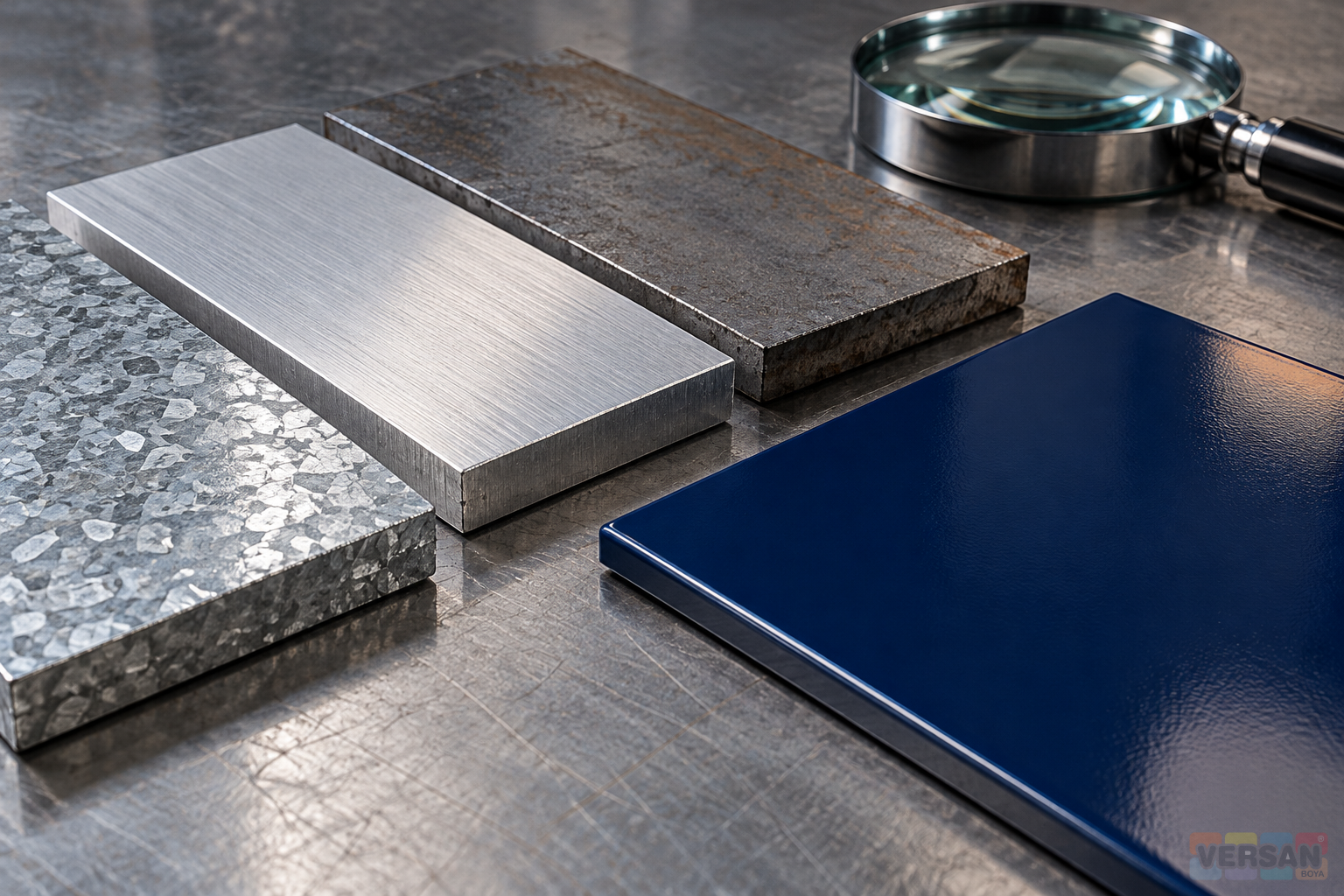
The absence of red rust does not make aluminium a self-explanatory painting substrate. Bare, anodised, sealed and previously coated components present different questions. Hempel's guideline separates extruded or cast aluminium from anodised aluminium, illustrating why one preparation sentence attached to the material name can be insufficient. A procedure described in that manufacturer's guidance is not a universal instruction for another supplier's products. Establish the actual surface first, then verify the preparation required by the proposed coating system. Previous cleaning materials and any retained protective treatment should be declared rather than assumed to have no effect on the assessment.
A bright specimen does not prove primer suitability, and an abraded appearance does not by itself demonstrate acceptable preparation. Options such as acrylic primer and epoxy primer need an exact product identity and a defined substrate condition. A historical reference to light metals should not be read as current approval for every alloy and surface treatment. Trial specimens should represent the delivery state and relevant geometry of the actual component. Where holes, edges or joints form a significant part of the work, discuss whether a flat coupon alone provides an adequate basis for the intended decision.
Choose the primer by function and documented compatibility
Primer selection is not a direct lookup from a metal name to a product label. Adhesion requirements, corrosion protection, finishing compatibility and achievable preparation have to be considered within one system. The term antirust primer does not establish the same application scope on every metal. Read the exact product documentation and the supplier's assessment together. Use on carbon steel does not prove that an identical build is accepted on aluminium or galvanized steel. When an alternative is offered, ask which conditions have changed and what evidence is needed before treating it as technically equivalent.
A fabrication-stage layer such as epoxy shop primer needs an explicit role in the final coating system. If an existing primer is to be retained, confirm its identity, condition and suitability for subsequent coating. Similar colours do not establish identical binders or overcoating requirements. Even a known broad product family cannot resolve an unidentified existing layer. The article on overcoating old antirust primer complements this assessment by separating retained and removed coating areas. Acceptance of that existing film is a distinct condition of the new system selection, not an incidental visual judgement.
Read the finish and auxiliary products as system components
A proposed gloss polyurethane finish or two-component acrylic finish should be discussed with its intended preparation and primer. Neither name establishes interchangeability across all substrates and underlying layers. Finding the requested colour does not close the technical file. The system description should identify each layer, its sequence and the conditions governing application. If one component changes, check the related entries rather than assuming that the original approval remains complete. The appearance of an earlier sample cannot demonstrate the suitability of a newly proposed combination that was not used to produce it.
Auxiliary product selection should not be inferred from the metal type or the similarity of container labels. Epoxy thinner, polyurethane thinner and acrylic thinner identify different product families; the relevant coating instructions determine the permitted material. These links do not propose a common dilution percentage. Application thinning and equipment cleaning should remain separate purposes in the work instruction. Do not calculate a ratio until the product, basis of measurement and permitted range are confirmed. A subjective impression of viscosity does not authorise departure from the accepted technical requirements.
Make the trial answer a specific selection question
A representative trial is more than painting three pieces the same colour and placing them together. Identify each specimen's substrate, preparation, products and conditions. State what decision the trial is intended to support: compatibility with a particular surface treatment, appearance agreement or practical application around a difficult geometry, for example. Changing every variable at once can make the cause of an observed difference impossible to isolate. Keep comparison conditions separate where practicable. Interpret the result within the specimen's scope; acceptance of a small panel is not a guarantee for an entire assembly, an untested fabrication detail or an unspecified service period.
Consistent lighting, viewing angle and distance help appearance comparisons, but photographs should not replace technical measurements. Define the acceptance method, assessment timing and decision authority before the trial starts. Where product instructions require particular drying or conditioning, explain what an earlier observation can and cannot demonstrate. If a defect appears, record it before reworking the area and removing the evidence. The resulting question may concern preparation, application or an underlying layer. Keeping those possible causes separate prevents an observation from becoming an unsupported diagnosis. A trial report should describe both what was seen and what remains to be established.
Separate preparation release from finished-coating acceptance
Approval to begin painting and acceptance of the finished coating are different control points. The first concerns the surface offered to the applicator; the second concerns the applied system against the agreed requirements. The surface preparation and film thickness guide discusses their relationship. The measurement method and instrument suitability must be established for the relevant substrate. On a surface that already contains a metallic coating, such as galvanizing, do not assume what a total reading represents. Record the purpose, method and interpretation of the measurement. Numerical precision on a display does not, by itself, establish that the intended layer has been assessed correctly.
A component change, new supplier or different preparation method during production should not be silently absorbed into an earlier acceptance file. Explain which conditions remain equivalent and which require further review. Identify the affected components and any new trial or inspection needs. Easier availability is a commercial advantage, not a technical acceptance criterion. Once a change is approved, procurement and application records should use the same product and surface descriptions. Obsolete labels and inconsistent sample names can undermine an otherwise careful review. Make the current document revision and decision authority visible to each team, especially where work crosses between the fabricator and painting contractor.
Leave a useful procurement and maintenance record
When exploring the product range, prepare a concise summary for each substrate: identity, delivery condition, exposure, required appearance, access limitations and existing layers. Add proposed products and clearly identified questions awaiting confirmation. If a quotation relies on assumptions, show them. Asking only how many kilograms are needed may require a quantity for a system that has not yet been defined. Establish technical scope and acceptance conditions first, then build the material and packaging calculation on that basis. A commercial comparison should not conceal an unsupported assumption that two different proposals are technically equivalent.
The maintenance handover should contain more than the final colour code. It should identify substrates, retained layers, preparation, the installed coating system and the location of the trial evidence. These records provide a starting point if local damage develops later. A newly added component made from a different metal should prompt a fresh compatibility review rather than automatic copying of the old recipe. One common system may ultimately be accepted for several materials, but that conclusion must come from checking each relevant surface. The professional value of the selection process lies in making those decisions explicit, so that missing information does not have to be guessed during application or repair.
Technical sources and scope
- Versan Boya epoxy catalogue archive: historical product scope, not current approval for every substrate
- American Galvanizers Association: galvanized surface condition, cleaning and profiling
- AGA: duplex systems and preparation distinctions
- Hempel: preparation scope for carbon steel and different aluminium surfaces; product-specific procedures are not transferred