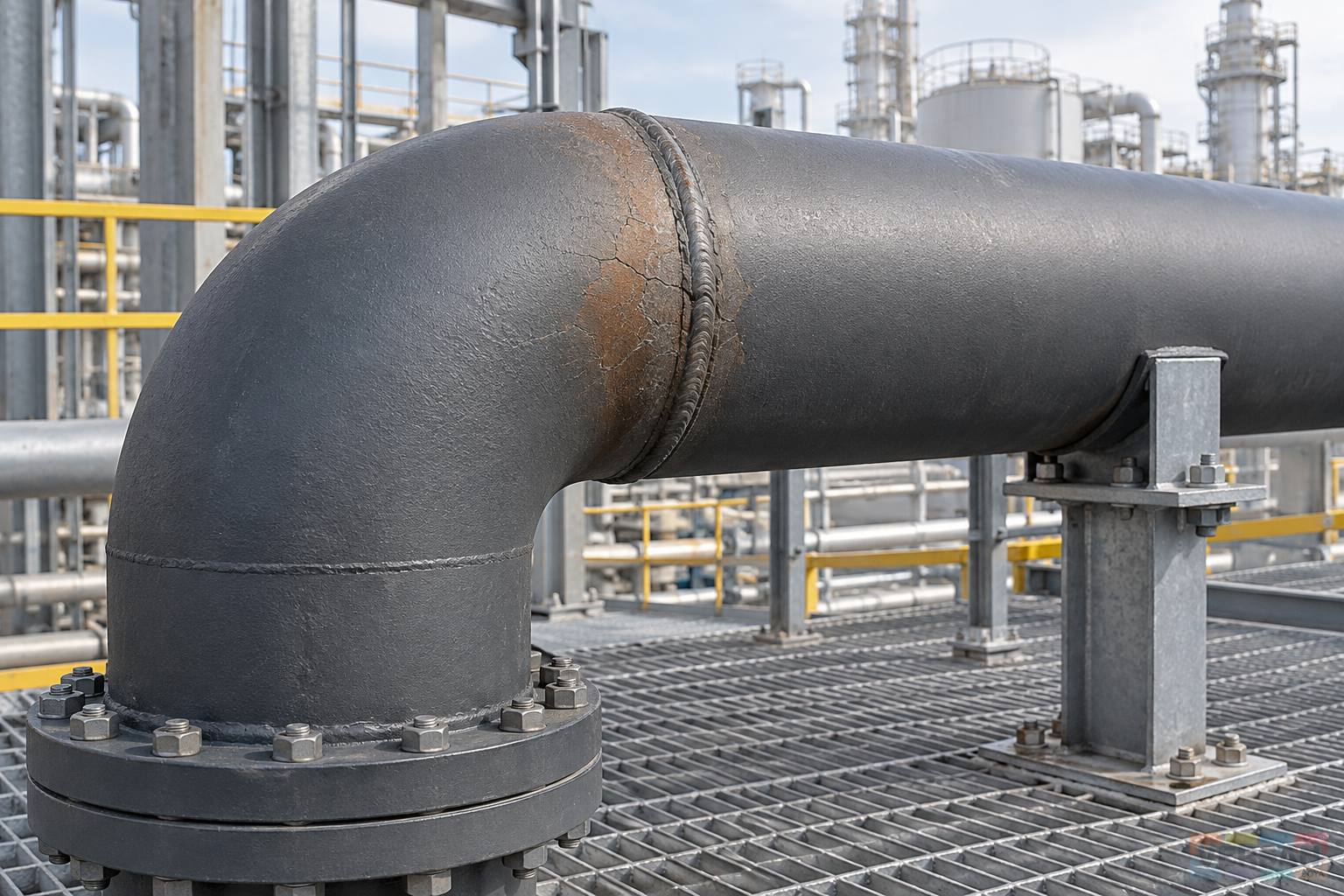
When a heat-resistant coating changes colour, the first useful question is not necessarily which paint should replace it. Establish what has changed, where the change begins and what operating history accompanies it. Discoloration, a network of cracks and separation of a coating layer are different observations. Describing all three as burned paint discards information needed for a sound investigation. A maintenance decision should begin with a record of the observed condition; an early theory about its cause should not replace that record. Where the evidence does not yet support a conclusion, uncertainty should remain visible in the report.
The condition of an installed coating deserves as much attention as initial heat-resistant paint selection. The existing temperature-profile selection guide addresses the service information needed before choosing a system. This article instead concerns investigation of colour change, cracking and adhesion-related observations on coated equipment. It does not diagnose a particular failure remotely or transfer one manufacturer's temperature limits to another product. Its purpose is to help maintenance, operations and coating specialists discuss the same event using the same evidence, with a clear distinction between confirmed findings and questions that remain open.
Separate the observation from the proposed cause
The initial record should identify the equipment zone, inspection date, visible form of the change and any difference from an earlier observation. A brown area on a grey surface, fine lines beside a weld or a lifted coating edge conveys more useful information than a general statement that the paint overheated. Photographs should show both location and detail, with a suitable scale where useful. Give separate zones distinct references. If a surface is later cleaned or coating is removed, retain the original condition record. An image should not be used to assert the presence of a feature that it does not actually reveal.
Keep possible causes in a separate part of the file. A change in operation, different preparation, coating build or external contamination may be relevant investigation topics without yet being established as the root cause. More than one hypothesis can remain open. State which record or assessment would help evaluate each one. Previous experience of a similar appearance can guide the enquiry, but does not prove that this equipment has been affected by the same mechanism. Distinguish measured information, reported recollections and unverified assumptions. This makes the next technical discussion more productive and prevents a convenient early explanation from becoming an unsupported final diagnosis.
Let the operating team establish inspection access
Do not approach hot or operating equipment merely to obtain a better photograph. The authorised operating team should determine access, shutdown and release conditions for inspection. Assessing the appearance of a coating is also a different task from assessing mechanical integrity. Where the pipe, connection or support itself raises concern, the relevant engineering assessment is required. This guide does not authorise disassembly, scraping or changes to site safety procedures. An inaccessible area should remain identified as unassessed, with its significance and the next opportunity for examination recorded. Maintenance priority should not be inferred solely from how dramatic a coating defect looks in a photograph.
Record the surface condition at the time of observation. Whether equipment is operating, shut down or cooled, and whether moisture, dust or cleaning residue is present, can affect the basis for comparison. Two photographs taken under unknown conditions do not necessarily demonstrate progression. A repeat view under suitable, consistent conditions may provide a better starting point. The wish to complete a coating record does not justify exceeding the site's access limits. When requesting advice on industrial coating systems, identify the inspected and inaccessible zones separately. A report should accurately represent the scope examined rather than give missing information an appearance of completeness.
Build an event timeline around the temperature evidence
A single highest temperature figure may not describe the relevant operating history. Ask about normal running, start-up, shutdown and unusual events, including when they occurred. Identify the location and method associated with temperature readings. Ambient air, process fluid and the external metal surface carrying the coating are not interchangeable measurements. If a value is estimated, label it accordingly. A reading at one point does not establish identical conditions over the entire component. Additional information about local hot areas or operating changes should be planned by the appropriate technical team, with the limitations of the available data retained in the coating review.
Place the first reported appearance change, last coating work and relevant operating changes on the same timeline. Different insulation, shutdown patterns or cleaning practices may be worth recording without presenting them as established causes. A short operating excursion and a long history of repeated cycles should not disappear into one broad hot-service label. Identify periods for which reliable records are unavailable. Later recollections and dated instrument records should not be given the same evidential weight. This structure helps the coating specialist see which service conditions can reasonably be associated with the observation and which questions require further information before a repair decision is made.
Distinguish colour change from loss of film integrity
Investigate whether the apparent colour difference lies within the coating or in material deposited on its surface. Lighting, viewing angle and photography can influence comparison. If cleaning is proposed, agree a method appropriate to the coating and site conditions; wiping with an arbitrary strong solvent is not a reliable investigation procedure. Record the same area before and after any intervention. Colour alone does not establish underlying corrosion or separation. Conversely, retention of the original colour does not prove that every layer remains sound. Appearance and film integrity are related but separate questions, and should be described as such in the inspection record.
Manufacturer literature shows that colour stability in some heat-resistant systems depends on the particular product and pigmentation. Jotun's Solvalitt colour document, for example, discusses thermal colour change within its own product range. This is not approval of equivalent behaviour in Nanomix or another manufacturer's coating. Ask the supplier about the exact installed product, shade and layer arrangement. A change considered acceptable within one documented system cannot automatically be accepted in another. If retained appearance matters commercially, the expected basis for assessment after service should be established before purchase. A colour sample should not be presented as a guarantee of unchanged appearance throughout an unspecified operating life.
Map the cracks before assigning a mechanism
Where fine cracking is visible, record its distribution, direction, concentration and location. Is it restricted to a weld, a broad flat area, an edge or an earlier repair boundary? A first photograph does not necessarily establish whether cracks affect only the upper appearance or extend through several layers. If further examination is needed, the responsible specialist should define the method. The edge and weld coating control plan explains why these fabrication details deserve separate attention. Nevertheless, proximity to a weld is an investigation clue, not proof of a particular fabrication error or coating defect mechanism.
A nearby area that appears less affected may provide a useful comparison, but first check whether its products, preparation and service history are comparable. Similar appearance does not establish equivalent conditions. Identify previous touch-up or local recoating boundaries where records allow. If coating removal is required for examination, agree its extent and the sampling approach; do not unnecessarily damage sound areas while trying to enlarge the investigation. A visible crack pattern should not be assumed to identify a unique cause. Interpretation needs the other available evidence, including coating build and application history. The appropriate conclusion can remain provisional when those records are incomplete or inconsistent.
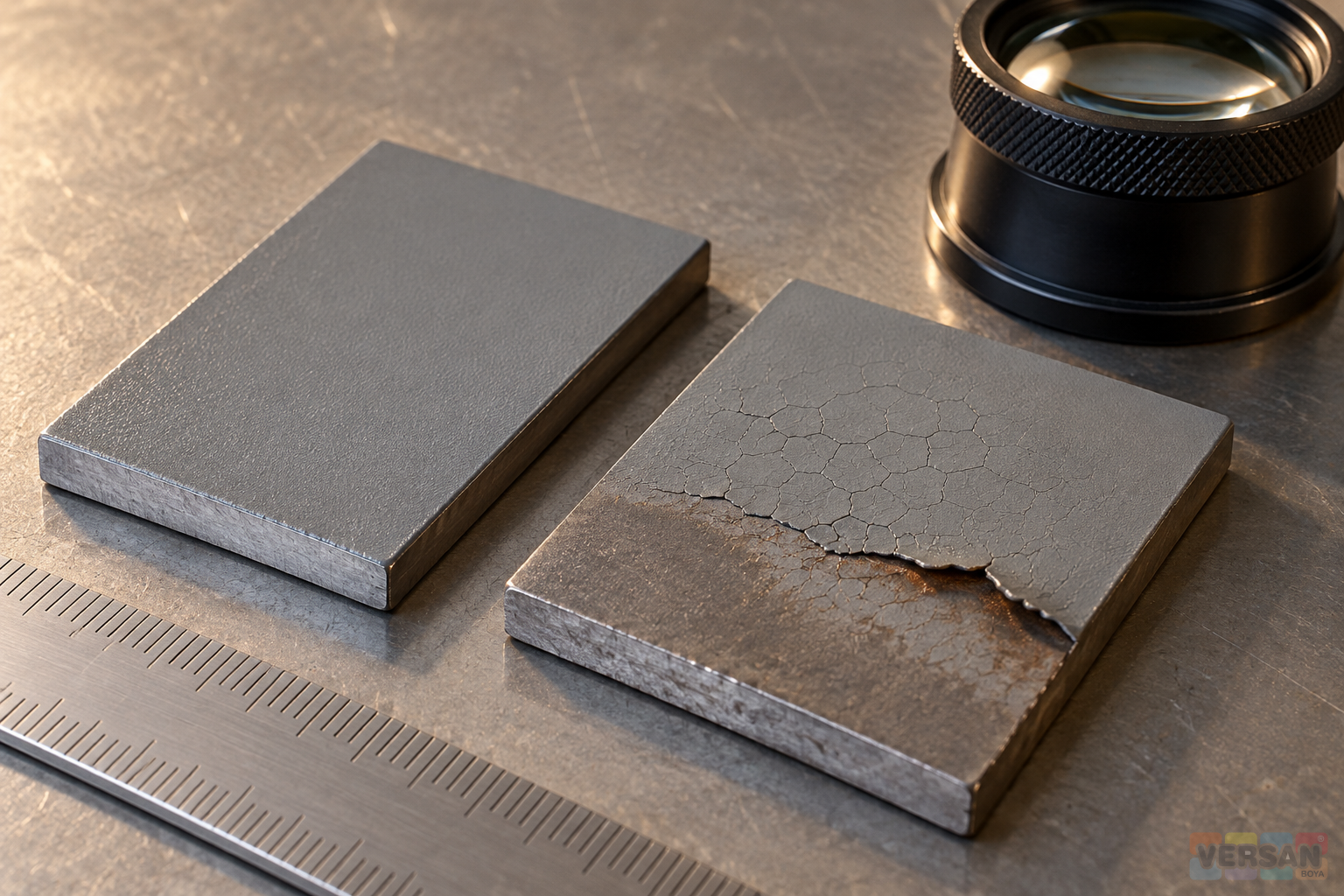
Identify the interface associated with separation
The term adhesion failure often suggests separation between coating and metal, but separation may also occur between layers or within a film. Examine the detached material, exposed surface and transition into apparently sound coating together. Without that distinction, assigning the entire problem to a primer name is premature. If an epoxy primer is reported, request its exact identity and the actual system build. A broad product-family description does not establish which material was applied to which surface. The report should distinguish the observed separation plane from any aspect that still requires confirmation through a suitable technical assessment.
Where a fabrication coating remains beneath the system, include the identity of the shop primer. If an old antirust primer was retained, investigate its condition and the basis on which it was accepted. These product links do not recommend those materials for combined high-temperature service. Suitability must be confirmed for the complete system and actual duty. The article on maintenance over old antirust primer provides complementary retained-film considerations; an ordinary maintenance approach should not be converted directly into a high-heat application recipe. The possible presence of an unidentified layer must remain part of the technical enquiry.
Interpret film thickness within the entire coating build
The assumption that a thicker coating always gives better protection needs particular scrutiny in a heat-resistant system. International's Intertherm 50 data sheet defines product-specific limits relating film build to behaviour during heating. Those figures are not application instructions for another product. Obtain the installed coating's own requirements, specified number of coats and available application records. Explain whether a measurement represents total build or a particular layer. The responsible specialist should establish suitable equipment, measurement locations and interpretation. One reading does not characterise an entire item of equipment, especially when the local history, geometry or earlier repair work is not known.
An existing system containing epoxy topcoat or gloss polyurethane topcoat does not automatically become appropriate for high-temperature duty when a heat-resistant finish is added. The service limits and compatibility of every retained layer need consideration. The new finish cannot confer its properties retrospectively on an underlying material. Where thickness records are absent, discuss what application documents, material records and suitable examination can establish. Each source provides different information. Material consumption alone cannot establish a precise local film thickness, and an attractive finish cannot substitute for the missing record of how the system was built.
Read drying, overcoating and return-to-service records separately
Touch dryness is not the same question as readiness of the complete system for operating service. Request application dates, intercoat timing, ambient conditions and the sequence used to return the equipment to operation. Whether heat curing is required, and which procedure applies if it is, must come from the exact product instructions. Do not assume that all heat-resistant paints behave alike. If the initial start-up record is missing, identify the gap. Later wrinkling or separation cannot be assigned a definite cause simply by looking up a generic drying time. The handover between application and operation is part of the technical history and should be documented.
Versan Boya's heat-resistant paint catalogue archive contains historical product information, including different Turkish and English dilution statements. This article therefore does not derive a current thinning percentage from that archive. Confirm the current data sheet, exact coating and permitted thinner with the manufacturer. Knowing the name epoxy thinner or polyurethane thinner does not demonstrate suitability for the heat-resistant coating being reviewed. Do not assemble a recipe using ratios and drying information from different products. Any unexplained difference between an archive and the current instruction should be resolved before application, with the accepted document revision retained in the file.
Keep shutdown, cleaning and external exposure on the timeline
The coating's exposure may extend beyond the periods when the equipment operates hot. Washing, wetting during shutdown, surface deposits and nearby work should be considered when documenting the event. Requesting these details does not establish a particular damage mechanism. It defines which conditions the investigation needs to examine alongside the observation. Where a cleaning product is known, record its identity and use history. A generic cleaner description may be inadequate for a compatibility review. Restrictions stated for a particular manufacturer's product should not be generalised across all heat-resistant coatings. The installed system's own accepted exposure and maintenance conditions still require confirmation.
Insulated and uninsulated zones should not be reported as though they have received the same examination. The condition of a visible surface does not demonstrate the condition of areas concealed beneath insulation. Assessment of inaccessible zones should follow a plan established by operations and the relevant technical specialists; this article does not authorise opening or removal work. Preserve location references when combining photographs from different parts of the equipment. An earlier synthetic finish, for instance, may have been used only on a cooler auxiliary component. Its presence in a maintenance list does not prove that it was applied to the hot zone. Match products to locations before interpreting their relevance.
Design sampling and testing around the decision needed
Instead of collecting material indiscriminately from every affected area, define the question that further examination should answer. Show whether colour change and separation occur together or in different zones. If an apparently sound comparison area is selected, explain why it represents relevant conditions. Keep sample location, collection time and assessment responsibility traceable. The appropriate specialist should select test methods, acceptance criteria and interpretation. A field observation and a laboratory result are not interchangeable types of evidence. Do not enter an estimated value as a test result for an unmeasured property. Where the investigation is limited, describe its scope as limited rather than implying complete equipment coverage.
Materials used during cleaning or examination belong in the sample record. Choosing among thinners and auxiliary products by appearance can alter both the coating and the evidence under investigation. Define the purpose, material and bounded area of any controlled trial before beginning. Even an apparently favourable result should not be extended automatically to another zone or the whole item. Changing several variables together can make a single-cause interpretation difficult. Evaluate what uncertainty a test actually reduces. A result that does not support the initial theory should not be relabelled to make the theory appear confirmed. Conflicting records deserve an explicit explanation or an identified unresolved question.
Select repair scope from the evidence and its limits
Monitoring, local repair and broader renewal can all be legitimate outcomes of an investigation, depending on its findings. The decision should not rest only on the area that looks damaged in a photograph. Consider retained layers, access, service conditions and suitability of the proposed system. Where evidence for retaining a layer is insufficient, correcting appearance alone does not resolve the technical question. Conversely, every colour difference does not require complete stripping. State what the current evidence supports and where further assessment is necessary. An undocumented temporary intervention should not be presented as a completed permanent solution. Define the accepted work scope and the responsibilities that accompany it.
For the selected repair, identify a representative area, the proposed coating system and the relevant acceptance points. Suitability for thermal service concerns the whole retained and new layer arrangement, not only the finish product. Specify the conditions governing return to operation separately. A successful trial should not be closed without an agreed follow-up responsibility and assessment time. Preserve location references and photography arrangements so that the same area can be found again. If a new observation develops later, add it with its date rather than deleting the earlier conclusion. The maintenance file then shows not just the latest paint used, but the evidence and limits behind the sequence of decisions.
Present a technical enquiry with explicit open questions
Before discussing the available product range, collect coating identities, document revisions, application dates, layer build, operating history and location-linked photographs. Distinguish actual measurements from reported estimates. Identify unexamined areas and historical information that cannot be verified. End the enquiry with the decision required: whether a layer can be retained, how a particular colour change should be assessed, or which renewal system should be considered. This turns a broad request for tougher paint into a defined maintenance problem. Listing missing evidence is a useful statement of the assessment boundary, rather than a reason to fill the gaps with assumptions.
Investigating colour, cracking and adhesion separately does not imply that they are unrelated. They can occur in the same event, but the relationship must be established from records and suitable assessment. Describe the condition first, reconcile service and application evidence next, and then determine the repair scope. Behaviour not addressed in the installed product's documentation should not simply be declared normal. An example from another manufacturer is likewise not an automatic rejection criterion. A useful technical discussion begins when everyone can distinguish the observed facts, the questions answered and the questions still open. Application and maintenance decisions should be based on that shared, traceable understanding.
Technical sources and limitations
- Versan Boya heat-resistant paint catalogue archive: historical description and differing TR/EN dilution statements; not a current application recipe
- Jotun Solvalitt colour document: thermal colour behaviour applies to the named products
- International Intertherm 50 data sheet, 27 May 2026: product-specific build, colour and compatibility limitations; no numerical instructions transferred to other products