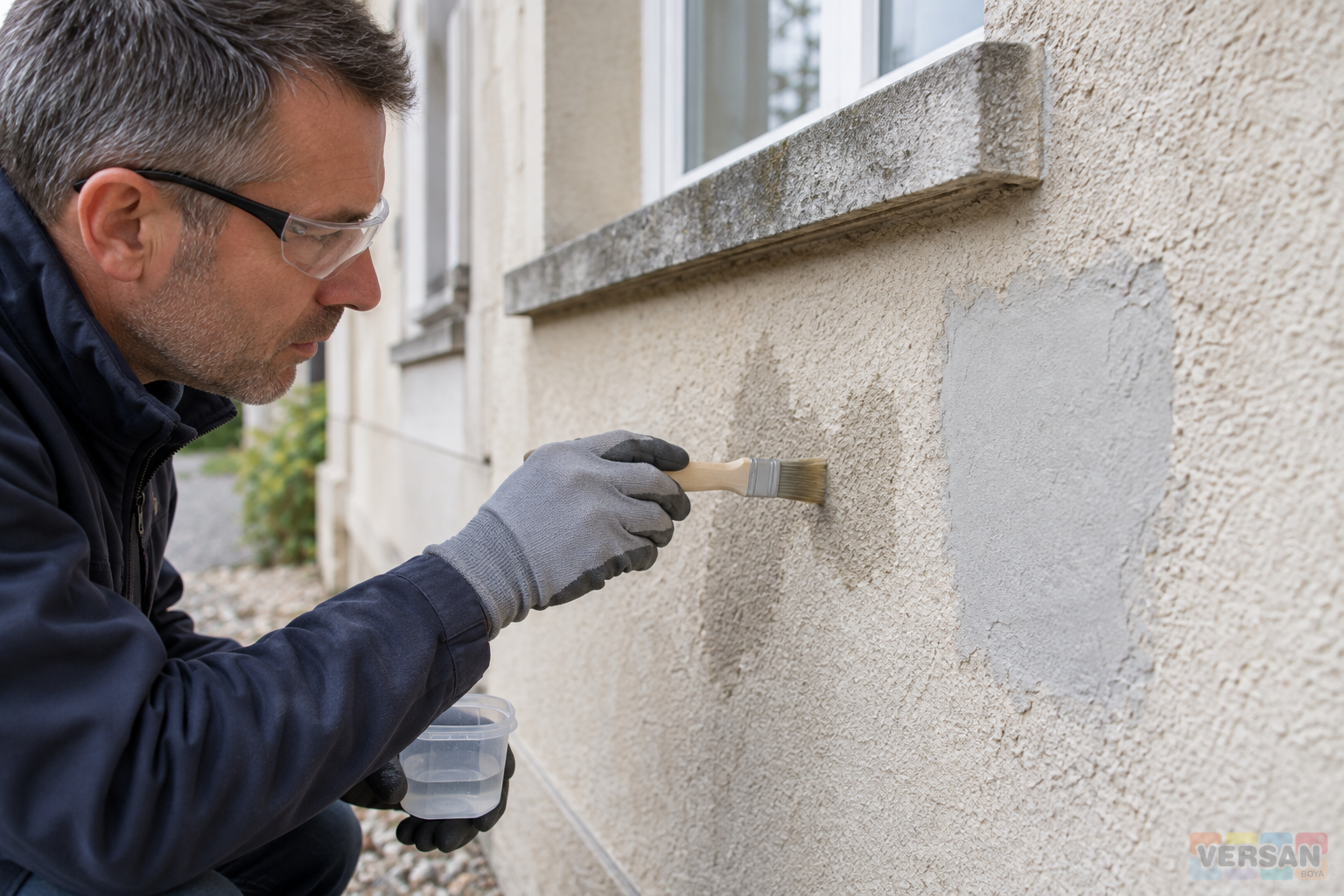
Assessing an old facade before silicone exterior paint involves more than putting water on a wall and applying extra primer wherever it disappears quickly. Droplet spreading, liquid absorption, moisture within the substrate and the soundness of an existing coating are different observations. Confusing them can turn every defect into an assumed primer problem. A repaired patch and an intact painted area may behave differently, while contamination can obscure the behaviour of the underlying material. A useful survey therefore divides the facade into representative zones and records uncertainty before selecting a preparation method.
When considering silicone exterior paint, the first objective is to describe the actual substrate. This guide explains an organised preliminary assessment; it does not replace a specified test procedure or the manufacturer's current application instructions. Read it alongside our discussion of facade chalking and blistering checks. Absorbency observations become useful when interpreted with surface cleanliness, coating condition and possible moisture sources. No single visual response should be treated as a complete diagnosis or an automatic instruction to use a particular primer.
1. Separate absorbency, wetting and moisture condition
Absorbency concerns the way a material takes liquid into its structure. Wetting describes how a liquid contacts the surface, including whether it spreads or remains in droplets. Moisture condition concerns water already present within the wall or introduced by an ongoing source. Water remaining on a surface does not prove that the wall underneath is dry. Rapid spreading does not demonstrate that an old paint film is securely attached. Record these issues under separate headings so that an overall note such as suitable does not conceal which properties were actually assessed.
A darkened patch is also not a measured water absorption coefficient. Colour, texture, contamination and previous treatments can affect the visible response. Where a numerical result is required, select an appropriate test method and competent interpretation. In the architectural coating range, the word silicone does not mean that every substrate receives identical preparation. Suitability depends on the material, its condition and the relevant product requirements. Preliminary observation helps identify the next technical questions; it cannot establish every performance property of a coating system within a few seconds.
2. Map the facade into meaningful inspection zones
Different elevations and details can have very different exposure histories. Areas below an overhang, beside a balcony, close to ground level or around a recent repair should not automatically be treated as one uniform surface. Mark changes in existing coating, render condition and visible water staining on a simple plan. Select observation points because they represent a particular surface group, not merely because they are easy to reach. A ground-level assessment cannot approve inaccessible upper areas without evidence that they share the relevant condition.
The record can remain straightforward: give each zone an identifier, an overview photograph, a close view and an inspection date. Attach previous coating or repair information where available. Our guide to moisture, climate and exterior substrates provides related context. The practical aim is to let another person return to the same place and understand what was observed. A note saying rear elevation poor is too vague for comparing later results, locating a trial patch or deciding whether a newly exposed substrate falls within an existing approval.
3. Inspect the dry surface before observing wetting
Record dust, loose coating, deposits, oily contamination and visible biological growth before interpreting a water response. Behaviour on a dirty surface should not be assumed to represent the clean substrate underneath. Cleaning can change the observation, so the preparation state must accompany the result. Loose paint also requires a decision about the extent and method of removal rather than simply a stronger primer. The Nanomix archive calls for clean, dry application surfaces, but a clean appearance alone does not establish all acceptance conditions or demonstrate adequate soundness.
Pay particular attention to repair edges, lifting, blisters and cracks. If movement or ongoing water entry has not been investigated, a cosmetic repair decision may be premature. An exterior filler should be assessed against the actual defect, substrate and subsequent coating system. Its presence in the product range does not make it an answer to every crack. Establish which layers are being retained and which are being removed. Increasing primer consumption before resolving that question can conceal a weak layer without creating a reliable preparation plan.
4. Make small, controlled and comparable observations
For preliminary comparison, select small, safely accessible areas that are suitable for the proposed observation. Applying comparable amounts of clean water with a small brush can help reveal differences between prepared surfaces. Do not present this informal exercise as a standardised laboratory result. Changes in water quantity, contact area or conditions weaken the comparison. The purpose is not to saturate the wall or force water into vulnerable details. Assess suitability first, especially around sensitive finishes, and allow the observed area to return to the required condition before any coating trial begins.
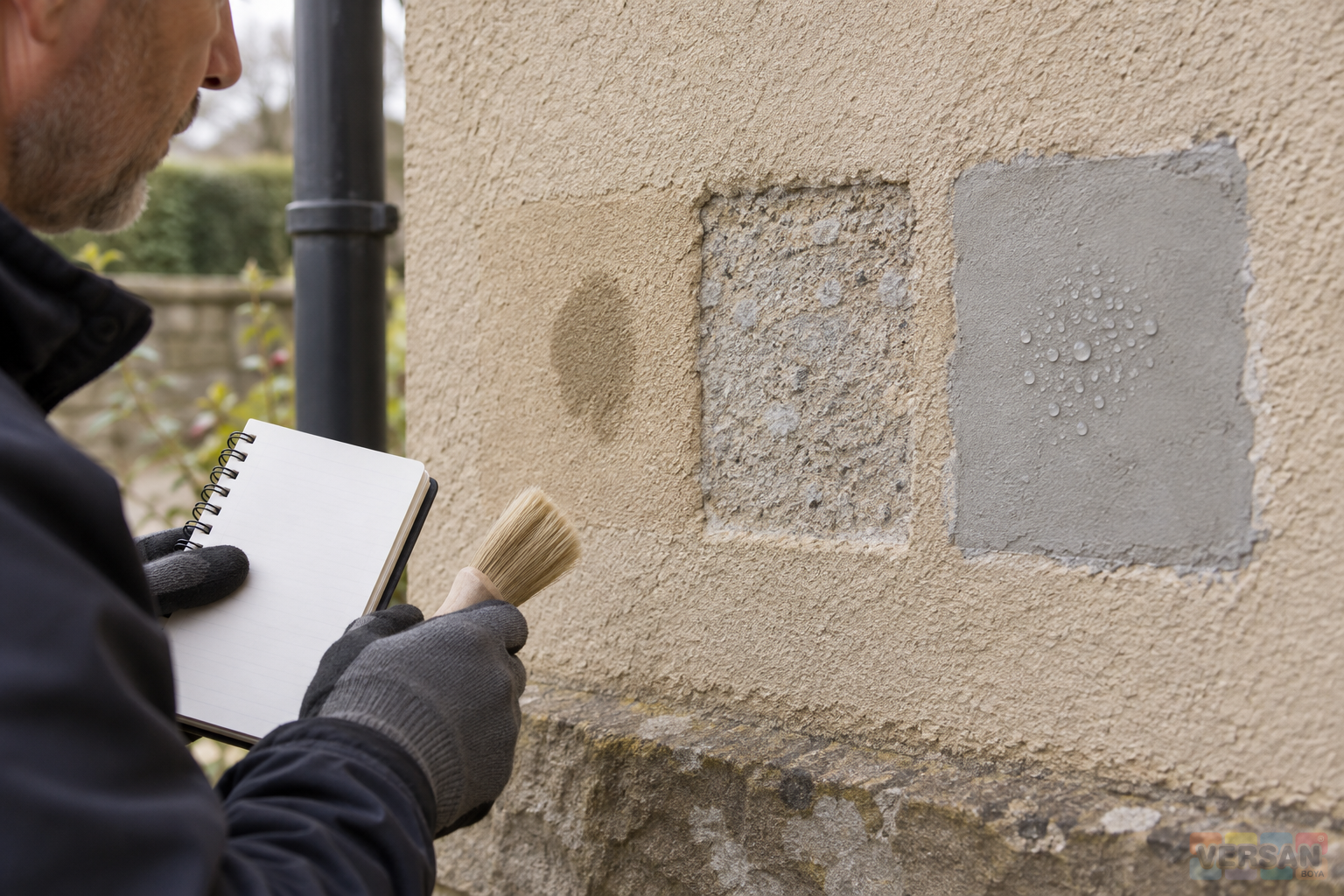
Note spreading, beading, darkening and differences between adjacent areas. Repeating an observation under comparable conditions is usually more informative than interpreting one isolated photograph. This article does not propose a universal number of seconds that separates an acceptable wall from an unacceptable one. Any required numerical limit must belong to an identified method and product specification. Selection of a silicone exterior primer therefore cannot depend only on how quickly a water mark disappears. Substrate identity, soundness, cleanliness and compatibility with the intended topcoat must also be considered.
5. Understand what the observed response does not prove
Rapid darkening may indicate a more open or otherwise different surface, but it is not a complete diagnosis. Persistent droplets can have several possible explanations, including a dense existing film, an earlier water-repellent treatment or contamination. These possibilities require different questions and should not be treated as equivalent. If water fails to spread, investigate the coating history before selecting an unfamiliar primer. Send the technical adviser an overview, a close photograph and a description of the observation method. That evidence is more useful than reporting only that the wall does not absorb.
Uneven darkening across repaired areas may point towards differences in substrate or preparation. It does not automatically mean the proposed topcoat must be changed. Review cleaning, repair material, existing film and local water exposure first. Products such as silicone isolating primer should not be substituted for other primers based on their names alone. Confirm their intended use and suitability with current documentation. Treat the preliminary check as a way to organise evidence and eliminate unsupported assumptions, rather than a recipe that resolves every surface condition in one operation.
6. Investigate suspected moisture independently
Staining after rainfall, damage around services, deterioration near ground level and recurring blisters warrant investigation of possible water sources. A wetting observation does not answer those questions. If a moisture instrument is appropriate, its suitability for the material, operating method and interpretation all matter. Do not apply one displayed reading as a universal acceptance threshold for every render and coating. Different instruments and substrates do not necessarily produce directly comparable results. Any required assessment should identify the method, measurement locations and the person responsible for interpreting the evidence.
Repainting before an active water source is addressed can lead to repeated remedial work. Record the investigation, responsible work package and planned reinspection separately from painting. Choosing an acrylic matt exterior coating, or any other finish, does not automatically repair unresolved water entry. Establish whether the substrate is ready before deciding appearance and application timing. Separating water-source repair from decorative preference makes the quotation clearer and avoids expecting the coating contractor to solve a building defect that has not been included in the agreed scope.
7. Treat repairs as a distinct substrate group
New repair mortar, old render and an aged paint film can behave differently. Record the repair material, installation date and requirements before subsequent treatment. The passage of a few calendar days is not evidence that every repair product is ready for painting. Check the repair and coating instructions together. Include transition edges in the assessment, because a satisfactory finish at the centre of a patch does not establish an acceptable result where new material meets old coating. Those boundaries are often the most useful locations for a representative trial.
A transition primer and a exposed-concrete primer may serve different purposes. Their names do not justify using either as a general solution to all absorbency differences on an old facade. Review the relevant product information and obtain current confirmation of suitability. This distinction is especially important when several building products are already on site. Using an available container simply because it is convenient may introduce an unapproved preparation step into an otherwise carefully specified system.
8. Combine observations with the intended coating system
The archived catalogue describes the silicone exterior primer as a silicone-emulsion preparation product for exterior use. That short description is not a comprehensive selection chart for every existing coating. Once retained paint, exposed mineral substrate and repair areas have been identified, establish an appropriate preparation sequence. Follow the current manufacturer's instructions for dilution, application and waiting periods. Do not assume that applying more material always improves the substrate. An excessive or unsuitable treatment can change surface behaviour, so quantity should follow an approved method rather than compensate for an unresolved diagnosis.
Our primer, filler and surface preparation guide explains the different roles of these stages. Filler addresses suitable surface correction, primer belongs to system preparation, and the topcoat contributes the specified finish and protection. None automatically performs every function of the others. Considering a textured silicone exterior coating does not remove the need for substrate assessment. A texture that makes a visual irregularity less obvious is not evidence that a weak or wet substrate has become technically acceptable.
9. Position the trial where it represents the difficult transition
Selecting only the smoothest wall section can exclude the feature most likely to cause a problem. A trial spanning sound old paint and a representative repair may be more informative. Record the preparation, primer, finish and tools used. If the main work will use a different method, approval of a carefully prepared small sample does not automatically validate that change. Include application date, conditions and assessment timing in the record. Allow the product to reach the appropriate evaluation condition before making a final judgement about colour or appearance.
Review general appearance, repair transitions, texture and visible variation together. Photographs help locate and document the trial, but they do not prove every performance characteristic. When comparing a silicone matt exterior product with another option, identify the exact product in each sample. Matching colour names do not establish identical preparation or formulation. If a trial is rejected, describe the specific unacceptable observation before proposing a correction. Changing colour without identifying whether the issue is texture, preparation or a substrate transition can leave the original problem unresolved.
10. Do not convert a water observation directly into paint consumption
A wetting comparison is not a direct calculation of the kilograms of paint to order. Use current product information, the specified coats and a representative application trial when planning consumption. The Nanomix archive gives seven to eight square metres per kilogram for one coat of its silicone exterior paint and qualifies coverage by application and surface. That archival range is not a guaranteed result for every old facade or a complete two-coat consumption figure. Confirm current product documentation, the unit of sale and the intended system before preparing the purchase quantity.
Record the trial area, quantity used and material remaining so that the estimate can be reviewed. Do not treat kilograms and litres as interchangeable; any conversion requires verified product density. Cleaning and repair quantities also belong in separate entries. Different exterior options in the product portfolio are not automatically interchangeable on the same substrate. A useful quotation shows preparation scope, system selection and the assumptions behind material quantities alongside the price. That visibility helps reveal whether an apparently inexpensive offer has omitted an essential preparation operation.
11. Turn the survey into an actionable work plan
For each zone, list the existing surface, observed behaviour, unresolved question and next action. A repaired mineral area that wets differently from adjacent sound paint may require a defined technical review and trial. Another area with suspected active moisture may first require investigation of the water source. Closing both entries with a generic instruction to prime loses the distinction. The plan should explain which uncertainties must be resolved before work starts and who will verify the result. Its purpose is to guide decisions, not merely produce a shopping list.
Cleaning or removal can reveal a substrate that was hidden during the initial survey. Photograph it, update the zone record and review preparation where necessary. A changed condition does not authorise an installer to improvise a different product without technical agreement. If a small repair expands across a significant area, the original trial may no longer represent the main work. Check whether the approved method still applies. Retaining a clear record of these changes allows the project team to distinguish a justified revision from an undocumented departure from the agreed process.
12. Prepare a useful technical enquiry and quotation brief
Share the building location, elevation directions, approximate areas, known coating history and previous repairs. Include general views and close photographs of repair boundaries or water staining. Describe how any wetting observations were made instead of sending only a conclusion. When reviewing the silicone exterior coating option, use this record to support a technical information or quotation request to Versan Boya. Clearly identifying uncertain areas helps the team ask focused questions and define the preparation work without pretending that inaccessible or untested surfaces have already been approved.
Also identify work excluded from the painting price, such as access equipment, detail repairs or investigation of water entry. An unresolved repair should not disappear between separate contractors' scopes. Mark inaccessible zones for inspection when safe access becomes available. At handover, retain the final preparation record, trial reference and any approved changes. Future maintenance decisions become more reliable when the owner knows where old coating was retained, where repairs were made and which preparation was actually used, rather than relying on the name of the final colour alone.
Product-specific archival references are the Nanomix exterior coating page and primer page. KEIM's technical guidance on substrate suitability and trials supports the general importance of sound preparation and site-based consumption assessment; its product recipe is not transferred to Nanomix. A reliable decision combines observations, current product requirements and resolved substrate issues. One water mark cannot approve an entire elevation or substitute for a documented preparation plan.