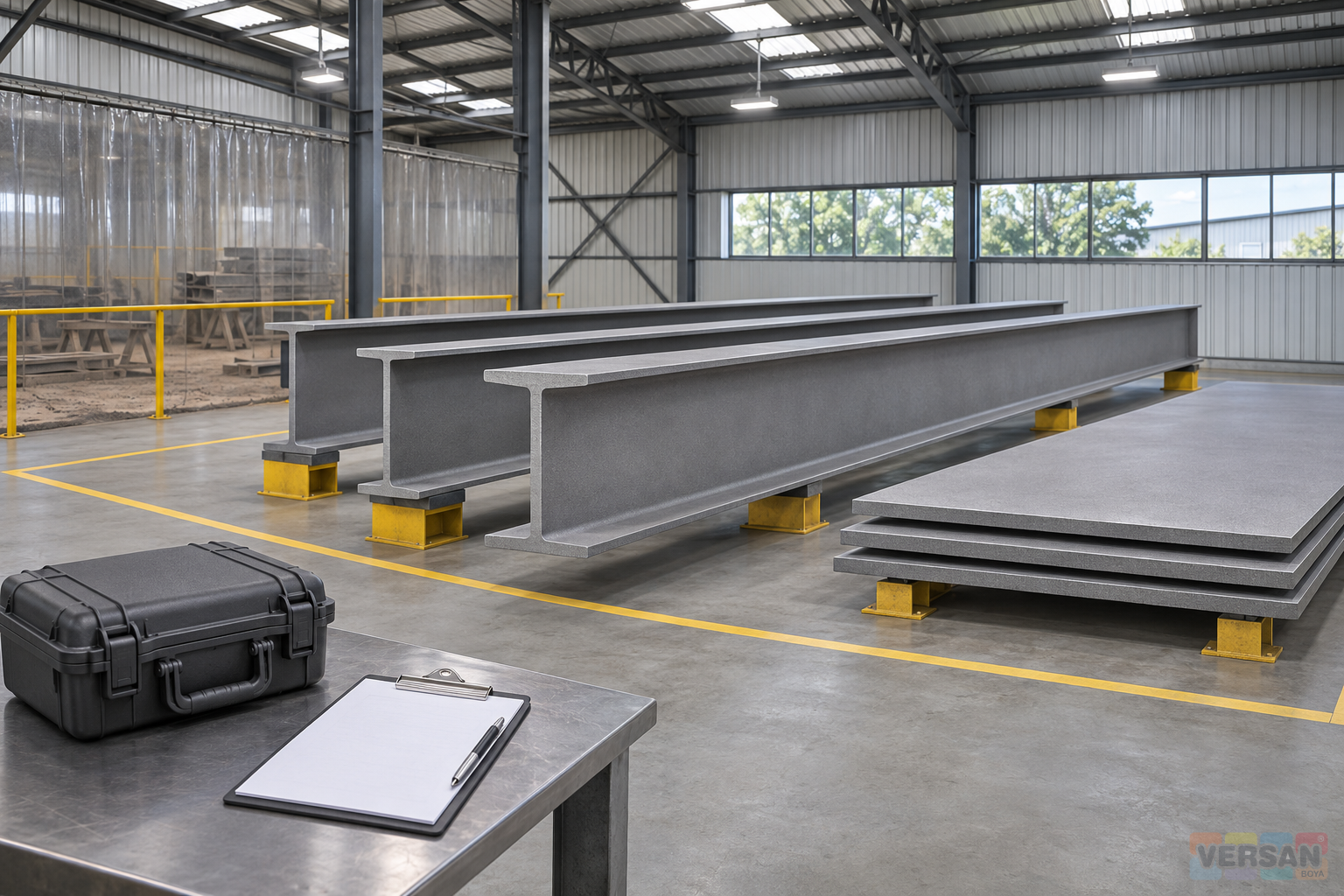
Completing surface preparation does not give prepared steel an unlimited period of acceptance before painting. Between the preparation crew leaving and the first primer coat starting, components can be moved, exposed to changing conditions or contaminated by neighbouring activities. The useful question is therefore not simply how many hours have passed. It is whether the condition accepted after preparation still exists at the point of application. Planning a suitable epoxy primer enquiry should include this interval, the protection of the prepared steel and the responsibility for its final release.
This article concerns prepared steel that has not yet received its first primer coat. It does not establish an overcoating interval, a concrete moisture assessment or a preparation method for every metal. Galvanised substrates, existing coatings and mineral floors require their own evaluation. The proposed approach is a practical way of recording what has happened to a particular prepared area and deciding what needs checking again. Actual acceptance requirements come from the current product documentation and the approved project specification. The procedure should support those documents rather than replace them with a general internet rule.
Record two events rather than one painting date
Keep the completion of preparation separate from the start of priming. A useful record identifies the component or area, its preparation completion time, the applicable acceptance document and the role of the person who inspected it. The next shift should be able to locate the same area without guessing which beam, face or compartment the record describes. Large structures may be prepared in sections at different times. Giving the entire structure a single completion time can hide these differences and make a later contamination investigation unnecessarily broad or misleading.
Consider a hypothetical workshop with three prepared steel components. One remains in an inspection bay, another is transported to a different position and the third stands near a subsequent cutting operation. Their elapsed waiting times might be similar, but their exposure histories are different. A record containing only the duration would miss the most useful distinction. Adding a short event note for each component allows the inspection team to focus on relevant handling points or exposed faces. This example illustrates a recording method; it does not imply that any particular waiting period is automatically acceptable.
Establish which document defines acceptance
The accepted historical Nanomix catalogue describes epoxy primer application to surfaces that are clean, dry and free of dust. It is useful evidence about the product family, but it is not a substitute for a current technical data sheet, safety data sheet or project specification. Required preparation quality, surface profile, environmental restrictions and any testing requirements must be established for the actual system. A general catalogue statement cannot legitimately become a universal blast-cleaning grade, soluble salt limit or maximum delay for every steel structure. Resolve missing requirements before the coating crew is asked to proceed.
The Jotun Resist 78 application guide listed among the sources belongs to a different product system. Its relevant general principle is to retain the prepared condition until coating and inspect contamination. Its product-specific numerical values are not acceptance values for Nanomix. A requirement issued for one manufacturer's product cannot be presented as approval of another. The site inspection plan should identify the actual product code selected from the industrial coatings range, the applicable document revision and the approved coating system. This prevents selected statements from unrelated documents being combined into an unsupported procedure.
Ask what happened during the interval
Before examining the surface, establish whether the surrounding work changed. Were doors opened, nearby surfaces cleaned, components lifted, packaging handled or the steel taken outside? Did temporary covers contact it? Were activities carried out above it? These questions do not themselves establish acceptance or rejection. They identify where further observation may be needed. A handling event might justify a closer look at contact points, while neighbouring preparation work may focus attention on horizontal ledges. The absence of an event record does not prove deterioration, but it makes the uncertainty explicit instead of quietly treating an unknown history as a clean one.
Coordinate the quantity of steel prepared with access, inspection capacity and the anticipated application sequence. Preparing an area much larger than the coating team can reasonably receive may create unnecessary exposure. Protection arrangements also need consideration: an unsuitable cover can introduce contact contamination or allow moisture to collect beneath it. Select the protection method through the site procedure and the responsible technical assessment. Simply placing an unidentified sheet over prepared steel is not evidence that the accepted condition has been preserved. The handover should explain both where the steel was held and how that holding arrangement was managed.
Make visual examination specific and traceable
Look for local differences as well as changes in the overall appearance. Edges, weld surroundings, downward-facing surfaces and horizontal ledges may not be equally visible from one position. Where photographs are taken, identify the area, viewing direction and location of each close view. Camera exposure and lighting can change the apparent colour of steel, so a photograph is supporting evidence rather than a complete cleanliness assessment. The record should allow a second reviewer to understand the observation and its extent. If the affected boundary cannot be seen in a close image, add a wider contextual view.
New rust appearance, suspected dust and a possible oily mark are different findings. They should not all be addressed with the same improvised wiping action. Removing a visible spot does not demonstrate acceptance of the surrounding surface; equally, a small local finding does not automatically require the entire structure to be prepared again. The appropriate scope is determined against the actual system and inspection outcome. The existing article on steel surface preparation and measurement discipline discusses the initial preparation stage. The present handover addresses whether its accepted result has survived the subsequent waiting period.
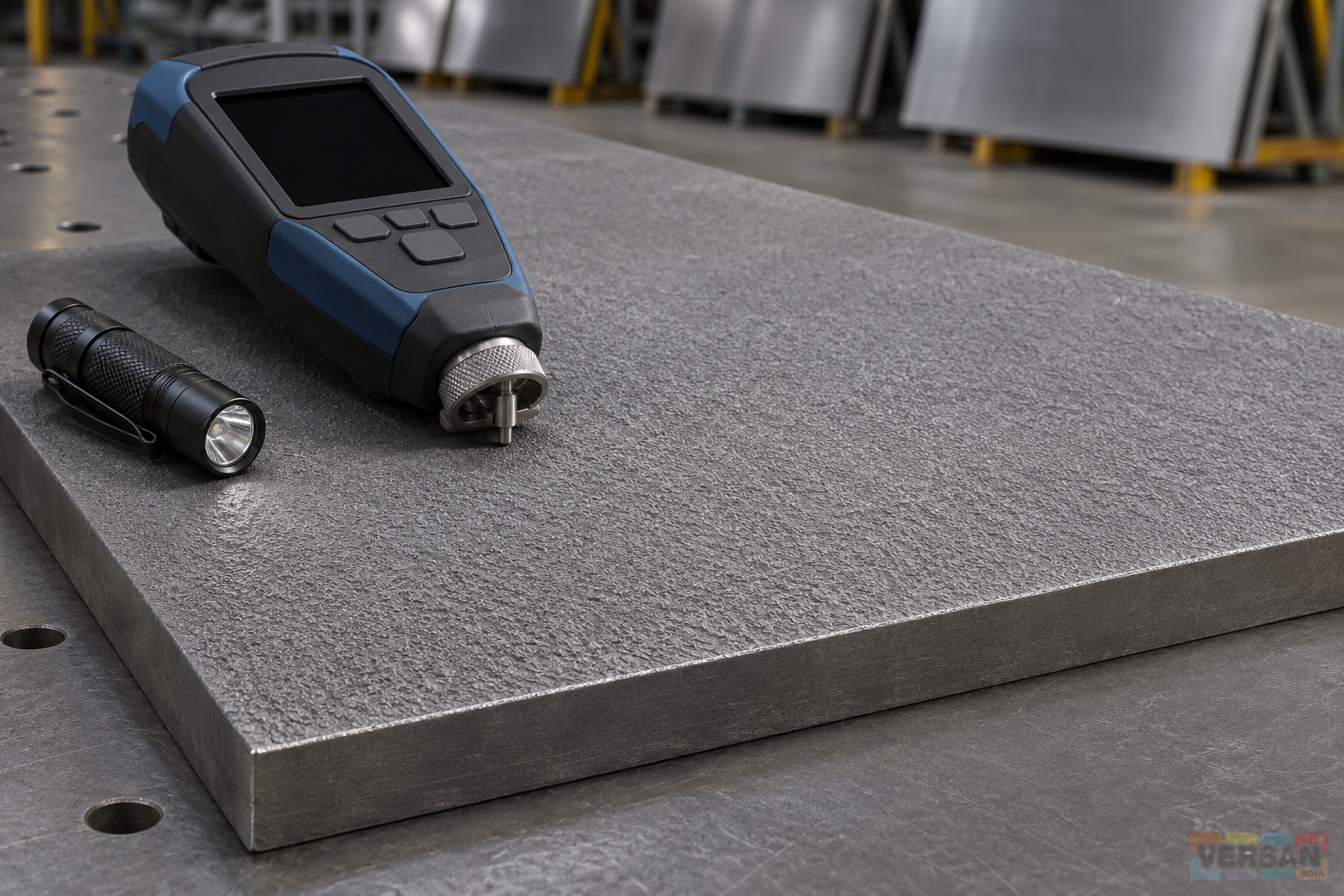
Keep dust, oil and soluble contamination separate
A dry-looking surface is not necessarily free of dust or grease. Fine particles may be difficult to see consistently over a large component. Where dust examination is required by the project, define the method, sampling positions and the way results will be recorded. The materials used during inspection must not themselves introduce contamination. Relating sampling points to an area sketch also avoids implying that one observation represents every face of the structure. A record saying only good or bad, without the inspection method or acceptance basis, will provide limited value when the next shift reviews it.
Suspected hydrocarbon contamination requires a cleaning method appropriate to the technical procedure. Treating paint thinner as a general-purpose cleaner for prepared steel is not a dependable shortcut. Dissolved contamination may be redistributed, and residues or other consequences must be assessed. The existence of an epoxy thinner product for specified uses does not authorise its uncontrolled application to the substrate. Products in the thinners and auxiliaries range should be identified by code, intended task and safety documentation. After an approved cleaning operation, inspect the resulting surface rather than assuming the action alone has restored acceptance.
Photographs cannot exclude soluble contamination. Where the project or intended exposure calls for salt testing, give the sampling and measurement task to competent personnel using the specified procedure. Check which condition the earlier results represented. A result obtained before transportation or exposure to rain may not adequately describe the later condition. Repeat assessments should follow defined triggers rather than an invented rule that every delay requires every available test. This article assigns no universal salt threshold. The numerical acceptance criterion, the sampling approach and the decision on remedial preparation belong to the actual coating system and project requirements.
Measure conditions where application will occur
A temperature display on a workshop wall may not represent every component. Steel recently brought inside, steel in shade and components with different thermal mass can behave differently. Environmental records should therefore identify the actual application area and the measurement time. Air temperature, substrate temperature, relative humidity and any required dew-point assessment should be considered together. Instrument identification and its suitable working condition matter as well. The inspection plan should specify when measurements are repeated, taking account of the likelihood of change. A single convenient measurement is not an enduring approval for all nearby surfaces.
Do not copy numerical conditions from an old job without checking their applicability. Current product instructions and the project specification may impose different requirements. Where condensation is possible or conditions are changing quickly, the previous shift's record may not support a new start. Make the environmental decision before mixing material where practicable, so that uncertainty about the surface does not become pressure to use a prepared batch. An enquiry about Nanomix epoxy primer should describe the real location and waiting history. A precise question supports technical advice, while final application remains subject to the current documentation and site assessment.
Distinguish profile from cleanliness
Surface profile and surface cleanliness are separate characteristics. A textured surface can still carry contamination, while a visually clean one may not have the profile required by the specified system. Retaining the initial profile assessment helps the team understand what was originally accepted and what a remedial operation must preserve or restore. Unplanned abrasion may improve appearance while changing another required characteristic. Record the selected method and the required final condition together. Describing the result merely as grey again is not a meaningful substitute for the acceptance criteria that applied to the prepared steel in the first place.
Welds, sharp edges and difficult access details require the same discipline. If additional welding or grinding takes place after preparation acceptance, assess what that work means for the affected section. The construction sequence should make clear which metalworking operations must be complete before priming. Subsequent inspection of an applied primer is another stage. The article on surface checks after epoxy priming addresses that later decision. Neither record should be used to imply that the other inspection has already occurred. Where the project requires separate release responsibilities, keep both the responsibilities and their timestamps distinguishable.
Bound the decision to rework an area
When a finding requires attention, do not close the record with an unexplained instruction to repair. State the area identity, the observed boundary, the proposed operation, the decision-making role and the method for reassessment. Additional cleaning may be appropriate in one case and more extensive preparation in another. The selection should come from the relevant technical assessment, not an unsupported time limit found online. Hold areas awaiting a decision visibly apart from those released to painting. Once an issue is closed, update the field identification as well as the office record, so both describe the same status.
An alternative product discussion can also affect the acceptance basis. Polyurethane primer, antirust primer and quick-drying industrial primer identify different product families. These links do not approve substitution into a planned epoxy system. A change of product requires the intended environment, preparation requirements, topcoat relationship and complete system to be checked. Previously accepted preparation does not automatically satisfy every requirement of the replacement proposal. Purchasing and application teams should receive the same written decision rather than interpreting a commercial availability discussion as technical approval to proceed.
Understand the complete coating purpose before the first coat
The inspection team should know why the steel is being coated. If exposure conditions, the approved system and subsequent coats remain undefined, accepting the first primer alone leaves important questions unresolved. Mentioning epoxy topcoat or gloss polyurethane topcoat is not evidence of compatibility between actual products. Their use together must follow written technical confirmation. Connecting the final system schedule to the first surface acceptance record clarifies the starting condition relied upon later. It also helps separate a surface preparation decision from a subsequent change in coating selection or application timing.
Similarly named floor coatings should not be folded into a steel priming procedure. Self-levelling epoxy paint and clear epoxy coating enquiries require their own substrate and system information. A concrete moisture investigation cannot replace assessment of prepared metal, and a steel cleanliness record cannot approve a concrete floor. Where both are present in one project, use distinct area identifiers and acceptance records. Commercial terms shared across products are not sufficient grounds to merge technically different work. This separation keeps advice, materials and inspection evidence attached to the surface to which they actually apply.
Use a short but complete shift handover
A practical handover can answer five questions: what was prepared, which requirement was used for acceptance, what changed during the wait, what the last inspection found and who releases the first coat. Add the real time and a link to supporting evidence. Clear area identifiers and closed findings are more useful than lengthy descriptions without a decision. A tick box alone is also insufficient where corrective action was needed. Naming the responsible role reduces assumptions between preparation, quality and painting teams. Check that the revision held by the crew matches the version referenced in the record.
Keep the record accessible to the people applying the coating. If inspection results exist only in an office folder, field personnel may have to reconstruct acceptance by telephone. Matching the component identification to the digital record makes the status easier to confirm. Define how held, released and reinspection-required conditions are communicated. Colour alone may not be adequate; a written status and current date can provide necessary context. Superseded acceptance records should remain available as history but must not appear current. This allows different shifts to work from the same decision without erasing evidence of the earlier condition.
If scheduling changes require components to move, record their existing identity and status before relocating them. Identify the new holding area and the person responsible for further examination. Moving steel out of sight is not a resolution of an outstanding finding. Review handling contacts and protection arrangements after the move where relevant. This does not require a long report for every minor action. It requires preservation of the events that could affect surface acceptance, at a level proportionate to the work. A short, accurate note often explains more than a generic statement that the surface was kept under cover.
Ask a technical question that can be answered
When requesting advice, state that the substrate is prepared, uncoated steel and that the question concerns the interval before its first primer coat. Include the area identity, preparation method, completion and inspection times, subsequent exposure and actual findings. Add the product code, relevant document revision and photographs with context. Ask what remedial scope and reassessment are required for that specific condition. This is more useful than asking whether a surface that has waited is acceptable. Remote photographs are supporting information; they should not be treated as a complete substitute for necessary on-site inspection by competent personnel.
Keep actual events intact if a later problem is discovered. Do not change the original application time to make a record appear compliant. Preserve the observations that supported the initial decision and record new findings separately. Waiting between coats belongs to the subsequent stage and is discussed in the epoxy primer overcoating interval guide. Separating preparation completion, first-coat release and later overcoating decisions makes technical investigation clearer. Managing the initial interval through area boundaries, exposure history and current evidence is more reliable than assigning an unsupported number of hours to every project.