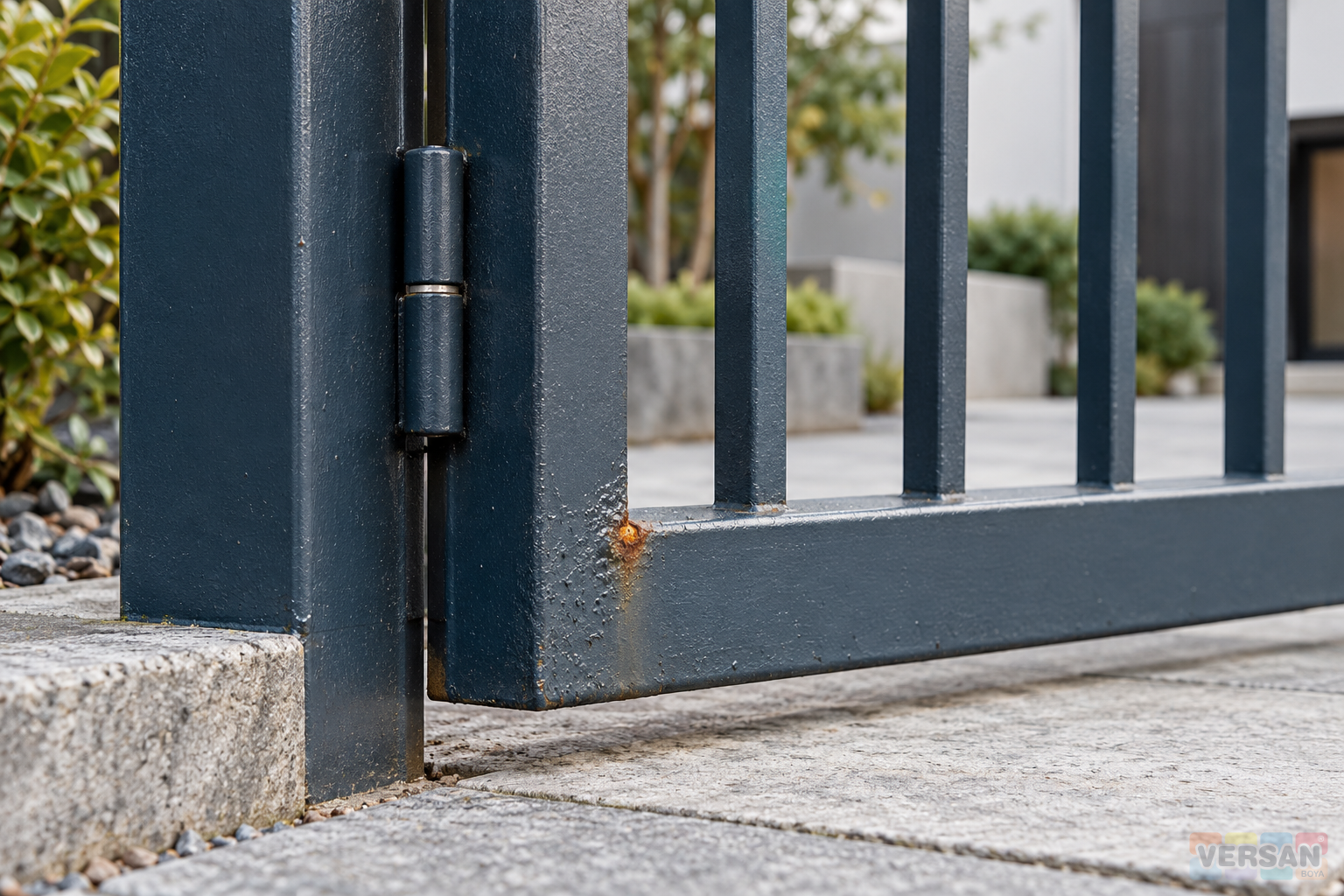
A calendar alone cannot determine when an alkyd painted gate, railing, window or timber bench needs renewal. Two surfaces coated on the same day can develop differently because of water contact, exposure, use and construction details. One may need suitable cleaning and a limited repair, while the other requires a wider investigation. Asking how old the paint is provides useful background, but the practical decision depends on where deterioration appears, whether it is changing and what is happening to the underlying material.
This article proposes a working arrangement for linking observations, records and maintenance decisions on metal and wood finished with synthetic topcoat. The examples are hypothetical planning cases, not customer projects or promises of a fixed service life. New product selection, compatibility with existing coatings and surface preparation must follow the relevant current technical instructions. Metal and wood should not share an assumed repair recipe. Their common requirement is a clear account of the actual condition and a defined reason for the next operation.
1. Give each maintained surface a usable identity
Instead of listing only garden gate, identify its location and the areas that will be reviewed. A consistent photograph direction, a simple sketch and an asset code make the next inspection easier. On metal, separate the lower rail, hinge area, weld surroundings and upper edge where appropriate. On a wooden bench, distinguish the seat, ends, joints and fixings. The intention is not to create complicated numbering for every detail. It is to ensure that the next person can find and compare the same area.
If the original product within the alkyd systems range is known, connect its application record to that asset. If it is unknown, recording that uncertainty is more reliable than identifying the coating from its appearance. Previous maintenance may have replaced only one section, leaving several coating histories on the same object. A record that distinguishes original work from later repairs makes the technical questions for the next product choice clearer. An overall colour description should not conceal those differences.
2. Establish a baseline that can actually be repeated
The first inspection should be descriptive and repeatable. Combine a general photograph with a close view of the affected area, and show where the close view belongs on the wider object. Record the date, observation conditions and whether the assessment was made before or after suitable cleaning. A dirty surface and a later cleaned surface should not be compared as though the entire visual difference represented deterioration. Similar lighting and viewing angles help later reviewers distinguish a change in the object from a change in the photograph.
For a metal component finished with industrial coatings, briefly record relevant use conditions as well. Water collection, repeated contact and impact points belong in their own fields rather than being automatically classified as paint defects. Do not label every stain as corrosion or every reflection change as lost coating. Describe the observation first and seek further assessment where needed. A clear baseline makes the purpose of maintenance more specific: improve appearance, repair a defined defect, or investigate whether wider system renewal is appropriate.
3. Separate cleaning needs from coating renewal
Accumulated contamination can conceal the actual condition of a painted surface. Confirm a suitable cleaning method for the product and substrate, and assess it on a small inconspicuous area where appropriate. Aggressive rubbing, arbitrary chemicals or solvent wiping should not be assumed to constitute normal maintenance. If the cleaner's compatibility is unknown, resolve that question first. Recording the surface before and after suitable cleaning can prevent an unnecessary full repaint. The ordinary cleaning arrangement used by the owner can also form part of the maintenance history.
The name synthetic thinner does not mean that the product is a universal cleaner for every finished synthetic coating. Dilution during application and cleaning a coating in service are different uses. If cleaning reveals a scratch, crack or area of detachment, the cleaning task can lead to a repair assessment without pretending that the cause has already been diagnosed. This distinction helps the caretaker and coating applicator understand the same work order. State which operation is requested and which further decisions remain open.
4. Inspect metal edges and joints as distinct areas
The broad centre of a metal surface may look sound while a weld or lower connection has a different condition. Include those details in the inspection rather than judging the whole object from its largest flat area. Record rust marks, blistering, detachment and mechanical damage separately. If a detail retains water, renewing the coating alone does not remove that feature. A deposit affecting drainage or a connection causing repeated rubbing may need attention from another responsible person. Relate that action to the coating task without treating the two as interchangeable.
Antirust primer should not be offered as a universal answer before the metal and existing system are understood. Review the retained coating, exposed substrate and intended topcoat combination. The article on early corrosion at edges and welds provides a related discussion of those locations. A small visible mark cannot establish the condition of all the metal beneath it. Suspected structural or mechanical problems require the relevant competent assessment in addition to the coating maintenance decision.
5. Review the timber joint as well as its painted surface
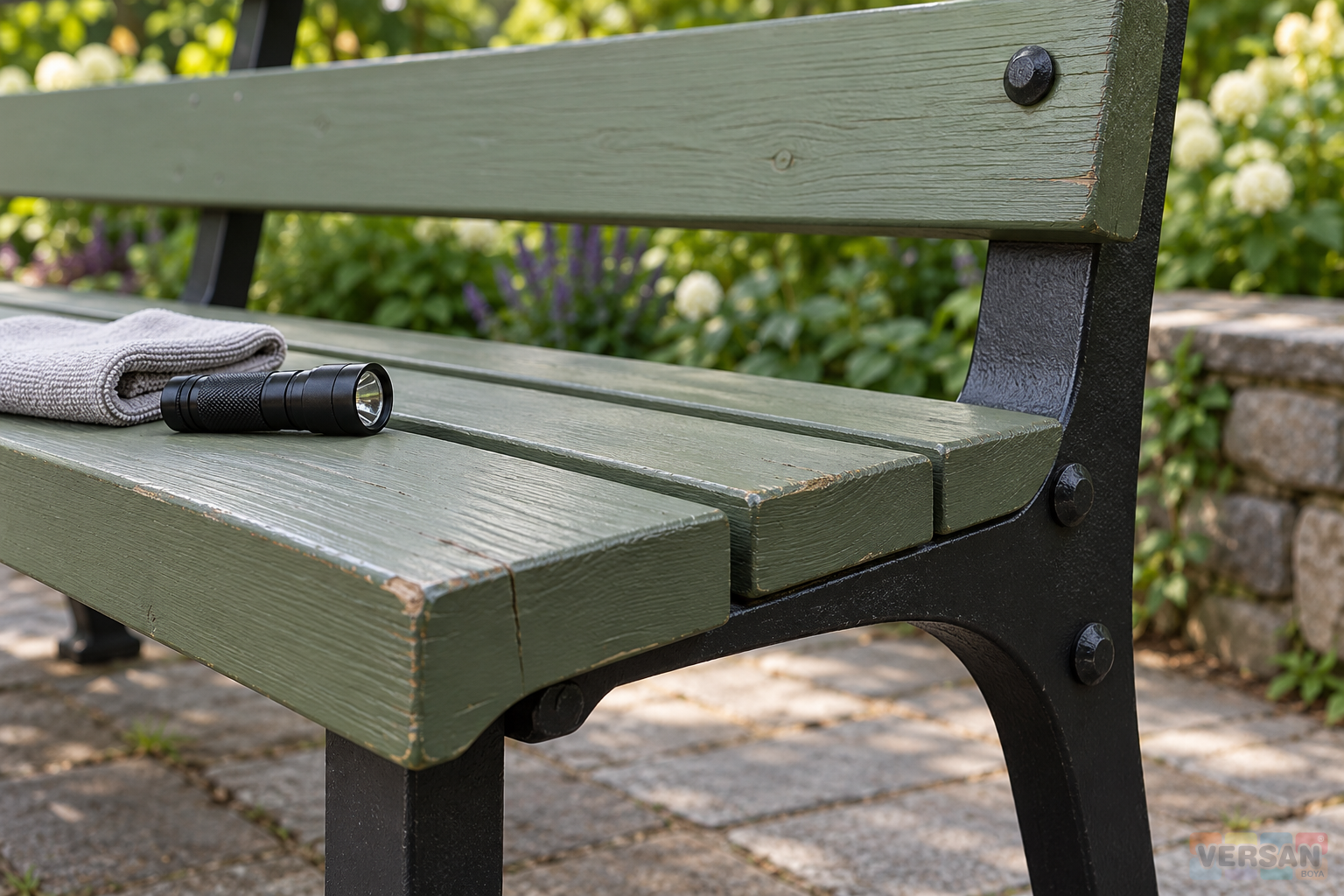
On wood, colour change alone is an incomplete basis for maintenance. Review edge wear, joint openings, coating cracks and points exposed to water together. The upper and lower parts of the same item may experience different conditions. If a joint moves or holds water, a fresh coat should not be described as correcting the joint itself. Loose fixings or damaged timber need their own defined repair scope. A line visible in a photograph should not be treated as a certain diagnosis of the material beneath the paint.
Options within wood and furniture coatings need to be considered alongside the actual location and use. An interior product should not be assumed suitable outdoors, and acceptance on metal does not establish suitability for timber. Keep the decision within the substrates and conditions covered by the current product information. Where known, record timber type, previous treatment and the condition of joints. Leaving unknown information explicit makes the technical questions visible and avoids creating confidence from an incomplete history.
6. Use observation language before diagnostic language
A note saying paint poor provides little help when planning the work. A location and appearance description, such as detachment at the lower corner or a brown mark beside a fixing, is more useful. Record the approximate affected area consistently, but do not present an informal estimate as a standardised professional rating. If photographs are annotated, keep the original image separately. The annotation must not later be mistaken for an actual crack or stain. Clear records distinguish what the observer saw from what a subsequent assessment concluded.
For a surface finished with semi matt synthetic topcoat, assess sheen against the intended finish and an appropriate reference. Photographs taken under different light do not support an invented percentage of colour loss. Separate the observation field from the cause assessment. New information can then refine the explanation without rewriting the original finding. This arrangement preserves the history of the decision and gives different teams a shared description, even when they do not yet agree on the cause or the appropriate repair.
7. Distinguish cleaning, local repair and wider renewal
Maintenance can lead to different sizes of work. A surface may remain under observation after suitable cleaning; a limited defect may justify local repair; widespread or uncertain conditions may require a wider renewal assessment. These are not classes defined by universal percentages. The decision depends on the nature of the damage and the retained coating. Hempel's spot repair guidance describes considering sound surrounding coating alongside local damage. That general distinction is useful here, while its brand specific preparation and application details are not a ready made Versan specification.
The need for synthetic primer cannot be decided from the topcoat colour alone. Identify the exposed substrate and the layers required by the confirmed repair system. If local work is selected, the transition into retained surrounding coating belongs in the technical plan. Painting over an unknown existing layer does not resolve the uncertainty about that layer. Define what can remain and what requires preparation before translating the job into quantities and working time. Otherwise a convenient materials list can become an unintended substitute for assessment.
8. Verify the new product against the retained system
Even when the old finish is believed to be synthetic, its exact product and previous repair layers may be unknown. Compatibility with the proposed new material needs separate consideration. A small trial area can provide useful observations, but a satisfactory appearance is not a guarantee for the entire surface under every condition. Record the trial's purpose, location, preparation and assessment timing. Obtain the required technical confirmation before extending the operation. Similar family names cannot replace instructions for the actual layers and substrate involved.
When evaluating premium synthetic topcoat, separate the appearance target from the suitability of the complete system. The earlier article on overcoating old antirust primer and making a maintenance decision develops that distinction. A brighter or smoother new finish cannot independently show that an underlying problem has been corrected. Providing technical support with the coating history, close photographs and the exact proposed product makes the conversation more useful than asking only which paint to purchase.
9. Plan inspection intervals from the actual history
A single fixed inspection interval for every surface hides differences in use and exposure. An organisation can set an initial review and a planned next observation, but that date should not be presented as the product's promised life. The direction and speed of observed change, water exposure, mechanical use and previous repair experience can inform the next review. An unusual impact or water collection event may justify another inspection. The calendar should be an updateable work record rather than a one time estimate made without seeing the surface.
Objects associated with architectural coatings may also be affected by other maintenance teams. Washing, irrigation, renovation or changes to gate hardware can introduce new conditions. Record such changes to help distinguish coating ageing from external damage. Give the next inspection a responsible person and a planned date. Taking photographs and closing a folder is not an effective follow up arrangement if nobody owns the finding. A short action record can be more useful than a large, unconnected archive of attractive images.
10. Break the maintenance order into executable operations
Once repair is selected, consider surface preparation, material selection, protection of the surroundings and access together. Where an object contains both metal and timber, define the operations for each material separately. Preserve the preparation and application conditions required by the chosen products. An instruction saying two coats does not identify which surface will be prepared or how the retained coating will be assessed. Coat numbers, times and quantities should come from the confirmed system and actual work rather than a generic online recommendation.
A repair using matt decorative synthetic paint may also need an agreed appearance expectation beside the retained finish. Discuss the repair boundary, transition and intended outcome with the owner or job supervisor before application. Do not promise an exact visual match between new and weathered areas without establishing it. Clarifying scope before ordering can reduce repeated work. Recording the full product identity also helps the next team avoid choosing a different system solely because its colour name appears familiar.
11. Assess old surface preparation as its own task
Preparation can involve dust, removed coating and cleaning materials that need assessment for the actual job. An unknown old coating composition should remain an explicit uncertainty. Sanding or another preparation method should not be selected solely from the desired appearance; consider the material, surroundings and working conditions. Consult safety information for solvent containing products. This article does not specify protective equipment or a waste treatment method. Competent people should prepare the working plan from the real requirements of the task and the applicable product information.
Keep thinners and auxiliaries correctly identified at the maintenance location. Dilution, equipment cleaning and cleaning a finished surface should not be managed as an interchangeable operation from one unidentified container. Uncontrolled substitution can undermine a repair system that was correctly selected earlier. Manage open containers, contaminated materials and waste through the established safe working arrangements. Reopening the area is another defined decision: completion of application alone does not establish readiness for normal service. Confirm the relevant drying and release requirements before handover.
12. Close the work with photographs and material records
After maintenance, take photographs from the original observation points where practical. Record the treated section, exact product and batch, application date and any issues outside the completed scope. Completed should not imply that the whole asset was renewed when only one connection was repaired. At the next inspection, this record helps distinguish a finding in an untouched area from one in a repaired area. That distinction improves both practical planning and the quality of information supplied for a technical review.
The related article on antirust and synthetic primers for metal maintenance connects product selection to the maintenance system. At handover, communicate the confirmed cleaning arrangement and the findings that should trigger another review. Do not add unsupported claims of chemical resistance or unlimited outdoor life. The new record becomes the starting information for the next maintenance cycle. Clear scope allows the next team to begin with informed questions instead of trying to reconstruct the entire coating history from appearance.
13. Compare a hypothetical gate with a timber bench
Consider a hypothetical gate whose broad surfaces appear sound while a lower weld has a limited mark. Immediate complete repainting is not the only possible first decision. Identify the area, review the local conditions and existing system, then define the repair scope through the appropriate assessment. A timber bench inspected on the same date may show a joint opening and a coating crack. Its joint condition needs consideration before paint is ordered. Equal coating age does not establish equal work sequences when the observed conditions differ.
In this example, the gate's next observation may focus on the welded connection, while the bench's review covers the repaired joint and edges. Each record retains its own photographs, product information and responsible person. If findings develop, revisit the earlier scope. If no change is observed, report that observation without converting it into a prediction of indefinite durability. The purpose is not to postpone maintenance arbitrarily. It is to make the reason for each action, its timing and its follow up understandable to the people responsible for it.
14. Base renewal on evidence rather than age alone
A practical maintenance decision should answer four questions: which area was reviewed, what was observed, which action was selected and when will it be reviewed again? Purchasing paint does not complete the process when these answers are missing. If information about the existing coating is incomplete, record the decision alongside that open question. Not every uncertainty requires immediate major repair, but removing the uncertainty from the paperwork does not resolve it. A request for technical support or inspection should become a defined next step with an owner.
The value of periodic care for painted metal and timber is the opportunity to understand where change begins and respond appropriately. Suitable products, correct preparation and clear records support one another. The calendar reminds people to look; the actual condition, service requirement and technical instructions determine the next operation. Maintenance then becomes more useful than repeatedly refreshing the colour. It creates a process in which the next team knows what was done, the user understands the handover limits and a new finding can be compared with an honest earlier record.
Sources and scope
- Versan Boya, Nanomix archive catalogue, synthetic system related pages — product family context, not the current TDS of every variant.
- Hempel, Spot repair technical guideline — local damage and retained sound coating; no brand specific preparation grade or recipe transferred.
- HSE, Solvents — general solvent exposure context; current product SDS and task assessment remain necessary.