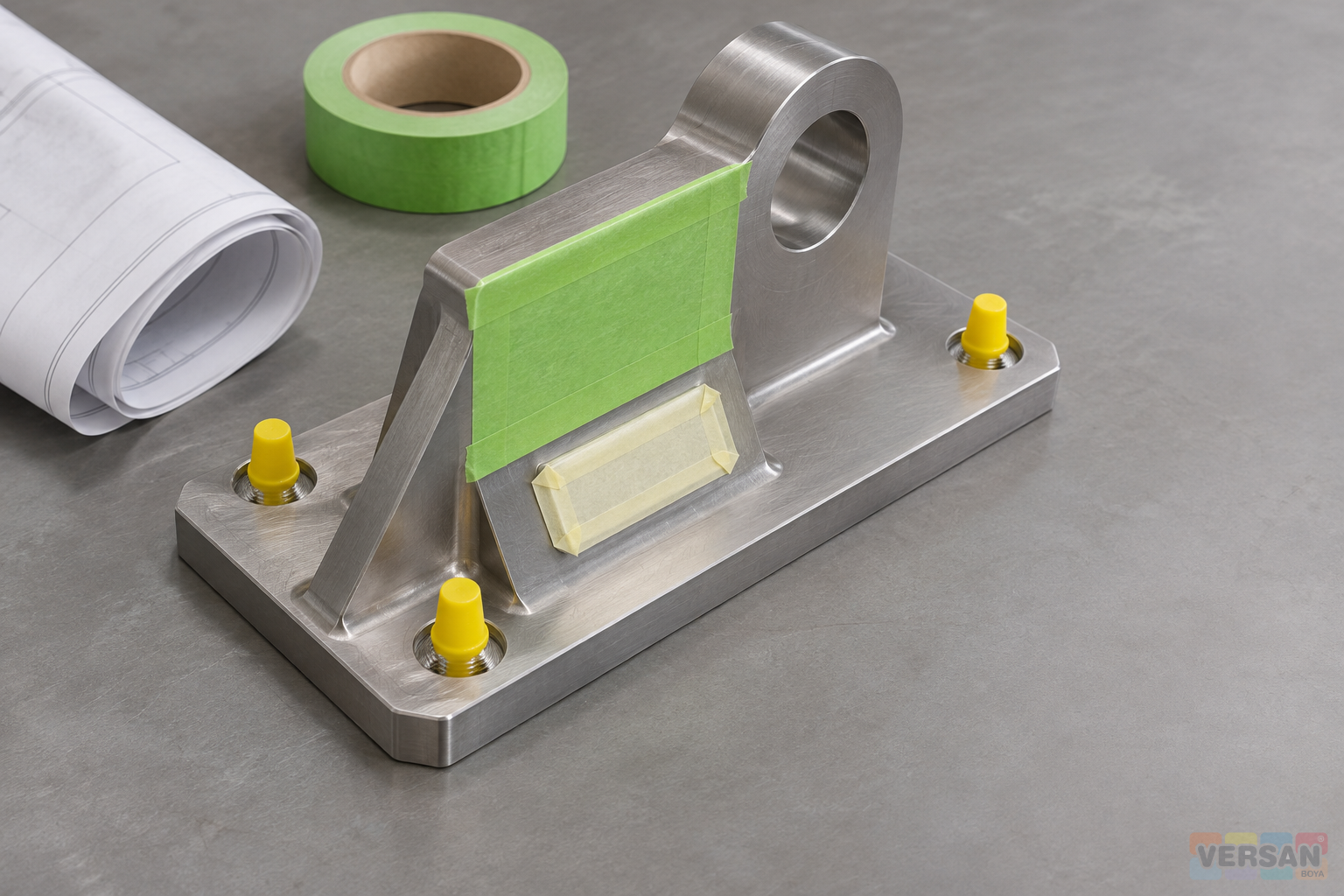
Metal coating work includes decisions about the surfaces that must receive paint and the features that must remain available for another purpose. A threaded hole, an identification plate and a machined mating face can appear on the same component while carrying different requirements. If those requirements remain informal, the coating operator and the assembly team may understand the same instruction differently. A masking plan turns that understanding into a traceable part record. It identifies the location, the intended boundary, the material reference and the question that must be answered before the component moves to the next stage.
This guide explains how to structure that record. It does not prescribe a universal tape, plug or removal method. Start with the specified coating system and the component's approved engineering documents. The industrial coatings range can support product enquiries, but a coating family alone cannot determine which mechanical interfaces may remain unpainted. Decisions involving fit, sealing, load transfer or electrical function belong to the relevant competent specialists. The practical value of the plan is to carry those decisions accurately into coating work and make the completed result understandable during handover.
Establish the part and drawing identity
Record the order reference, component code, drawing number and current revision together. Where several similar parts belong to a larger assembly, include the assembly reference and a clear orientation view. A photograph from an earlier order can help locate a feature, but it cannot establish that the current component has the same requirements. If a hole pattern, identification area or machined face differs from the drawing, raise that discrepancy before deciding where protection belongs. The masking instruction must be linked to the component that is physically present, rather than to the closest available illustration.
Identify who owns the instruction and who approved its current version. A change issued after production starts needs an effective scope, such as the affected batch or serial references. A plan previously used with quick-drying industrial paint should be reviewed before it is reused for another coating system. Similar geometry does not establish equivalent interaction between the coating, the masking material and the process. Keep the reviewed fields visible. This makes it possible to distinguish information checked for the new job from information copied for convenience.
Define the protected area without relying on an arrow
An arrow pointing toward a flange or a hole can leave several interpretations open. Does it identify the complete face, a narrow annulus, the opening alone or an internal feature? Give every protected area a unique reference and describe its extent using the approved drawing or another accepted technical instruction. Where a dimensional boundary is required, obtain it from the responsible engineering source. This article supplies no default masking allowance. If several views are used, maintain a common orientation so that turning the part over does not reverse the intended location.
Also record why that area is being protected. Preserving an identification field is a different requirement from maintaining clearance or separating colours. With epoxy primer, ask whether the same area must remain protected during the subsequent finish. A primer-stage instruction should not silently become an instruction for every layer. Equally, a finish-stage boundary may not describe what was required beneath it. The plan should show these differences explicitly, especially when the component changes hands between surface preparation, priming and finishing operations.
Treat threaded features as identified functional details
For a threaded feature, describe the hole reference, whether it is blind or through, and the specified extent of protection. A plug covering the visible opening does not prove that the complete required area has been protected. Nor does a clean-looking opening establish dimensional acceptance after the work. The inspection method and acceptance criteria must come from the drawing, specification or responsible specialist. An informal attempt to fit a fastener cannot substitute for the required inspection merely because it appears convenient at the bench.
Keep the protective item traceable as a material in its own right. Its product code, size reference and applicable supplier instructions should be available. If a component has already received epoxy shop primer, clarify whether protection removed after that operation must be reinstated for later work. The next operator should be able to see what is present and what still needs to be fitted. This is especially relevant when the same component travels between departments and the last masking operation is not visible from the overall appearance of the part.
Make label protection a separate requirement
Identification plates and labels need a defined protection decision. Establish which information must remain readable, whether the label is already fitted and whether a space is being reserved for later installation. Do not assume that applying an adhesive material to a label is harmless. The label substrate, its adhesive and the masking method may need review together. The instruction should clarify whether the protected object is the printed field, the entire plate or the underlying mounting position. Those are different scopes and can produce different boundaries.
A housing finished with synthetic topcoat may include both a decorative colour separation and a functional identification area. Keep those references distinct in the plan. At final inspection, check readability and correct association with the component as separate questions. A neatly preserved label could still belong to the wrong part. For photographs, record only the information necessary for traceability and keep any restricted identifiers in the appropriate controlled records. A general illustration should not become an uncontrolled copy of a sensitive production record.
Obtain the mating-face decision from engineering
Whether coating is allowed on a mating face cannot be decided from a general shop preference. The interface function, tolerances and project requirements determine the question that engineering must resolve. The masking plan transmits the resulting decision. It does not create it. If the drawing is silent, ask for clarification using a marked view and an unambiguous part reference. Save the response with the relevant revision, rather than relying on a verbal instruction that another shift cannot recover. Include the affected faces and the scope of the decision.
The presence of polyurethane primer or another named coating does not establish suitability for a particular mechanical interface. The plan should not invent tightening values, sealing arrangements or instructions for electrical contacts. These are discipline-specific decisions with their own authority. Coating suppliers and mechanical specialists should receive the same description where their responsibilities intersect. A clear record helps each team answer its part of the question without silently assuming that another team has already approved the complete arrangement.
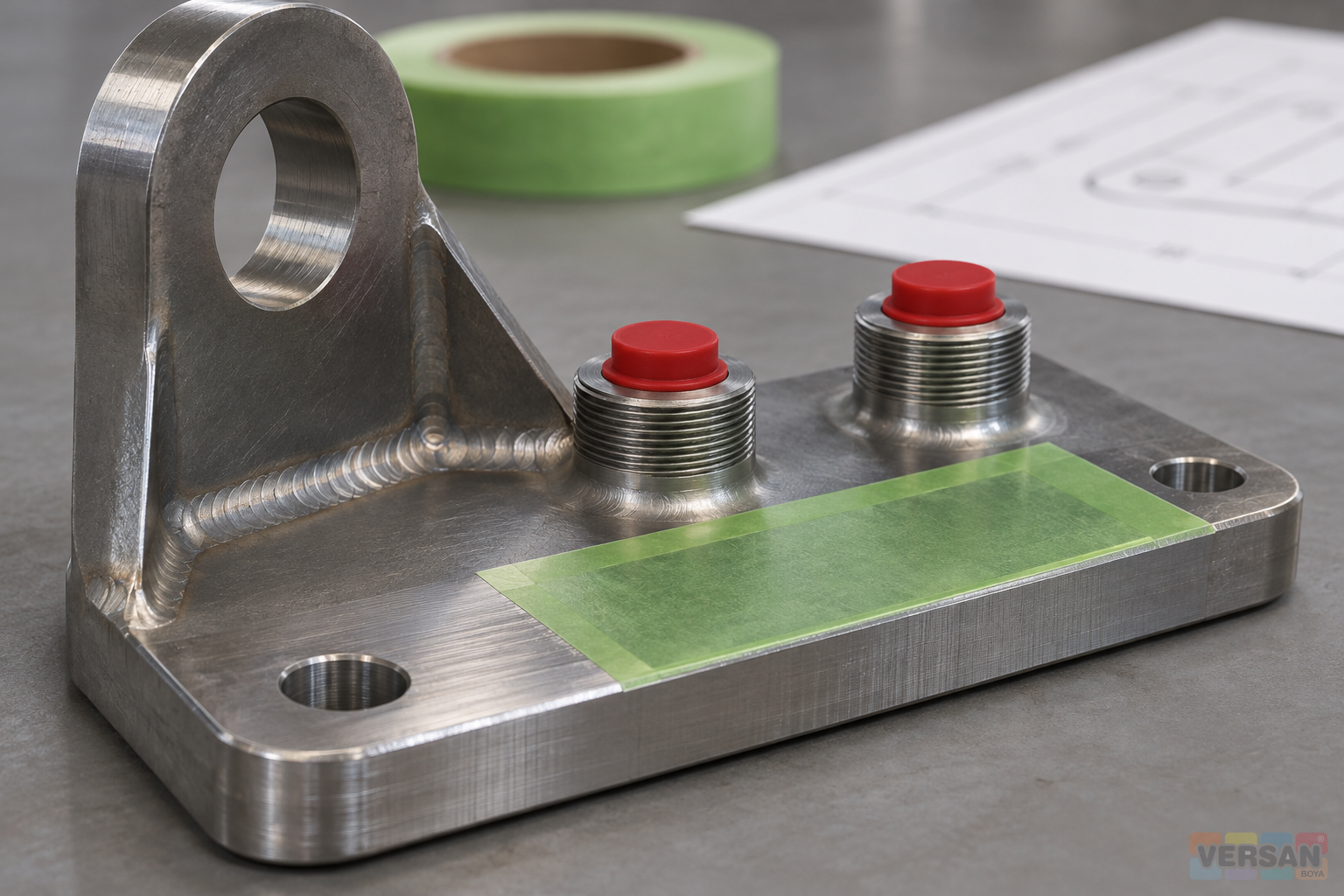
Identify masking materials by product rather than colour
Colours can be useful for visual organisation, but a green tape or a red plug does not reveal its approved process conditions. Record the actual masking product and obtain the supplier's relevant information. Echo Engineering's metal-finishing resources describe different tapes, caps and plugs for different surface-treatment processes. That primary source supports the need to consider application-specific masking solutions. It does not approve a particular item for the wet coating, substrate and process in the current job. Avoid transferring claims between powder coating, immersion processes and liquid-paint work.
Ask about the backing, adhesive, contact duration, relevant process exposure and removal expectations for the identified item. A tape previously used alongside quick-drying industrial primer still needs review when the circumstances change. Where another coating or a bonding operation follows, residue is an additional question for the appropriate specialists. Keep the supplier's answer with the product reference. If the packaging summary and the detailed instructions appear different, ask for clarification. The operator should not have to resolve a technical discrepancy by selecting whichever statement is easier to follow.
Coordinate masking with the preparation sequence
A plan needs to show when protection is fitted and whether it remains in place through subsequent operations. Otherwise, cleaning, preparation and coating teams can each act on a different understanding of the same surface. Record the sequence reference and the responsible handovers. If a preparation operation could affect a masking boundary, address that interaction in the authorised work instructions. A clean photograph cannot establish that the sequence was technically appropriate. The operation itself must be assessed using the applicable substrate, coating and workplace requirements.
If wash primer is part of the specified system, make its application area consistent with the protection scope. Any mention of a thinner or cleaner should identify the product and intended task. This guide does not supply a cleaning recipe or recommend an interchangeable solvent. The condition of reusable caps or plugs also requires an explicit decision. Their previous use and visible appearance do not automatically establish that they are suitable for the next operation. Follow the masking supplier's applicable instructions and the accepted project decision.
Use a first component to test whether the plan is understandable
A suitable first-component review can expose ambiguities before they spread through a production group. Its purpose is to compare the physical interpretation with the intended drawing references. It is not a blanket performance guarantee. Review the component from more than one direction and match each protected area to its identifier. Ask the operator to show the boundary they understood. Where clarification is needed, update the instruction and make the status of earlier copies clear. A marked drawing left on one bench does not necessarily reach the next shift.
Take an overall view and a detail view where both are needed. The overall image locates the feature, while the detail shows the relevant boundary. For work using quick-drying industrial topcoat, record the conditions and material references associated with the accepted example. A later change in geometry, material or sequence may require a new review. Make the example's approval reference visible. Otherwise a useful photograph can gradually acquire the status of an approved sample without anyone having made that decision.
Plan removal and the inspection that follows
Consider removal when the protection plan is prepared. There is no universal removal time applicable to every coating and masking combination. Refer to the relevant product instructions and the approved process. The record should identify who removes the protection, which instruction applies and what must be checked afterwards. Observations such as a displaced boundary, visible residue or an item left in place should be written separately from any conclusion about cause. If corrective work is needed, obtain the appropriate decision and preserve its reference.
On a part finished with epoxy topcoat, the visual quality of the paint boundary and the functional acceptability of the exposed area are different inspection questions. A tidy edge does not prove that an internal protector has been removed. Conversely, a visible imperfection does not establish its engineering consequence without further assessment. Where a count of identified protectors is used, match it to the defined scope. A count can assist traceability, but it does not by itself establish cleanliness of every concealed space or release the complete assembly for operation.
Manage deviations without hiding uncertainty
Begin a deviation record with the observed condition, location, part identity and process stage. For example, distinguish an uncovered area noticed before painting from an incorrect boundary discovered after removal. Add photographs that actually locate the condition. Avoid assigning a cause before the necessary information exists. A decision to continue, correct or reinspect should identify the responsible authority. When the issue remains open, make its status explicit so that an unresolved question does not disappear behind a general completion stamp or a colour-coded tag.
If a drawing revision arrives, establish whether it applies only to future production or also to identified parts already in progress. Do not silently rewrite the history of earlier components. The guide to industrial coating specifications and acceptance provides related context for organising technical decisions. A controlled record can show what was requested, what evidence was reviewed and which scope was accepted. Its value is practical: the next person can locate the decision and ask a precise question instead of reconstructing the work from incomplete recollections.
Close the record around the receiving team's needs
The final file should answer the assembly team's questions. Which areas were deliberately left without coating? Which protectors were removed? Which technical matters remain open? Include the final drawing reference, the masking instruction used, material identification and the post-removal inspection result. Link photographs to the component rather than leaving them as unnamed attachments. Retain the responses that changed the instruction during production. This gives the next team an explanation for an intentional paint boundary and a way to distinguish it from an omission.
The metal coating edge and weld control plan addresses the details of coated areas, while the masking record covers areas deliberately protected from coating. Both can refer to the same component without substituting one result for the other. Similarly, the guide to drying and handling readiness for quick-drying coatings offers a useful next step: removing masks does not itself establish that a part is ready for transport. A complete handover keeps coating appearance, functional acceptance, handling conditions and unresolved decisions identifiable. That is what makes a masking plan usable beyond the coating bench.