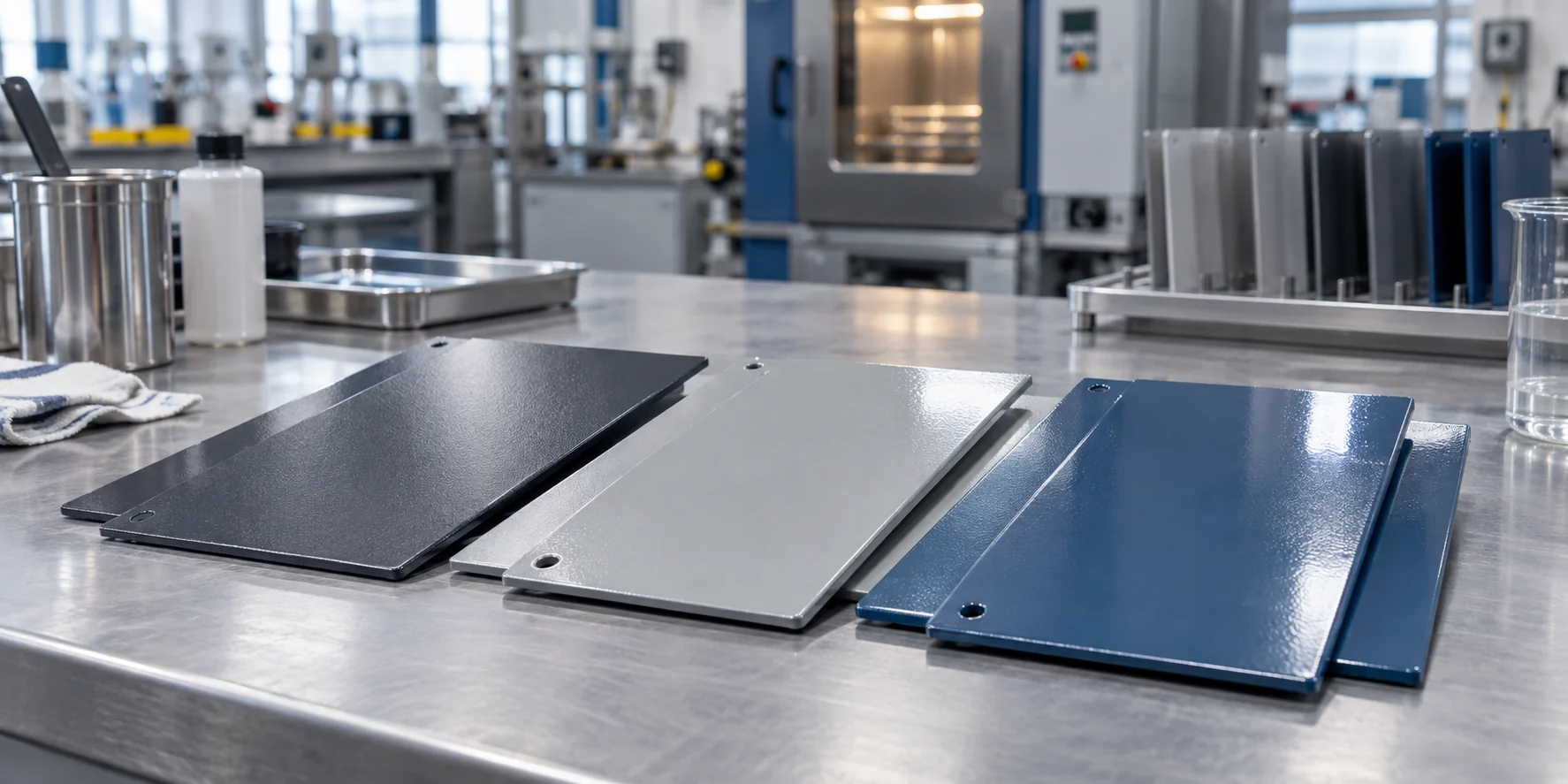
Evaluate drying speed, handling strength, colour consistency and rework cost when specifying machinery and equipment coatings.
Measure speed across the entire line
Fast surface drying does not mean a component can immediately be packaged. Preparation, mixing, spraying, drying, assembly and packing are separate stages. Selecting a faster finish without identifying the bottleneck may not increase overall production capacity.
Map contact across the machine
An operator panel, oil-exposed chassis and sunlit enclosure face different conditions. Include cleaning agents and maintenance frequency in product evaluation. Define appearance and service requirements by functional zone rather than automatically specifying one system for every metal part.
Make colour and gloss measurable acceptance criteria
A RAL reference supports colour communication but does not define gloss, texture or lighting effects. Retain an approved reference component for adjoining panels. Compare new batches and process changes early; discovering a mismatch after final assembly increases rework cost.
Technical framework: from substrate to system
An industrial coating specification must connect service exposure with the capabilities of the production line. Steel, galvanised steel, aluminium and previously coated surfaces cannot automatically share the same preparation procedure. Choosing by resin name alone is incomplete without identifying whether the component will operate outdoors, face chemical splashes or remain in a dry interior. Chemical identity, concentration, temperature and duration of contact all matter.
Define the system as primer, any required intermediate coat, finish and approved thinner. Similar product names are not evidence of intercoat compatibility. A sample prepared or applied differently from production may not represent the finished component. Technical approval should ensure that purchasing, application and inspection teams use the same product codes and document revisions.
Start this assessment with the Industrial Coatings range and refer to the coatings glossary for terminology.
Example project scenario
A machine builder may increase spray-booth output without reducing the pre-dispatch queue because the coating is not ready for packaging pressure. Test a representative panel with the actual gasket and packaging. Evaluate assembly, labelling and packing conditions rather than touch dryness alone, and approve a product change against results measured through that complete workflow.
Checks before making the decision
- Bottleneck: measure drying and packaging queues separately.
- Contact: record oil, cleaner and sunlight exposure.
- Appearance: approve gloss and texture as well as colour.
- Dispatch: include packaging-mark checks in release criteria.
Relevant products and system components
These records support comparison and technical discussion. Listing them together does not constitute an approved application system for every condition. Follow the links for packaging, technical scope and product-specific questions.
Nanomix Quick-Drying Industrial Paint
Quick-Drying Industrial Paint is a Nanomix coating solution developed to combine protection, an attractive finish and professional application performance on selected surfaces.
Application scope: Metal, wood, mineral or industrial surfaces specified in the product technical description.
Archived family reference; product-specific confirmation required (PDF)
Nanomix Two-Component Acrylic Topcoat
Two-Component Acrylic Topcoat is a Nanomix coating solution developed to combine protection, an attractive finish and professional application performance on selected surfaces.
Application scope: Metal, wood, mineral or industrial surfaces specified in the product technical description.
Archived family reference; product-specific confirmation required (PDF)
Nanomix Semi-Matt Polyurethane Topcoat
Semi-Matt Polyurethane Topcoat is a Nanomix coating solution developed to combine protection, an attractive finish and professional application performance on selected surfaces.
Application scope: Metal, wood, mineral or industrial surfaces specified in the product technical description.
Nanomix Hammer Finish Paint
Hammer Finish Paint is a Nanomix coating solution developed to combine protection, an attractive finish and professional application performance on selected surfaces.
Application scope: Metal, wood, mineral or industrial surfaces specified in the product technical description.
Application, acceptance and maintenance planning
Do not restrict inspection to final appearance. Address preparation, cleanliness, application conditions, mixing records and wet and dry film checks at the appropriate stages. Instruments must suit the substrate and be checked before use; a single thickness reading cannot represent an entire component. Establish additional inspection points at edges, welds and inaccessible areas.
Touch dryness, handling strength and full chemical resistance are different release criteria. Tie dispatch, stacking and commissioning to the conditions in the current technical data sheet. Food contact, potable water, fire protection and continuous immersion require documented suitability for the exact product and system; they cannot be inferred from the coating family.
Preparing a technical enquiry and quotation request
Before contacting the technical team, prepare overall and close-up photographs. Identify substrate, any previous product, area or component count, colour and appearance requirements. State the application location, equipment and required completion date. Flag chemical contact, continuous immersion, food-related use or any other condition requiring specific documentation at the beginning of the enquiry.
Request separate identification of primers, finishes and auxiliaries alongside exact product codes. List unresolved technical values as items requiring written confirmation instead of filling them with assumptions. Keeping the approved sample, current technical data sheet and application records together allows purchasing and production to work from the same decision. Packaging information supports ordering, but product-page options do not represent live stock or a guaranteed delivery date.
Send your project details through the quotation request form or discuss unresolved questions with the Versan Boya team.
Frequently asked questions
Is quick-drying paint suitable for every machine?
No. Production speed matters, but chemical exposure, outdoor service and appearance require separate evaluation. Compare quick-drying, acrylic and polyurethane options at product level rather than selecting from family names.
Will a matching colour code make repairs invisible?
Not always. Ageing, sheen differences and application method can make repairs visible. Assess a trial area; some panels may need refinishing to a natural boundary rather than a small local repair.
Sources and technical scope
This article is based on Versan Boya product records, the site's technical descriptions and available archived Nanomix catalogue documents. An archived document does not replace a current technical data sheet. Confirm numerical application values, system compatibility and special-use approvals for the selected product before ordering. The scenario is illustrative and is not presented as a completed customer project or a performance test.
Editorial archive date: 24 August 2026. This new content was prepared and updated on 25 September 2026. Archive ordering does not imply that the article was previously published.
Explore the subject further
- Specifying a Steelwork Coating System: From Exposure to Inspection
- Epoxy Flooring: Concrete Moisture, Loads and Return to Service
- Industrial Coating Defects: Diagnosing Orange Peel, Craters and Adhesion Loss
- Industrial Coating Procurement: Technical Enquiries and Total Applied Cost
Related technical publication: Metal Surface Preparation: Abrasive Blasting, Cleaning and Disciplined Film Thickness Measurement.