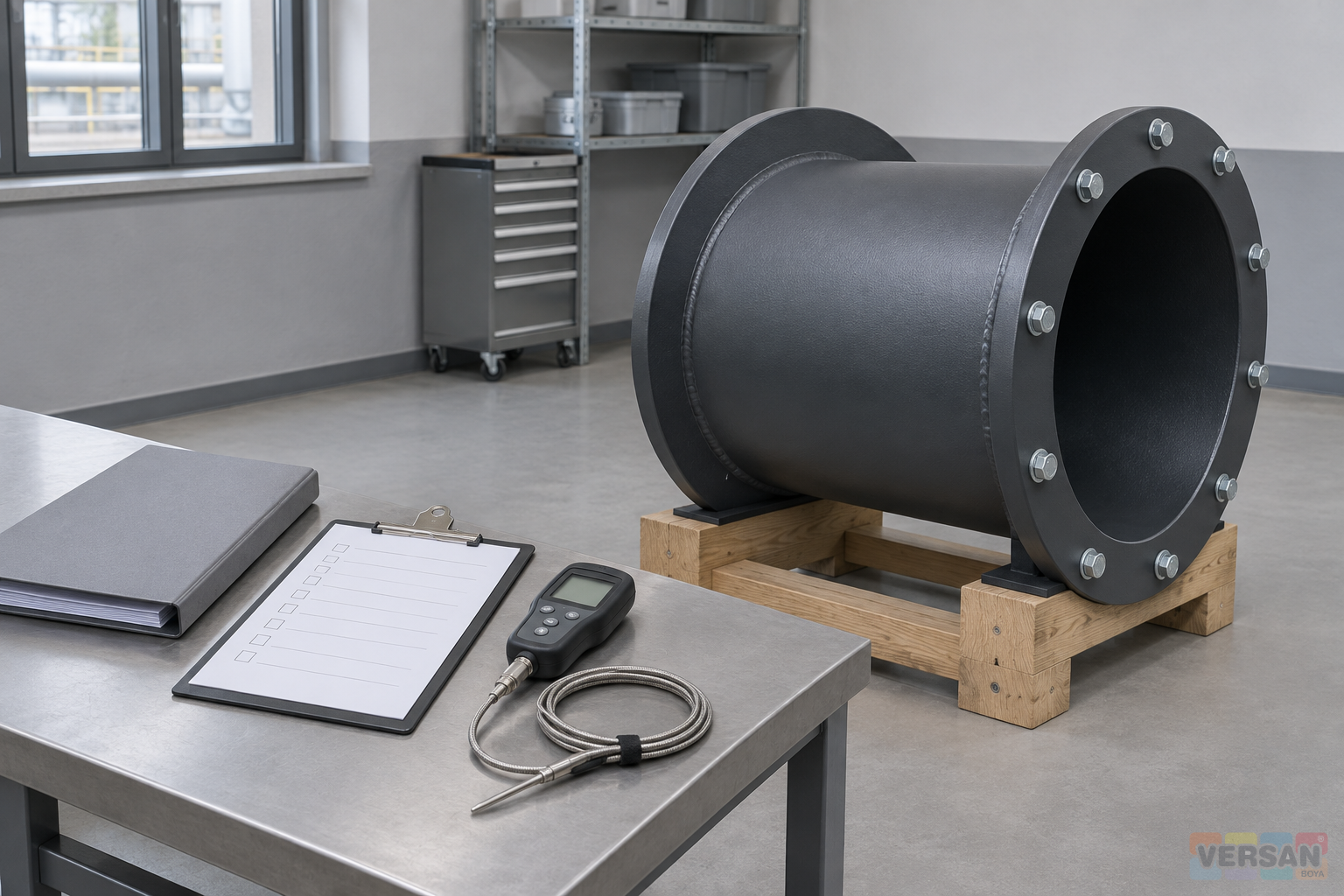
Completing a heat-resistant coating application does not, by itself, establish that the coated equipment is ready for first heating. The coating record, the product instructions and the operating team's commissioning decision answer different questions. A uniform-looking film does not show its application history or prove that the required preparation information is complete. A readiness file brings those facts together. Its purpose is to connect the correct product instructions with the correct equipment and the actual work performed, so the responsible teams can make their own defined decisions.
Begin the enquiry for heat-resistant paint with the exact product identity and the intended service conditions. If a first-heating requirement applies, the file should identify its source, revision and relationship to the particular coating work. If that instruction remains unconfirmed, do not fill the gap with a temperature or duration taken from another manufacturer's product. This article addresses documentation and handover. Heating sequences, ventilation arrangements, ignition procedures and safety systems require the authorised operating instructions and the competent people responsible for the equipment.
Identify the equipment and the coating scope
Put the work order, equipment or part code, coating-work reference and file revision on the cover. A general equipment name alone may be insufficient where several units or replacement parts look alike. Describe the section that was coated and provide an orientation image where necessary. If only an external duct spool was treated, do not describe the file as acceptance of the complete system. Distinguish a removable workshop component from work performed on installed equipment. The identity should remain clear when a reader encounters an individual photograph or report outside the main folder.
The coating scope and the operating scope may have different boundaries. One team may hand over a component while another team controls an integrated system. A product from the industrial coatings range does not establish readiness of the mechanical installation as a whole. State the decision expected from each recipient. Where clarification is outstanding, identify the owner of the question and the affected section. In work involving several contractors, a named function or accountable role is more useful than a generic instruction to send the file to site.
Separate current instructions from historical catalogue information
Record the full product name, product code, colour or variant, batch reference and any other components in the specified system. Make the applicable technical data sheet, safety data sheet and application instructions accessible with their revisions. A similar name found online does not establish that a document applies to the supplied material. If a supplier clarification is required, retain the original question and the scope of the answer. A date, language or applicability uncertainty should remain visible until it is resolved. Do not convert an assumption into a product instruction merely by entering it in a formal-looking form.
The relevant Nanomix catalogue archive identifies a historical product family. Its page also describes a separate intumescent product, whose information must not be transferred to the heat-resistant coating. The Turkish and English thinning statements in that archive differ, so they cannot supply a current preparation recipe for this work. Nor should quick-drying industrial thinner be accepted solely because its name appears familiar. Confirm the actual thinner pairing and any first-heating requirement with the applicable manufacturer information. An archive can assist identification while leaving those present-day technical questions unresolved.
Keep drying records distinct from first-heating requirements
Touch drying, readiness for another coat and readiness for service describe different questions. A record saying dry can be interpreted too broadly if it does not identify the condition assessed. Use the distinctions in the applicable product documentation. Record the final application time together with the relevant conditions and the purpose of the check. Elapsed calendar time alone cannot establish a first-heating decision. Where the documentation does not answer the question, ask the supplier directly and track the response as an open technical item with an owner.
The Jotun Solvalitt technical data sheet treats drying information and the effect of heating on certain film properties separately. This is an example of why a product's own instructions must be read in context. It supplies no Nanomix temperature or duration. Likewise, the drying record for epoxy primer cannot automatically explain the first-heating requirements for a heat-resistant finish. Keep each layer's identity and technical questions intact. Combining a definition from one document with a number from a different product does not create an approved coating-system instruction.
Build the application history from actual records
The file should show when each relevant section was coated and what work was performed. Use actual recorded times for the application stages, intermediate checks and final treatment. If the file is assembled later, distinguish the file-preparation date from the application dates. Readers should be able to identify information recorded during the work and information added later through document review. Include recorded interruptions, waiting periods and shift handovers where they affect the history. An unverified time should remain unverified rather than being replaced with a convenient estimate.
Choose the necessary level of detail from the project's recording requirements. Combining two components coated on different days under one completion time can conceal information needed for the readiness review. If epoxy shop primer is present underneath, connect its identity and application record to the relevant component. This does not approve that product for the proposed hot-service system. The record describes what is actually present. System suitability still requires the applicable technical assessment. An undocumented layer should prompt a question rather than being silently removed from the written system description.
Link surface and film checks to their acceptance basis
Preparation, application and acceptance records should identify the coated section they cover. Where measurements exist, retain the location, instrument identification and assessment basis required by the project. A number without its comparison criterion does not explain why it was accepted. The reader should be able to find the relevant specification and understand the scope of the result. This guide supplies no default film thickness, surface-preparation grade or numerical acceptance threshold. It describes the connection needed between the project's approved criteria and the observations actually recorded during the work.
Describe visual observations without converting them into unsupported diagnoses. A local repair, colour difference or handling mark can be recorded, but a photograph alone cannot establish its cause or service acceptability. Familiar inspection habits for epoxy topcoat do not automatically apply to a hot-service coating. If additional work occurred, link its location, product and actual time to the earlier record. A general acceptance summary should not imply that every area has the same application history. Make any area awaiting assessment identifiable to the team receiving the file.

Check the identity of every system component
A heat-resistant description for the finish does not prove that every underlying material is suitable for the proposed exposure. The substrate, primer, existing coating and local repair materials belong in the system description. Where an approval covers a specific combination, highlight any part of the actual work that differs from it. An unidentified existing coating is an unresolved technical question. Its appearance cannot establish its product identity or temperature history. Keep those gaps available for review instead of allowing a polished handover cover to conceal them.
References to wash primer, polyurethane primer or quick-drying industrial primer are references to different product families, not an equivalence list for hot service. If one of those materials is present in the project, establish the exact product and its place in the approved arrangement. Products used for a broadly similar purpose are not automatically interchangeable in a particular exposure. A supplier answer should specify the material sequence it addresses. Without that scope, the next reader may apply a narrow clarification to a much wider system.
Reference the first-heating instruction in the operating plan
Where the manufacturer gives a special first-heating instruction, identify the exact document, revision and relevant section. The authorised operating plan should make its relationship to that instruction clear. A brief message saying heating is permitted may leave the product, equipment section and conditions undefined. Ask for those details. Any required heating sequence, measurement method or holding step belongs in the instructions prepared by the responsible specialists. A general editorial article should not become the operating procedure through an unreviewed copy-and-paste exercise.
If the operating plan requests something different from the product information, retain both sources and record the discrepancy. The coating team should not silently change the operating settings, and the operating team should not silently reinterpret the product requirement. A previous file for quick-drying industrial paint may offer a useful document structure, but its technical values do not transfer to this job. Save the clarification together with the question and the responding party. This allows the answer to be assessed for the actual equipment instead of circulating as a universal instruction.
Assign observation and measurement responsibilities
Decide who supplies the application history, who checks product documents and who owns the operational observations. These may be different teams. If a measurement is required, the authorised plan should identify the measured quantity, location, instrument and recording method. Ambient temperature, component-surface temperature and internal equipment temperature should not be assumed identical. This is first a question about what the evidence represents. A data series whose location is unclear may acquire an unwarranted meaning when someone later places it beside a product requirement.
Connect observation times with the application and operating records. Where different devices provide time information, make the time basis understandable. Attaching an instrument report does not prove that it covers the relevant section. Link it through equipment identity, location and operation reference. The receiving team should be able to locate the record that answers a particular question. For missing evidence, identify an owner and the expected next action. Do not backfill an incomplete field with a successful outcome that was never observed. Leaving a gap visible preserves the basis for the next decision.
Connect coating information with the workplace safety process
Make the applicable safety data sheet and the operating team's workplace arrangements accessible through the file. Completion of coating records does not establish completion of every condition needed to start the equipment. The operating organisation manages its mechanical, electrical and operational checks through its own authorised procedures. Ventilation, access arrangements and work-area controls belong with the responsible specialists. The readiness file can identify the relevant roles and document references without prescribing how the equipment should be started or how a safety system should be changed.
Use the approved operating procedure for unexpected conditions during first heating. Do not infer acceptable smoke, odour, colour change or exposure duration from a general publication. A photograph or a brief observation cannot establish harmlessness. Contact information in the coating file should lead to people who can supply accurate product and application details. The person providing a manufacturer clarification may differ from the person authorised to make the operating decision. Maintaining that distinction helps direct a question to the right expertise and connect the technical answer with the actual event record.
Track open technical items to their supporting decisions
A readiness review may aim to close all required questions, but that aim should not make outstanding information disappear. For each item, identify the topic, affected area, requested information, responsible party, present status and supporting reference. When it closes, record the response or evidence that closed it. If two documents still require interpretation, retain both. The effect of an item on coating handover and its effect on the commissioning decision may need separate assessments. Make those assessments visible instead of compressing them into a single unexplained accepted box.
ISO's introduction to guidance on documented information provides general context for organising records around an organisation's needs. It does not impose the particular table proposed here or create a certification requirement. The table is an editorial suggestion for making the work understandable. The guide to temperature profiles for heat-resistant coating selection addresses the inputs used before selection. This file concerns readiness after the specified product has been applied. Linking the two helps the reviewer see whether the assumptions made during selection still match the component and service now being presented for handover.
Keep handover and the first operating record separate
At the end of the file, show the status of coating records, technical clarifications and the reference for the operating decision separately. Confirmation that the documents have been received should not be written as permission to start the equipment. State what each approval field actually verifies. If the file is updated later, identify the new revision and the records added. Do not silently replace the pre-heating file with evidence that did not exist at the time. Preserving the actual decision history also helps later reviewers understand what was known when each decision was made.
The first-use record can be linked afterwards using the operating team's actual event times and observations. Do not prewrite an expected successful result. The guide to colour and film problems in heat-resistant coatings provides a separate next reading for assessing visible changes. For specification and acceptance responsibilities, consult the discussion of technical evaluation in industrial coating procurement. A usable readiness file joins a precise product identity, a truthful application history and an identifiable decision owner. It gives the operating team the evidence needed for its authorised assessment without asking it to reconstruct the coating's history from appearance alone.