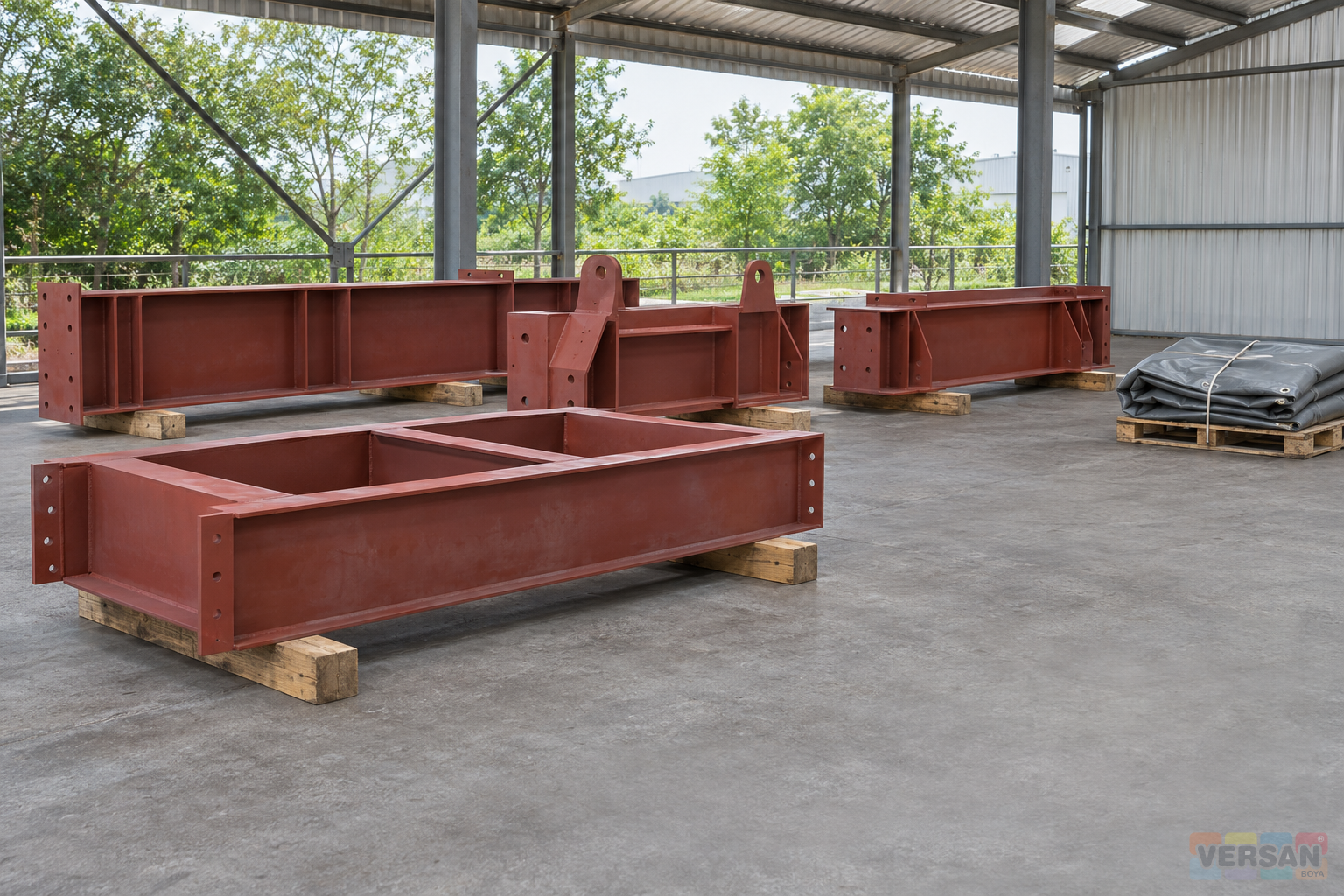
A coated part and a part released for dispatch are different records
Newly coated metal components may remain in a warehouse or temporary holding area before installation. Their location, contact surfaces and protection during that interval belong in the handover file. A difference between the present appearance and an earlier photograph does not establish the cause of a failure. Equally, dispatching the component without recording a visible difference can leave a significant information gap. A post-storage check makes the available observations and unresolved questions visible before a release decision is made by the appropriate responsible person.
The name antirust paint does not define every component's storage conditions or how long it can remain protected outdoors. Identify the actual product, applied system and project-specific technical information together. This article proposes a record and decision workflow; it provides no protection period, lifting method or repair recipe. Its focus is the history of newly coated parts between coating and dispatch. Assessment of a coating that has aged in service is a different process, and that distinction should remain clear from the beginning of the file.
Establish the identity of the component being examined
Connect the component code, fabrication drawing and current storage location. Similar beams and frames may be difficult to identify from a general photograph alone. Link a location view showing the identifying label with a close view of the area being examined. If the code cannot be read, request confirmation from the responsible person instead of recording an estimated identity as fact. A change in the storage arrangement may also require an updated location reference. Otherwise an accurate observation can become attached to the dispatch file of the wrong component.
Do not confuse this task with renewing an old primer on an existing structure. The article on maintenance decisions for overcoating old antirust primer addresses a different starting condition. The present record concerns newly coated components after they leave the coating area. If a supposedly new part has actually been used before or removed from another installation, record that history separately. A new label on the inspection folder does not remove uncertainty about the substrate or coating history; the file should state the actual information available.
Distinguish the applied coating record from the purchasing list
The material purchased and the material actually used on a component are different records. Where available, link the coating product name, batch information, application record and relevant technical response to the inspection file. If the identity is unknown, retain that as an explicit information gap. Colour and gloss are not reliable identifiers of a product. This matters particularly where several visually similar primers are used in one workshop. The person making the subsequent decision should be able to distinguish confirmed material information from an assumption based on appearance.
A record for synthetic primer should not be treated as an antirust product record merely because the names or colours seem similar. The accepted historical Nanomix catalogue helps identify product families; its old application conditions are not a dispatch approval for the present component. Obtain the current documents needed for the actual system and use. If the coating record is incomplete, define the question for the technical owner. Substituting the nearest familiar product name would cause later reviews to begin from an unverified assumption as well.
Prepare a short timeline of the storage interval
List known events such as release from the coating area, warehouse receipt, relocation and preparation for dispatch. Identify the source of each event: a work record, transfer note, photograph or confirmation from a responsible person. Do not fill unknown dates by estimation. The conditions changing during the interval matter as well as its duration. A component may have moved from covered to exposed storage, received a temporary cover or been repacked. Those events provide context for review without independently proving the cause of a mark seen later.
The planned application of synthetic topcoat paint can occupy a separate field in the file. A planned activity is different from a completed application. A system awaiting its specified topcoat should not be described as a finished coating system. If storage is extended, ask which conditions were covered by the earlier release assessment. No universal waiting period is established here. The actual product, project and technical instructions determine the applicable requirements, and the relevant authorised person decides what additional information or action is needed before the next stage.
Match earlier photographs to the same component and location
When comparing a photograph taken after coating with a dispatch-stage view, confirm that both show the same component and area. A weld, hole pattern or identifiable junction can provide a repeatable location reference. Lighting, camera angle and the presence of dirt or moisture can affect appearance. A mark absent from one photograph cannot automatically be described as a later development; the earlier image may simply omit the affected area. Retain a clear explanation of what the photograph shows and the boundaries of the evidence it provides.
The same discipline applies if the material is from a different family, such as industrial rapid primer. Do not transfer an old date or acceptance note onto a new photograph. Where no initial photograph exists, do not invent a perfect original condition as the comparison baseline. Record the current observation under its actual date and identify the missing earlier evidence. This approach separates available information from missing information instead of assigning responsibility from appearance. It also gives the technical reviewer a clearer basis for deciding whether more evidence is needed.
Record support and packaging contact points as specific locations
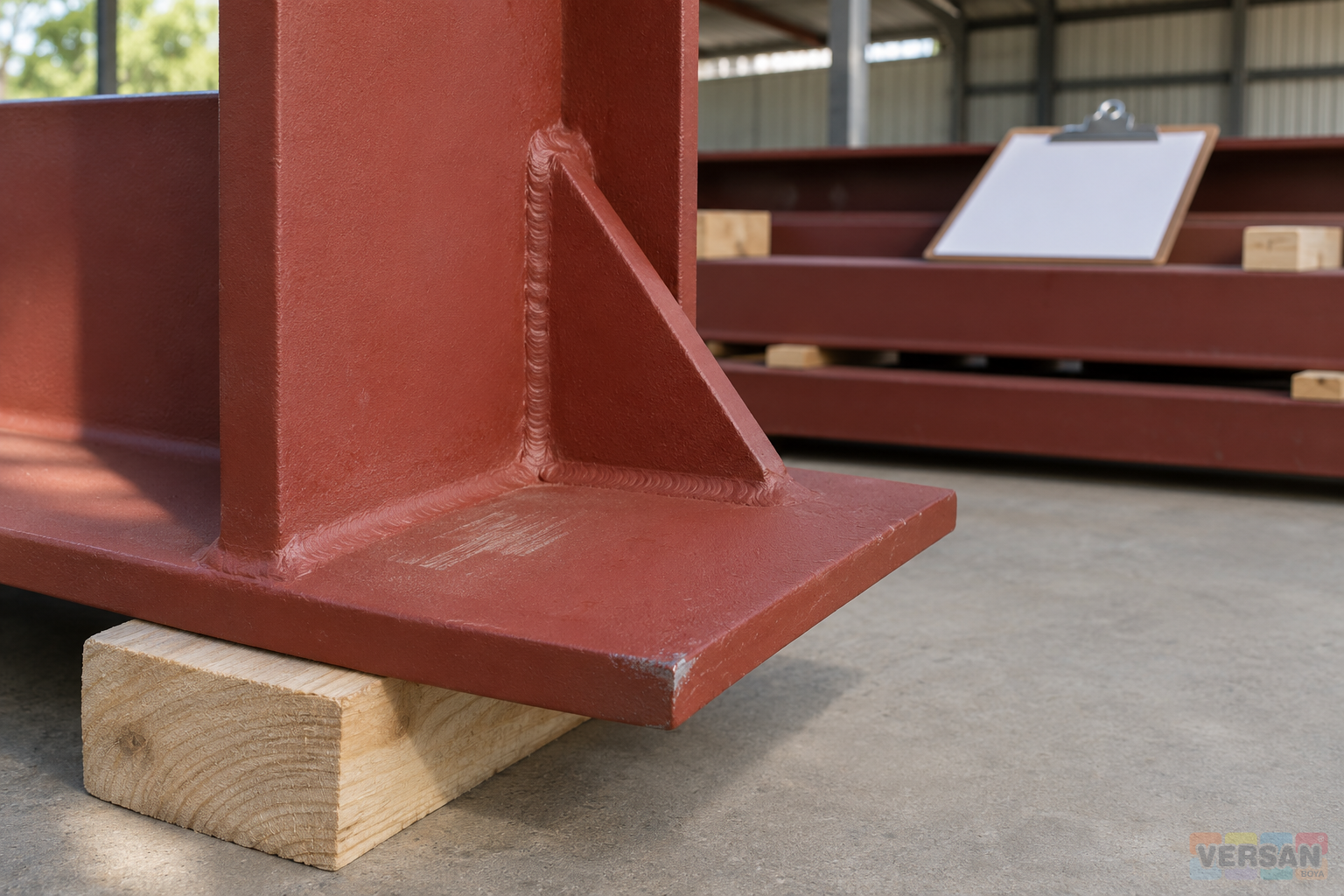
Identify accessible regions where the component has contacted timber supports, spacers, restraints or packaging. A contact mark alone does not determine whether the coating is technically unacceptable or requires recoating. Record its location, appearance and relationship to any earlier image. If a region beneath a support cannot be observed safely, state that limitation. Do not move a heavy component independently to improve an inspection photograph. Access, handling and lifting remain subject to the organisation's authorised arrangements and the specific requirements of the equipment and load involved.
Jotun's guide for a different fire-protection product illustrates that transport and storage instructions can be system-specific and must be read with the relevant product documents. It supplies no antirust primer waiting period, humidity limit, lifting method or fire performance. Product-specific details should not be transferred to industrial rapid paint either. The record proposed here carries an observation about a contact area to its technical owner. It does not turn that observation into an application instruction, a diagnosis or a release approval for a different coating system.
Describe potential water traps as observations
Horizontal pockets, enclosed corners and areas beneath packaging can be described separately where they are visible. Record standing water, a dry mark or an unidentified deposit with a location photograph. Appearance alone does not identify the deposit's chemistry or the condition beneath the coating. Keep observations and interpretations in separate fields. A note describing a damp-looking corner is different from a conclusion that corrosion has started. If the evaluation supporting the second statement has not been performed, retain the observed condition and leave the technical question open.
The presence of red lead primer paint or another primer in the catalogue is not permission to treat an unidentified mark with it. The actual product documents and the organisation's safety and environmental arrangements remain relevant. This article prescribes no universal drying, wiping or overcoating procedure for a wet region. The required response must come from the appropriate technical evaluation. While that response is pending, preserve the link between the observation, the component and its exact area so that another person can reliably locate the same question.
A cover is not proof of suitable protection throughout storage
Temporary wrapping or a cover does not establish that the hidden surface remained in appropriate conditions throughout the waiting period. Record when the cover was installed, changed or opened if that information is available. Photograph visible tears, contact areas or accumulations without making assumptions about hidden regions. This review does not design a cover or specify a new packaging method. Its purpose is to identify who assessed the actual protection arrangement for the coating system and conditions involved, and which parts of that assessment can be supported by records.
Products from the industrial coatings range may share a warehouse, but that does not establish common storage requirements for every item. Link each component to its own material and work history. If the protection arrangement changed, ask whether the previous assessment covers the new condition. Packaging may, for example, have been opened for a different planned dispatch and subsequently closed again. Record the event and refer its significance to the responsible person. The file communicates changed conditions; it should not provide an unsupported guarantee that the protection arrangement remains suitable.
Describe findings at edges and welds without assigning a cause
Where an edge scuff, local mark or appearance difference around a weld is observed, create a sequence from the general component view to the specific location. Add an explanatory location note, avoiding a precise dimension that has not actually been measured. A single surface appearance cannot reliably distinguish an application issue from handling damage or a storage effect. First establish when the finding was noticed and whether the same area appears in an earlier record. Keep the cause question separate until an appropriate assessment provides evidence for a conclusion.
The article on antirust coating behaviour around edges and welds provides broader background. Do not apply that background as an automatic diagnosis for every new finding. A technical reviewer may request additional examination, measurement or documentation. When that happens, identify the location covered and the person recording the result. Do not describe a repair or acceptance as completed before the relevant work has taken place. Retain the initial observation, subsequent assessment and final decision as connected but distinguishable stages, each supported by its actual evidence.
Keep contamination observations separate from cleaning instructions
Dust, dry packaging marks and an oily-looking patch can raise different questions. Recording the visible appearance and known contact history is an appropriate starting point. Choosing a solvent before identifying the condition is not part of the review proposed here. Obtain an evaluation suitable for the actual coating and finding. If another team previously cleaned the part, ask for the record of that operation where it is relevant. If the information is absent, state that it is unknown. A clean-looking appearance should not be turned into evidence of chemical compatibility.
The thinners and auxiliaries range identifies product groups; it does not provide a universal cleaning recipe for every mark on coated steel. Availability in a warehouse does not authorise use on a component. An unsuitable wiping operation may also change the original finding and complicate later review. Record the observation date separately from any intervention date. If an intervention has been authorised, link its actual instruction, responsible operator and affected area to the file. An instruction that has been issued must remain distinguishable from work that has genuinely been completed.
Separate the questions answered by photographs and measurements
A photograph can show the location and appearance of a mark without establishing every coating property. If a result concerning thickness, adhesion or another property is required, the project must identify the appropriate method and responsible person. No measurement frequency, instrument setting or acceptance threshold is supplied here. The measurement record should explain the question being addressed and the part examined. If a required assessment remains incomplete, keep it as an open item. An attractive photograph or a known product name does not replace missing technical evidence.
Appearance is also insufficient for selecting between epoxy primer paint and an antirust coating, or for establishing that one can replace the other. Likewise, a measurement from another component does not automatically establish the condition of this one. Any sampling or representative scope must come from the authorised inspection plan, and the record should state what was actually covered. A useful entry makes both the supported conclusion and its limits readable. That distinction helps people understand which decisions the available information can support without unnecessarily expanding the inspection list.
Define the release decision and the role responsible for it
Removal from storage, preparation for transport and acceptance for outdoor service can be different decisions. State which decision is being requested. Recording observations does not necessarily authorise the inspector to provide every technical and operational approval. The decision record can identify the responsible role, component group, supporting documents and any conditions attached. Where an issue remains open, record its owner and the evidence needed for closure. Creating a dispatch schedule is not evidence that an outstanding assessment or acceptance decision has already been completed.
Finding the right material record through the product range is a supporting step rather than the whole release process. Combining product selection and dispatch approval in one box may hide different responsibilities. A record should allow the reader to distinguish the observation, technical response and release decision and then recover the connections between them. The organisation may use its own established forms and authority structure. The editorial workflow here does not prescribe a mandatory inspection form or claim that completing a particular checklist demonstrates certification or compliance.
Prevent parts with open questions from becoming indistinguishable
If a component is awaiting assessment, make its status understandable within the organisation's safe identification and storage arrangements. This article does not instruct staff to move heavy parts or create a new quarantine area. The responsible personnel determine how the component should be distinguished under their existing rules. A status entry should lead to more than a general word such as unsuitable: the open issue, affected location and next action should be retrievable. When personnel change, the reason for the outstanding decision should not depend on an individual's memory.
Closing an open item later does not require deleting its earlier record. Add the technical response, scope and responsible decision that supported closure. If work was performed, connect before-and-after images using their correct dates. Forwarding a file to another department is not acceptance. If a conditional decision was given, its conditions should remain visible when dispatch is prepared. Maintaining this level of clarity helps prevent a component from appearing simultaneously in outstanding and completed lists. It also lets a new reviewer understand the actual history without reconstructing it from scattered messages.
Include usable information in the dispatch handover
Connect the component identity at dispatch with its coating record, inspection observations and the status of any open or closed matters. Record which document version is provided to the recipient. Instead of supplying an unexplained folder of warehouse photographs, include the location references needed to interpret the relevant images. A recipient noticing a new finding should be able to link it to the correct earlier record. If packaging or supports changed before loading, their actual change date and responsible person may also be included where relevant to the handover.
The wider discussion of preparation and intercoat compatibility for antirust and synthetic primers concerns a broader maintenance context. Where the current technical response needed for the newly coated component already exists, link the correct version. Where it does not exist, keep the gap visible. A handover document should not represent an unperformed measurement or an unapplied topcoat as completed. A concise file limited to real information, with open questions assigned to their owners, can support a more reliable transfer than a long checklist that cannot be substantiated.
Revisit the conditions of an assessment when dispatch is delayed
Dispatch may be postponed after the initial review, or the component may move to another holding area. In that situation, the earlier assessment's date, location and observed conditions become important. Instead of transferring an old acceptance mark to a new date, ask whether the relevant conditions changed. A new event, opening of packaging or observed contact may require an additional record. Retain the earlier entry as historical evidence. The need for further review comes from the actual change and authorised plan; this article establishes no universal reinspection interval.
The documentation arrangement can be tested by asking a team member who missed the discussion to review one component file. Can that person locate the part, connect its previous image to the present area, find the owner of an outstanding question and understand the release decision's scope? If those links are unclear, improve the connections before adding more checklist boxes. The value of a post-storage review is not that it declares every surface acceptable. It is that actual conditions reach the right decision maker and that the resulting decision remains traceable.
Walk through an incomplete handover before the next dispatch
Consider a hypothetical frame whose coating record is available but whose packaging was opened during an earlier cancelled dispatch. The current reviewer sees a small contact mark, while the original photograph does not show that region. A useful file records both facts without stating when the mark formed. The responsible person can then decide whether the missing view, the packaging event and the planned exposure require further assessment. Neither a clean general photograph nor a familiar primer name settles those questions independently.
If a later technical response resolves the question, connect it to the same frame and location rather than replacing the original observation. If the frame remains in storage, retain the conditions of that response so that another relocation does not silently extend its scope. This example is a record exercise rather than evidence of an actual project or a recommendation for a repair. It demonstrates how a short sequence of identifiable events can give the next team more useful information than an unexplained accepted stamp. The scope of archived sources needs particular care. The linked multi-page catalogue shows synthetic, rapid, shop primer and wash primer examples. It is not used as an antirust product's current storage specification or dispatch approval. The antirust product identity is checked separately against the current product page, while the coating actually applied to a component must still be identified from that component's work file. A product link leading to an archive does not establish technical information that the archive does not contain.