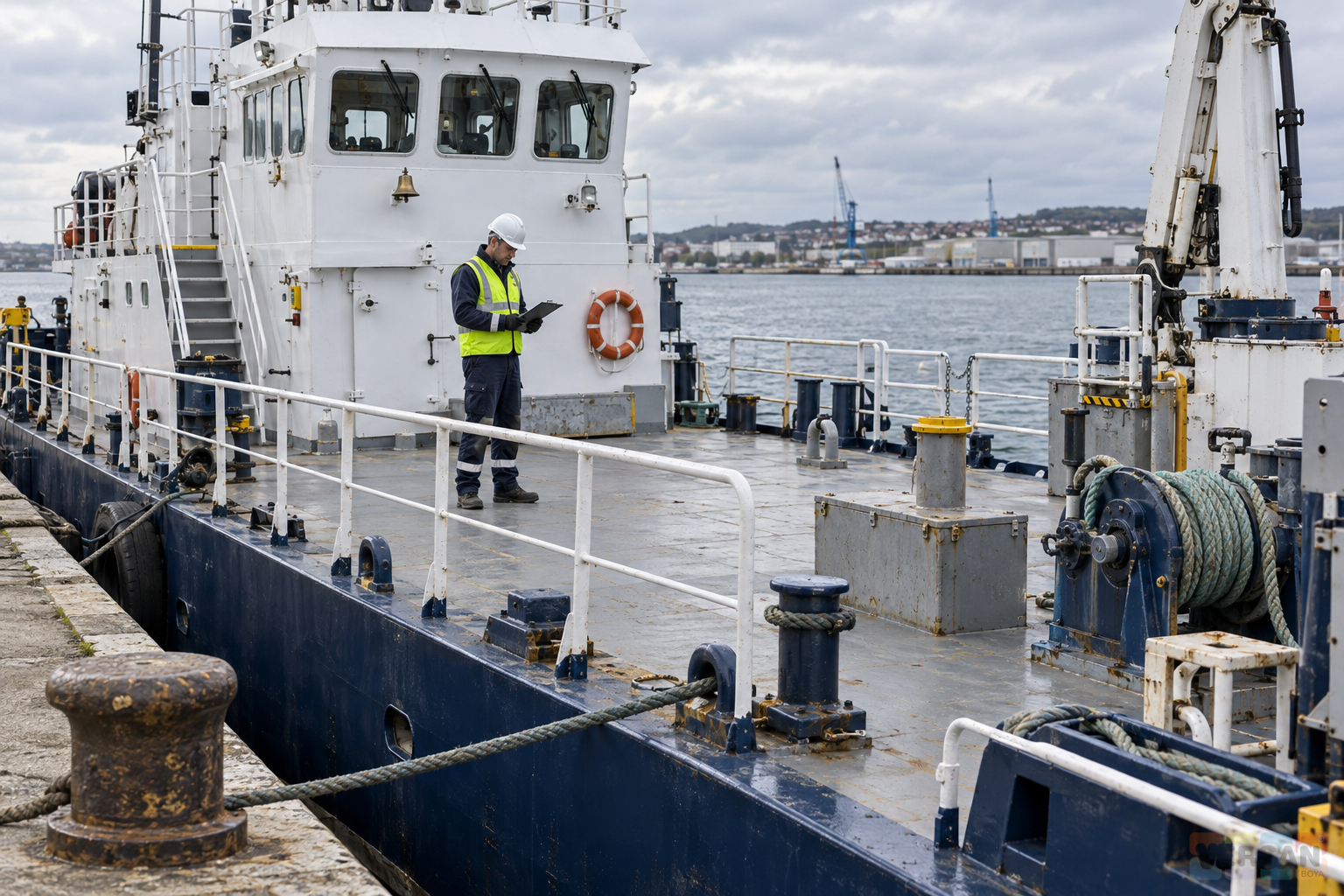
A ship coating maintenance project becomes difficult to control when it is described only by a total area and a colour. Deck traffic, access to hull sides and the appearance of superstructure surfaces create different priorities. Being part of the same vessel does not mean that every area should receive the same preparation, coating system or work sequence. A zoned maintenance plan connects each area's actual condition with material selection, access, inspection and return to service. It gives purchasing and application teams a common description of the work.
This guide offers a planning framework for evaluating the marine coatings range. Its main subjects are decks, above-water hull sides and superstructure. Permanently immersed areas, tanks, specialised cargo spaces and applications requiring particular approvals need their own specifications. A general industrial coating is not assumed suitable for all shipboard locations. The correct selection depends on the substrate, existing system and service exposure. A product's presence in a commercial category does not independently establish marine certification or suitability for a specialised duty.
1. Define physical and functional zones
Start with a map that allows everyone to identify the same surface. Distinguish port and starboard, forward and aft areas, walkways, ladders, covers and superstructure faces. Give each work area a short code. This does not require an elaborate digital system; the objective is to connect photographs, quantities and inspection records to the right location. A photograph of a defect should not leave the next inspector guessing which deck or hull section it represents. Include a wider view where a close photograph would lose the location.
Physical boundaries and functional boundaries can differ. One deck may contain a busy route, an equipment footprint and a rarely used margin. Hull sides also require a distinction between consistently above-water areas and areas affected by a changing waterline. Our guide to above-water and below-water coating maintenance explains why this boundary belongs at the beginning of the selection process. If the service boundary is uncertain, the product enquiry is uncertain as well. Resolve it with the vessel's responsible personnel before finalising the work pack.
2. Record condition before deciding treatment
For each zone, record substrate material, known existing coating, visible damage, access and the maintenance objective. Rust, blistering, peeling and impact damage are separate observations. If apparently sound paint cannot be identified, state that explicitly. A satisfactory photograph does not prove compatibility with a new coat, while a small rust mark does not establish the underlying metal's structural condition. The appropriate further assessment should be determined by competent personnel. Coating maintenance records should not be used to imply a structural assessment that has not actually taken place.
Separate an observation from a treatment decision. Local coating loss around a weld is an observation; apply only a finish coat is a decision requiring preparation and compatibility assessment. Keeping those statements separate prevents an initial walkaround from becoming an unsupported application instruction. Products in the industrial coatings range may be reviewed during the enquiry, but the shipboard location and exposure must still be declared. A broad product description cannot replace the acceptance of the existing coating or the specification of the new system.
3. Plan decks around how they are used
Ask about pedestrian movement, equipment traffic, cleaning, local liquid contact and the existing surface texture. Where slip resistance is required, identify the relevant use conditions and the evidence needed to accept the selected system. A matt appearance or a surface that feels rough is not a substitute for a documented requirement. The enquiry should state the requirement clearly rather than expecting the applicator to infer it from the word deck. This also makes quotations more comparable, because suppliers can respond to the same service description.
Plan how access will be maintained while the work proceeds. Closing an entire deck at once may conflict with other vessel operations, emergency arrangements or equipment movement. The authorised site management should coordinate those matters with the application team. Information on epoxy topcoat describes a product system; it does not automatically establish slip resistance, suitability for continuously wet service or resistance to every liquid encountered on a deck. State such expectations separately and obtain the necessary technical confirmation before the material is committed to the job.
4. Combine hull-side access and exposure planning
The position of a hull-side area affects access equipment and the practical work window. A section readily reached from a quay should not be merged unquestioningly with a section requiring another access arrangement. Define the service exposure near the waterline using confirmed vessel information. A waterline visible in one photograph may not represent every loading or operating condition. The application boundary should therefore be agreed with the responsible vessel personnel. The plan needs to say what is included, rather than relying on an ambiguous painted line or an assumed operating condition.
Cosmetic renewal and corrosion repair may involve different areas. Separate apparently intact coating considered for renewal from locations requiring removal and preparation of the underlying metal. If preparation reveals a larger affected area, update the relevant work pack and its quantities. When evaluating epoxy primer, specify the substrate, required preparation and proposed subsequent coats together. The primer name does not independently approve immersion service or compatibility with unidentified old paint. Those questions belong in the technical review, not in an assumption made from the product family.
5. Distinguish substrates and appearance areas
A superstructure may contain steel, aluminium, galvanised components, previously coated fittings and other materials. Requiring one colour across them does not mean they need one preparation method. Include window surrounds, joints, fasteners and narrow details in the scope. Mark components that will be removed, protected or left unpainted. These details are easy to miss in a broad area estimate, yet they can become significant sources of delay and disagreement during application. A few annotated photographs often communicate them more effectively than a generic sentence in the purchase order.
Options such as polyurethane primer and gloss polyurethane topcoat must be assessed for the actual substrate and approved system. An appearance sample should represent that substrate and sequence. A colour card does not show the effect of preparation or the transition from an old surface to a local repair. Agree the expected visual continuity across broad faces and the treatment of repair boundaries. Similar colour names do not by themselves define an acceptable finished appearance.

6. Inspect cleanliness and preparation separately
Hempel's maintenance and repair preparation guideline distinguishes surface cleanliness from roughness requirements. Removing contamination and achieving the preparation needed by a coating are therefore separate checks. The disappearance of visible rust alone does not demonstrate that every preparation requirement has been met. The work pack should identify the relevant contaminants, the approved removal method and the final inspection. Acceptance criteria must come from the selected coating specification and project requirements. A generic article cannot provide one numerical cleanliness limit or one preparation grade for every marine maintenance system.
Our article on marine steel salt contamination and preparation develops the distinction further. Epoxy thinner should be considered according to its approved use with the relevant product, rather than presented as a universal cleaner. In particular, solvent wiping is not equivalent to soluble salt removal. If a prepared surface is contaminated again, its earlier acceptance record does not establish its present condition. Review it before coating and retain a record of any additional preparation that becomes necessary.
7. Make repair boundaries explicit
The transition between a local repair and retained coating is part of the maintenance scope. The initially visible rust area may not equal the area that ultimately requires preparation. Removing unsuitable or poorly attached material can change the boundary. Record that change with location, photographs and quantities. Do not narrow necessary preparation merely to preserve an initial estimate, but do not leave scope growth unexplained either. A traceable revision allows the technical requirement and its commercial consequence to be discussed from the same evidence.
Appearance at the boundary can require a separate decision, especially on superstructure and above-water hull sides. A technically acceptable local repair may still need a wider finish area to meet the agreed visual objective. Record preparation and cosmetic finish areas separately. Selecting semi-matt polyurethane topcoat does not remove that distinction. Product, colour and sheen decisions should support the repair plan, not be treated as a single solution to all transition issues. Show the expected boundary in a representative trial where the appearance requirement warrants one.
8. Coordinate the sequence with other maintenance
Welding, dismantling, installation, cleaning and coating need a coordinated sequence within each zone. Damage to a newly prepared or coated surface from later work is not a problem the paint team can solve alone. Define the condition in which a zone is handed over by one team and accepted by the next. Work permits, access and safety arrangements must follow the vessel or yard's authorised procedures. This planning guide does not replace hot-work or confined-space procedures, and it does not authorise activities that require separate site approval.
Show inspection and waiting stages on the programme alongside application tasks. One team leaving the area does not necessarily mean another can begin immediately. Assign responsibility for cleaning acceptance, preparation acceptance, any required intermediate checks and release back to service. Track delays against their actual work packs. Instead of a single completion percentage for the vessel, report whether each zone awaits preparation, is ready for inspection, can receive the next coat or remains unavailable for service. These states are more useful for coordinating the next action.
9. Monitor conditions where the work occurs
A deck, shaded hull side and sun-exposed superstructure can have different surface conditions at the same time. Evaluate the relevant work location rather than treating one measurement as representative of the entire ship. Record the conditions required by the technical data sheet and specification, including the location and time of the assessment. Without that information, a measurement cannot be reliably connected to an application. This article deliberately does not prescribe one temperature range or waiting interval for all products; those limits are specific to the approved system.
Decide in advance how a change in conditions will be handled. Who reviews a prepared surface after work stops? What information governs continuation of a partly completed coat? Adding polyurethane thinner or another auxiliary is not an automatic response to changing weather or surface conditions. Permitted application adjustment and environmental acceptance are different questions. Obtain technical clarification where needed and record the change in the work pack. This avoids an undocumented field adjustment becoming the assumed procedure for the next zone.
10. Keep preparation and coating quantities distinct
A whole panel may need cleaning, a smaller portion may need preparation back to metal, and a wider area may receive a cosmetic finish coat. A single square-metre figure conceals these differences. Give each operation its own quantity. For example, a hypothetical superstructure panel can have separate local repair and whole-panel appearance renewal entries. This example does not establish a consumption rate or a standard repair percentage. It demonstrates why a quotation must describe what happens to the area, rather than reporting area alone.
Calculate material demand from the approved coat sequence, required film build and correctly identified product units. Kilograms and litres are not interchangeable without the appropriate density information. Consider application method, access and detailed geometry when assessing practical losses. An archived theoretical coverage figure should not be represented as a guaranteed current site yield. Revisit quantities if preparation changes the scope. Treating the first estimate as immutable can create an avoidable shortage or surplus, while a documented revision makes the reason for a new quantity understandable.
11. Separate small specialist areas from the general package
Timber rails, doors or decorative components should not disappear inside a metal coating package. Assess yacht varnish against the timber condition and location as a separate question. Similarly, existing alkyd systems on equipment are not automatically compatible with another coating family. This does not mean every small component requires a different product. It means that substrate and existing coating differences should be considered deliberately, rather than overlooked because their areas are small compared with the main deck or hull surfaces.
When a tank, enclosed space, immersed area or specific chemical exposure enters the discussion, define a separate technical scope. Do not assume that a product listed under marine coatings is approved for every specialist location. If suitable documentation is missing, leave the selection open and identify who must resolve it. This allows general maintenance planning to progress without pretending that an unassessed special area has been accepted. Keep the pending decision visible in the project record so it cannot disappear into a broad completion statement.
12. Agree inspection points before application begins
Identify the necessary checks after preparation, at relevant intermediate stages and before handover. Link methods and acceptance criteria to the specification. Where dry film thickness is measured, establish suitable equipment, the measurement plan and how results will be assessed. One reading does not demonstrate that an entire zone complies. Visual inspection should also represent the actual details of the area, rather than only the easiest accessible surface. Record inaccessible locations explicitly so the inspection scope remains honest and the follow-up work can be planned.
Connect product identity, batch, application date, zone code and inspection outcome. If a nonconformity is found, record the proposed action and the need for reinspection alongside the photograph. The guide to a boatyard coating maintenance inspection file explains how these records can be assembled for handover. A signature should represent an actual review of the relevant stage. It should not imply that an inaccessible area was examined or that an incomplete work pack has been accepted simply because the overall project is nearing completion.
13. Use work packs to manage change
Consider a hypothetical project with local damage on the forward deck, appearance renewal on a starboard hull section and small repairs around superstructure fittings. The deck pack defines access, preparation and return-to-service requirements. The hull-side pack defines access equipment, the finish boundary and appearance acceptance. The superstructure pack identifies fittings to protect and how local repairs will be completed. Combining all three into the instruction repaint the ship would leave much of the real work to interpretation and make differences between quotations difficult to understand.
If deck preparation exposes a larger damaged area than expected, revise that pack and its dependencies. Other work may proceed where it is genuinely independent, but shared access or contamination risks still require coordination. Review missing technical information during daily planning as well as completed areas. Give unresolved questions an owner and a target response date. Record verbal decisions in the relevant zone file. The objective is to keep field instructions, purchasing quantities and inspection expectations aligned as evidence develops, rather than allowing three different versions of the job to emerge.
14. Close each zone with a usable maintenance record
At completion, record the applied system, final inspection, outstanding items and return-to-service requirements for each zone. Touch dryness should not be confused with readiness for full service; use the actual product and project criteria. Retain the zone map for the next maintenance cycle. New observations can then be compared with a known treatment history instead of restarting the investigation from a photograph and an uncertain recollection. This makes the handover file useful beyond the date on which the work is signed off.
For a technical enquiry to Versan Boya, share the location, substrate, known existing coating, damage photographs, exposure, access and desired outcome. Those details are more useful than the vessel name alone. A zoned plan organises the information into a practical basis for product review. It gives the applicator, purchaser and inspector a shared definition of the work. Treating decks, hull sides and superstructure according to their actual needs makes it clearer why a system is being considered and what evidence will be needed to accept the completed maintenance.
- Hempel, Surface Preparation — Maintenance and Repair — general preparation principles, not a Nanomix application recipe.
- Nanomix Epoxy Topcoat technical catalogue archive
- Nanomix Polyurethane Topcoat technical catalogue archive — product identity and scope; specialist shipboard suitability requires separate confirmation.