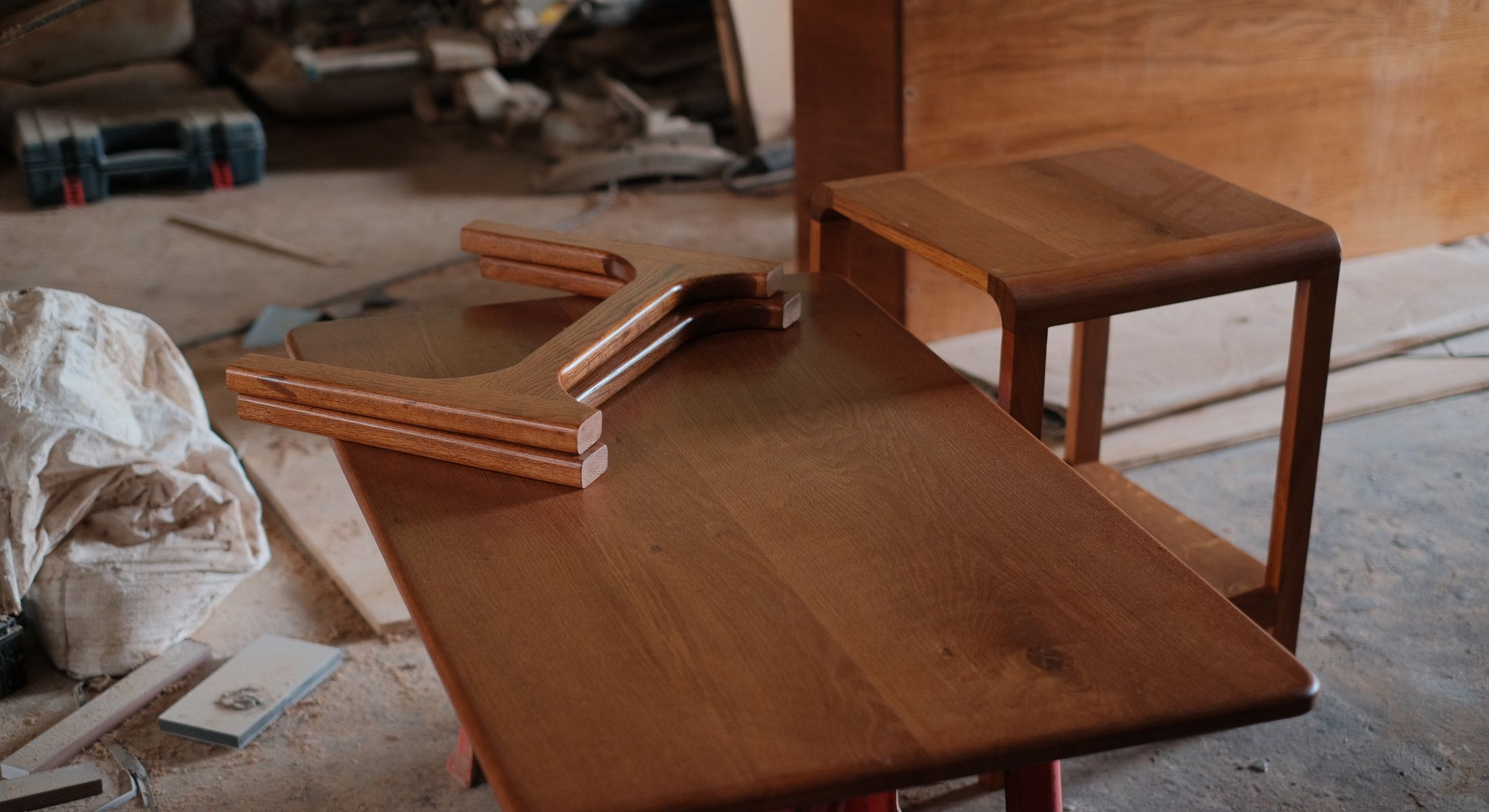
Examine dust, airflow, handling and stacking from the spray booth to packaging in furniture finishing.
Trace the route of contamination
Dust found in the spray booth may originate in sanding, trolleys or drying racks. Map intersections between clean and dirty workflows. Changing a final-stage filter may not provide a lasting solution unless the complete contamination route is assessed.
Treat drying as an active process stage
Component spacing, airflow and environmental conditions form part of the drying process. Overloading racks when output increases may invalidate trial conditions. Establish operating conditions against product instructions and equipment requirements rather than relying on assumed temperatures.
Include stacking and packaging in trials
A coating that feels dry may still mark under packaging film or spacers. Test the real transport and stacking arrangement. If defects arise during packing, changing spray settings alone may not address the root cause.
Technical framework: from substrate to system
Furniture finishing combines appearance with production consistency. Solid timber, veneer, MDF, edge banding and previously varnished surfaces differ in absorbency and preparation requirements. Trials should include edges, profiles and joints, rather than a flat panel alone. A colour code does not guarantee identical appearance over different substrates; the underlying colour and grain structure can affect the result.
For clear finishes, define grain visibility and acceptable colour change. For opaque systems, specify filling, hiding and surface smoothness. Sanding sequence, dust removal, primer and finish form one process. Inclusion in a furniture range does not automatically establish suitability for toys, food-contact surfaces or exterior exposure. Such applications require explicit product documentation and assessment of the intended conditions.
Start this assessment with the Wood and Furniture Coatings range and refer to the coatings glossary for terminology.
Example project scenario
If cabinet doors look clean at booth exit but show packaging marks the next day, work backwards through the records. Compare product, mixing, drying conditions, waiting time and packaging material. Change one variable in a controlled trial and communicate the approved procedure across shifts, rather than relying on one experienced operator’s habits.
Checks before making the decision
- Workflow: reduce crossings between sanding and clean areas.
- Racks: prevent increased output from compromising drying conditions.
- Packaging: test actual materials and contact conditions.
- Shifts: document the approved sequence for all operators.
Relevant products and system components
These records support comparison and technical discussion. Listing them together does not constitute an approved application system for every condition. Follow the links for packaging, technical scope and product-specific questions.
Nanomix Nitrocellulose Varnish
Nitrocellulose Varnish is a professional protective system designed to improve surface resistance and the final finish while retaining the visible natural character of wood.
Application scope: Furniture, doors, panels, solid wood and suitable wood-based substrates.
Archived family reference; product-specific confirmation required (PDF)
Nanomix Polyurethane Varnish
Polyurethane Varnish is a professional protective system designed to improve surface resistance and the final finish while retaining the visible natural character of wood.
Application scope: Furniture, doors, panels, solid wood and suitable wood-based substrates.
Archived family reference; product-specific confirmation required (PDF)
Nanomix Acrylic Varnish
Acrylic Varnish is a professional protective system designed to improve surface resistance and the final finish while retaining the visible natural character of wood.
Application scope: Furniture, doors, panels, solid wood and suitable wood-based substrates.
Archived family reference; product-specific confirmation required (PDF)
Nanomix Polyurethane Thinner
Polyurethane Thinner is an auxiliary product developed to adjust the application viscosity of the corresponding coating system in a controlled manner and support professional application quality.
Application scope: Thinning the relevant Nanomix paint, primer or varnish systems; equipment cleaning where expressly specified as suitable.
Application, acceptance and maintenance planning
Record reference panels, batch details and application conditions. Prevent recontamination after sanding; silicone, oil or unsuitable cleaning agents can affect subsequent appearance. A trial should establish primer and finish compatibility as well as colour approval.
Air movement in the drying area, component spacing and stacking arrangements form part of production capacity. A surface that feels dry has not necessarily become resistant to packaging adhesion or pressure marking. Evaluate representative parts with the actual packaging and base stacking decisions on current technical information. Mixing ratios and working times in two-component systems are product-specific; values from another varnish must not be transferred.
Preparing a technical enquiry and quotation request
Before contacting the technical team, prepare overall and close-up photographs. Identify substrate, any previous product, area or component count, colour and appearance requirements. State the application location, equipment and required completion date. Flag chemical contact, continuous immersion, food-related use or any other condition requiring specific documentation at the beginning of the enquiry.
Request separate identification of primers, finishes and auxiliaries alongside exact product codes. List unresolved technical values as items requiring written confirmation instead of filling them with assumptions. Keeping the approved sample, current technical data sheet and application records together allows purchasing and production to work from the same decision. Packaging information supports ordering, but product-page options do not represent live stock or a guaranteed delivery date.
Send your project details through the quotation request form or discuss unresolved questions with the Versan Boya team.
Frequently asked questions
Does every dust defect originate in the paint?
No. Assess preparation, air, equipment, handling and drying together. Identifying the stage where contamination occurs reduces unnecessary product substitutions and repeated trials.
Is hotter drying always better?
No. Remain within the product and equipment limits. Uncontrolled heat can affect appearance or film formation. Validate any speed increase against finish quality and packaging performance on representative components.
Sources and technical scope
This article is based on Versan Boya product records, the site's technical descriptions and available archived Nanomix catalogue documents. An archived document does not replace a current technical data sheet. Confirm numerical application values, system compatibility and special-use approvals for the selected product before ordering. The scenario is illustrative and is not presented as a completed customer project or a performance test.
Editorial archive date: 16 June 2026. This new content was prepared and updated on 25 September 2026. Archive ordering does not imply that the article was previously published.
Explore the subject further
- Choosing Furniture Varnish: Matt, Silk-Matt and Gloss Finishes
- Painting MDF Furniture: Primers, Sanding and Edge Preparation
- Clear Timber Protection: Preservatives, Decorative Varnishes and Finishes
- Furniture Refinishing: Compatibility, Touch-Ups and Repair Boundaries
Related technical publication: Managing process efficiency and colour consistency together in furniture coatings.