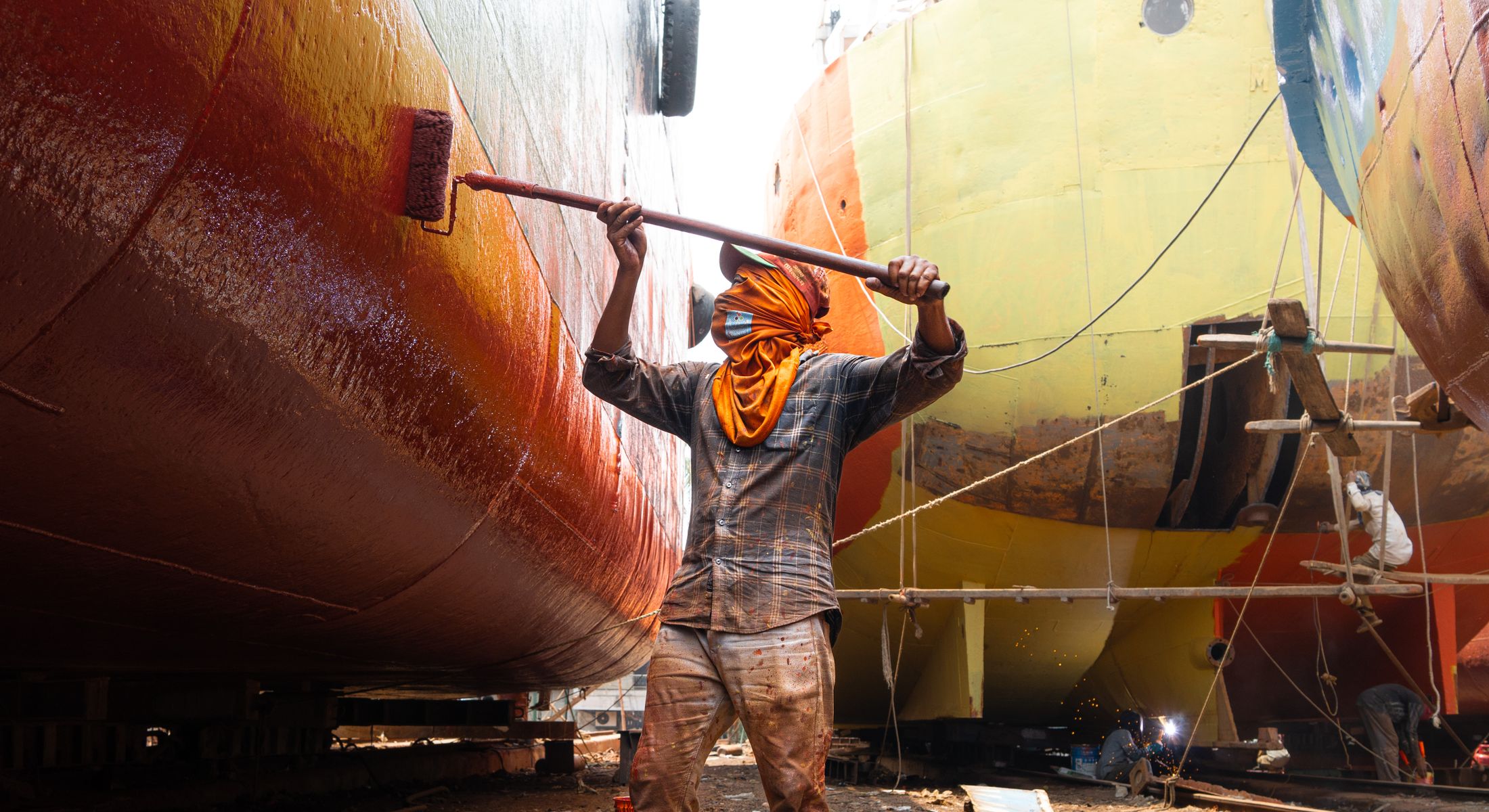
Ballast tanks combine repeated seawater immersion, high humidity, condensation, temperature changes and difficult-to-access steel geometries within a single space. Over time, these severe conditions can turn a small deviation in surface preparation or film thickness into a major maintenance problem.
The service cycle that makes ballast tanks demanding
As a tank alternates between full and empty periods, the coating undergoes wet-dry cycles. Heated surfaces, different ballasting frequencies, sludge and salt accumulation within the tank, and the cathodic protection system must all be considered together when selecting a coating.
The IMO performance standard for protective coatings under MSC.215(82) sets out an approach to application, inspection and documentation for dedicated seawater ballast tanks and certain double-side skin spaces. It does not, however, specify a product name; it requires evidence that the selected system is suitable for the service conditions.
Durability in a ballast tank is built not in the final coat, but throughout the process, from the first cleaning of the steel to completion of the handover file.
Primary and secondary surface preparation
During new construction, shop-primed steel plate can be damaged through fabrication and welding. Weld spatter, sharp edges, heat-damaged areas and contaminated surfaces must be addressed again before coating. Rounding edges and smoothing welds improve film continuity over the geometry.
Soluble salt levels and dust contamination must be checked alongside surface cleanliness. If ventilation inside the tank is inadequate, a blast-cleaned surface can quickly absorb moisture. The application schedule should prevent recontamination between acceptance of the prepared area and application of the first coat.
Corners, weld seams, profiles, drainage holes and areas around bolts should be treated by brush before the main spray application.
Film thickness: distribution, not just an average
Looking only at the average dry film thickness across a tank may conceal local weak spots. The measurement plan should be divided into areas that represent the overhead surfaces, bulkheads, bottom, backs of profiles, weld areas and difficult-to-access locations. A film that is too thin reduces the barrier effect, while excessive thickness may increase the risk of cracking, solvent entrapment or intercoat stress.
Wet and dry film measurements for each coat should be linked to the mixing ratio, thinning, application equipment and operator details. This makes it possible to trace a deviation found at final inspection back to the stage at which it arose.
Managing climate and ventilation
Temperature and humidity are not uniform within an enclosed tank. Conditions can differ between the bottom and top of the tank, and between shaded areas and sun-exposed shell plating. Dew point checks should not be limited to one location at the start of a shift; they should be repeated in representative areas throughout application.
Ventilation is essential not only for occupational safety but also for solvent release and film formation. Areas with poor air circulation may take longer to dry. Recoating decisions should be based on product technical data and actual tank conditions, rather than the calendar alone.
What does the Coating Technical File safeguard?
The Coating Technical File brings together approved system information, the manufacturer's technical documents, application procedures, inspector records, surface preparation reports, climate measurements, dry film results and repair records. It provides baseline information for maintenance teams during the vessel's operating life.
The purpose of the file is not to generate paperwork but to make the chain of decisions traceable. Linking the batch used, the area coated and the inspection result makes it easier to determine whether a subsequent defect is systemic or localised.
Critical checks before handover
- Correct sharp edges, welds and surface defects before coating.
- Compare salt, dust, surface profile and cleanliness results with the acceptance criteria.
- Keep climate, mixing and recoating records for every coat.
- Verify stripe coat coverage using photographs and an area list.
- Plot dry film measurements on a map that represents the tank geometry.
- Reinspect damaged and touched-up areas before final inspection.
Information to carry into service
A well-prepared handover file helps the ship operator plan inspection intervals and maintenance scope. Intervening without knowing the tank washing method, previous damage locations, coating used and repair compatibility can create a new chain of failures.
Each project must be assessed individually against the vessel type, service profile, approval requirements and the manufacturer's technical data. Product selection and application procedures should be verified by the authorised parties, and site conditions managed with the record-keeping discipline required by the standard.
For the performance standard for protective coatings and the technical file approach, see the International Maritime Organization's official page.